
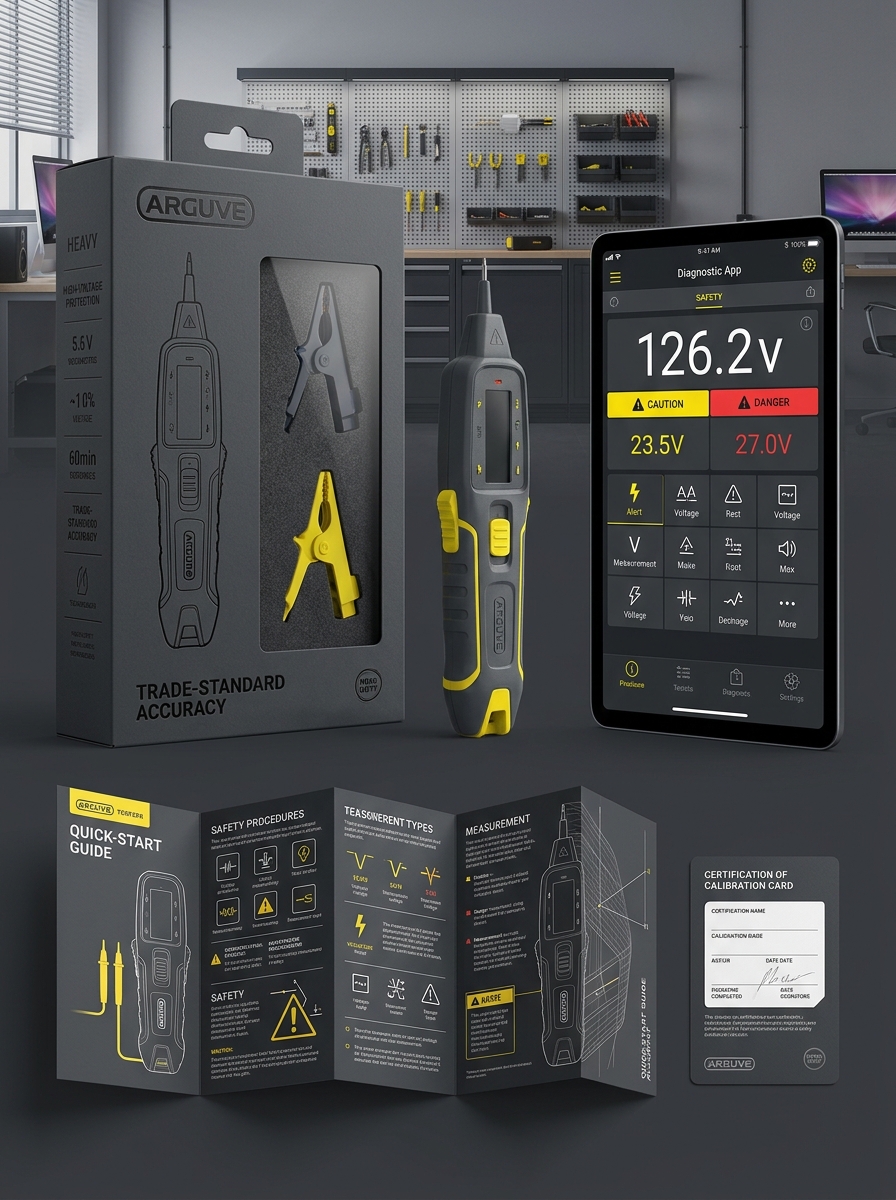
Effective packaging design for contactless voltage testers serves as the primary bridge between technical innovation and consumer trust. For manufacturers of non-contact voltage (NCV) detectors, a cohesive visual identity must prioritize safety certifications and intuitive usability at first glance.
By integrating clear iconography with robust structural engineering, brands can effectively communicate product reliability while enhancing retail shelf presence. Strategic optimization of the unboxing experience further reinforces brand loyalty, ensuring that the tester's high-precision capabilities are mirrored in its physical presentation.
As electrical safety tools evolve, refining the aesthetic and functional elements of packaging is essential for capturing market share and establishing a professional reputation. This holistic design approach ensures that technical specifications translate into a compelling narrative for both professional electricians and DIY enthusiasts seeking dependable hardware.
The Evolution of Contactless Voltage Tester Packaging Trends
The packaging for contactless voltage testers has undergone a significant transformation, moving from traditional plastic clamshells to sophisticated, sustainable designs. Originally designed for maximum security and theft prevention, early packaging often lacked environmental consideration.
Modern trends now prioritize eco-friendly materials and enhanced user experience through several key innovations:
- Sustainable Materials: A shift toward recycled cardboard and biodegradable soy-based inks.
- Compact Engineering: Reducing spatial footprints to lower carbon emissions during transport.
- Digital Integration: Utilizing QR codes to replace bulky paper manuals with instant digital guides.
- Visual Clarity: Minimalist aesthetics with die-cut windows that showcase the tool's ergonomic features.
This evolution reflects a broader commitment to sustainability and brand transparency, ensuring that high-performance electrical safety tools are delivered in packaging that is as innovative as the technology inside.
Defining the Visual Identity for Professional Grade Electrical Tools
The visual identity of a contactless voltage tester must communicate immediate reliability and uncompromising safety. Professional-grade electrical tools leverage a high-visibility color palette-typically safety yellow or industrial orange-to ensure the device is easily locatable in dimly lit workspaces.
Beyond color, the structural design emphasizes rugged durability. Incorporating over-molded rubber grips and impact-resistant polymers ensures the tool withstands the rigors of industrial jobsites. Semantically, the interface focuses on intuitive feedback; clear LED indicators and distinct auditory signals provide instant notification of live circuits. By aligning ergonomic form factors with high-performance materials, the visual language reinforces the tool's CAT rating and technical precision. This cohesive design strategy ensures that electricians and technicians recognize the instrument as a trustworthy partner for safe, non-contact electrical testing.
Critical Safety Information and Regulatory Iconography Placement
To ensure the safe operation of a contactless voltage tester, critical safety information and regulatory iconography must be strategically positioned on the device housing. These markings provide immediate identification of the tool's operational limits and compliance with international standards.
Key elements for semantic clarity and user safety include:
- Measurement Category Ratings: Symbols indicating CAT III or CAT IV ratings must be clearly visible to prevent use in high-energy environments beyond the tool's capacity.
- Regulatory Icons: Marks such as CE, UL, or ETL signify that the tester meets specific safety and performance requirements.
- Insulation Indicators: Double-insulation symbols inform the user of protection levels against electric shock.
Strategic placement of this regulatory iconography ensures technicians can verify device suitability at a glance, significantly reducing the risk of accidental exposure to live electrical transients.
Material Selection for Durability and Product Protection
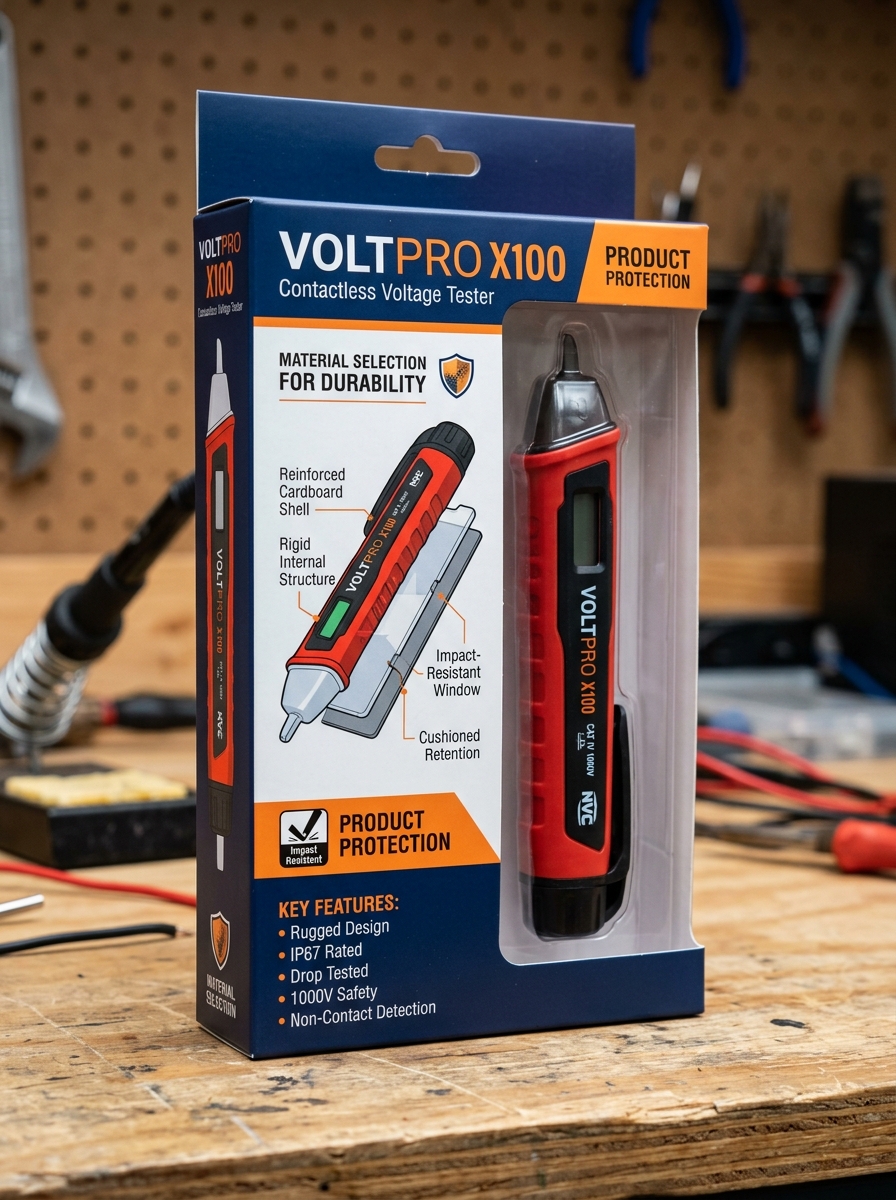
The structural integrity of a contactless voltage tester is paramount for both user safety and tool longevity. High-quality devices are typically engineered using reinforced ABS plastic or polycarbonate. These materials are selected for their superior electrical insulation properties and high impact resistance, protecting sensitive internal circuitry from accidental drops and environmental stress.
To further enhance ruggedness, many professional-grade models incorporate thermoplastic elastomer (TPE) or rubber over-molding. This provides an ergonomic, non-slip grip while acting as a shock absorber in demanding work environments. Additionally, the detection tip is often crafted from heavy-duty, non-conductive resins to prevent snapping. By prioritizing weather-resistant and chemically stable polymers, manufacturers ensure the tester maintains its CAT safety rating and remains reliable throughout its service life.
Optimizing Graphic Hierarchy for Instant Product Recognition
In the design of a contactless voltage tester, establishing a clear graphic hierarchy is vital for safety and brand differentiation. Visual organization ensures that electricians can identify critical tool functions and safety specifications at a glance.
- Visual Dominance: High-contrast colors, such as high-visibility yellow or red, should define the tool's primary purpose and improve visibility in low-light environments.
- Typography: Bold, legible fonts must highlight the CAT safety ratings and voltage detection ranges (e.g., 12V–1000V) to prevent equipment misuse.
- Intuitive Iconography: Using universal symbols like the lightning bolt or signal waves provides instant communication of electrical hazards without language barriers.
By strategically placing the most important information through size, color, and positioning, manufacturers enhance the user experience and ensure the product is recognized instantly as a professional-grade safety instrument.
Color Psychology in Electrical Safety Equipment Branding
In the design of contactless voltage testers, color psychology serves as a critical safety communication tool. Manufacturers strategically utilize high-visibility hues like safety yellow and orange to trigger psychological alertness and ensure tools are easily located in dim work environments. These colors are universally recognized as signals for caution and professional-grade reliability.
Branding often incorporates red to denote active hazards or high-voltage detection, tapping into the human brain's instinctive association between red and danger. Furthermore, black or dark grey chassis are frequently used to provide maximum visual contrast for integrated LED indicators, ensuring clear readability during live testing.
By leveraging these chromatic cues, brands improve situational awareness and reduce the risk of electrical accidents, using intuitive visual signals to reinforce safe handling protocols and quick identification of live circuits.
Enhancing User Experience Through Intuitive Unboxing Design
The initial interaction with a contactless voltage tester significantly influences a user's perception of safety and reliability. An intuitive unboxing design focuses on immediate product readiness, ensuring that technicians can transition from packaging to live electrical testing seamlessly. By utilizing frustration-free layouts and clear visual hierarchies, manufacturers can highlight essential components such as batteries, user manuals, and safety certifications.
Strategic packaging choices, like recessed compartments and tactile opening points, reduce setup friction. This semantic design approach ensures that critical safety instructions are the first things a user encounters, promoting proper usage. Ultimately, a well-engineered unboxing experience reinforces brand trust and ensures the device is perceived as a professional-grade tool rather than a mere commodity, prioritizing user safety and operational efficiency from the very first second.
Strategic Messaging for Professional Electricians and DIY Enthusiasts
Effective communication for contactless voltage testers bridges the gap between expert precision and homeowner safety. For professional electricians, messaging focuses on reliability, ruggedness, and CAT III/IV safety ratings. Highlighting features like high-intensity LED indicators and audible alarms ensures efficiency during complex circuit diagnostics and industrial troubleshooting.
Conversely, for DIY enthusiasts, the strategy prioritizes user-friendly operation and non-invasive testing. Emphasizing the ability to detect live wires through insulation without direct contact provides essential peace of mind for home improvement projects. By positioning the non-contact voltage tester (NCVT) as an indispensable safety tool, brands address the specific needs of both seasoned contractors and weekend hobbyists, ensuring every user can confidently identify energized circuits before beginning work.
Sustainable Packaging Solutions for the Modern Electronics Market
As the demand for the contactless voltage tester grows among professionals and DIY enthusiasts, manufacturers are pivoting toward eco-friendly packaging. In the modern electronics market, traditional plastic blister packs are being replaced by sustainable alternatives to reduce environmental impact and meet consumer expectations.
Key sustainable strategies for distributing a non-contact voltage detector include:
- Recyclable Materials: Utilizing FSC-certified cardboard and biodegradable paper-based inserts instead of single-use plastics.
- Minimalist Engineering: Reducing package volume to optimize shipping efficiency and lower carbon emissions.
- Soy-Based Inks: Employing non-toxic printing methods for safety instructions and branding.
By integrating these sustainable packaging solutions, brands can protect sensitive electronic components while demonstrating corporate responsibility. This transition not only appeals to eco-conscious buyers but also aligns with global regulatory shifts toward a circular economy in the electronics industry.
Integrating Digital Touchpoints and Interactive Packaging Elements
Modern contactless voltage testers are evolving beyond hardware through the integration of interactive packaging and digital touchpoints. Manufacturers now utilize QR codes and NFC tags directly on the box to bridge the gap between the physical tool and digital safety resources.
These smart elements provide users with immediate access to:
- Digital Manuals: Searchable, eco-friendly instructions accessible via smartphone.
- Safety Tutorials: Video demonstrations on checking high-voltage circuits and interpreting LED signals.
- Authentication: Instant verification of CAT safety ratings and warranty registration.
By implementing these digital touchpoints, brands ensure that electricians and DIYers have the most current technical data at their fingertips. This interactive approach enhances the user experience, promotes electrical safety, and ensures the voltage detector is used correctly in various diagnostic environments.
Leave a comment