
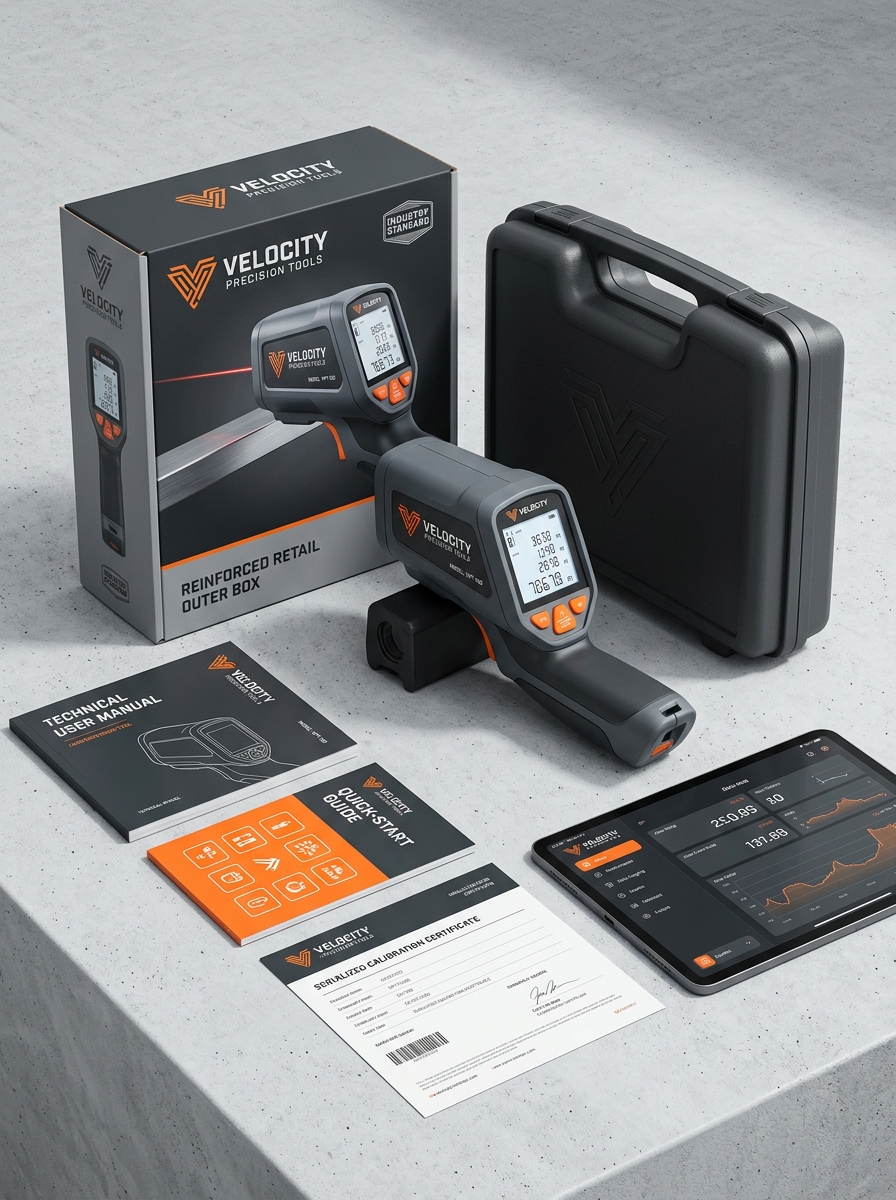
Laser tachometers serve as indispensable high-precision instruments within the industrial, automotive, and aerospace sectors. While technical performance remains paramount, the packaging design acts as a vital bridge between engineering excellence and brand perception. Strategic packaging does more than protect sensitive optical components; it communicates professional reliability and technological sophistication before the device is even powered on.
By integrating modern design concepts with core aesthetic principles, manufacturers can elevate a utilitarian tool into a premium product experience. This exploration focuses on the harmony of structural integrity and visual storytelling-utilizing minimalist layouts, technical typography, and ergonomic internal architectures. Understanding these elements is essential for creating an unboxing experience that resonates with the precision-oriented mindset of modern engineers and technicians.
The Role of Packaging in Precision Instrumentation
For a laser tachometer, specialized packaging is essential for maintaining measurement integrity. As precision instruments, these devices contain sensitive optical components and internal circuitry that are highly susceptible to damage from mechanical shocks, vibrations, and environmental fluctuations during transit.
High-quality packaging, such as custom-molded foam inserts and hard-shell cases, ensures that the laser diode remains perfectly aligned for accurate RPM readings. Furthermore, effective sealing protects the device from dust and moisture, which can degrade the lens clarity and sensor sensitivity. By utilizing robust, anti-static materials, manufacturers safeguard the tachometer's calibration. This commitment to protective packaging guarantees that the tool arrives ready for high-performance industrial use, ultimately extending its operational lifespan and ensuring reliable data collection in demanding environments.
Defining the Target Audience for Laser Tachometers
The target audience for laser tachometers includes professionals and enthusiasts who require precise, non-contact RPM measurements. Primarily, industrial maintenance technicians and mechanical engineers utilize these tools to monitor the rotational speed of motors, fans, and turbines, ensuring machinery operates within safe parameters.
In the automotive industry, mechanics rely on laser tachometers for diagnosing engine performance and pulley alignment. Additionally, HVAC specialists use them to verify blower speeds and system efficiency. Beyond industrial settings, hobbyists involved in RC aviation or woodworking find them essential for calibrating propellers and lathe speeds. Ultimately, this tool is designed for anyone needing a safe, high-precision solution for measuring moving parts from a distance, prioritizing both operational safety and data accuracy.
Industrial Minimalism and Visual Hierarchy
In professional measurement tools, a laser tachometer leverages industrial minimalism to maximize functional clarity. This design philosophy removes aesthetic clutter, ensuring the user focuses entirely on precision data. By establishing a clear visual hierarchy, the device prioritizes the most critical information-the rotational speed (RPM) reading.
Effective design elements typically include:
- Primary Display Prominence: High-contrast LCD or OLED screens make the numeric output the immediate focal point.
- Simplified Interface: Intuitive button layouts reduce cognitive load, allowing for seamless one-handed operation in high-vibration environments.
- Functional Color Coding: Strategic use of color highlights safety warnings or measurement units without distracting from the core data.
This minimalist approach ensures that technicians can interpret complex mechanical data instantly, reducing errors and improving safety during non-contact rotational inspections.
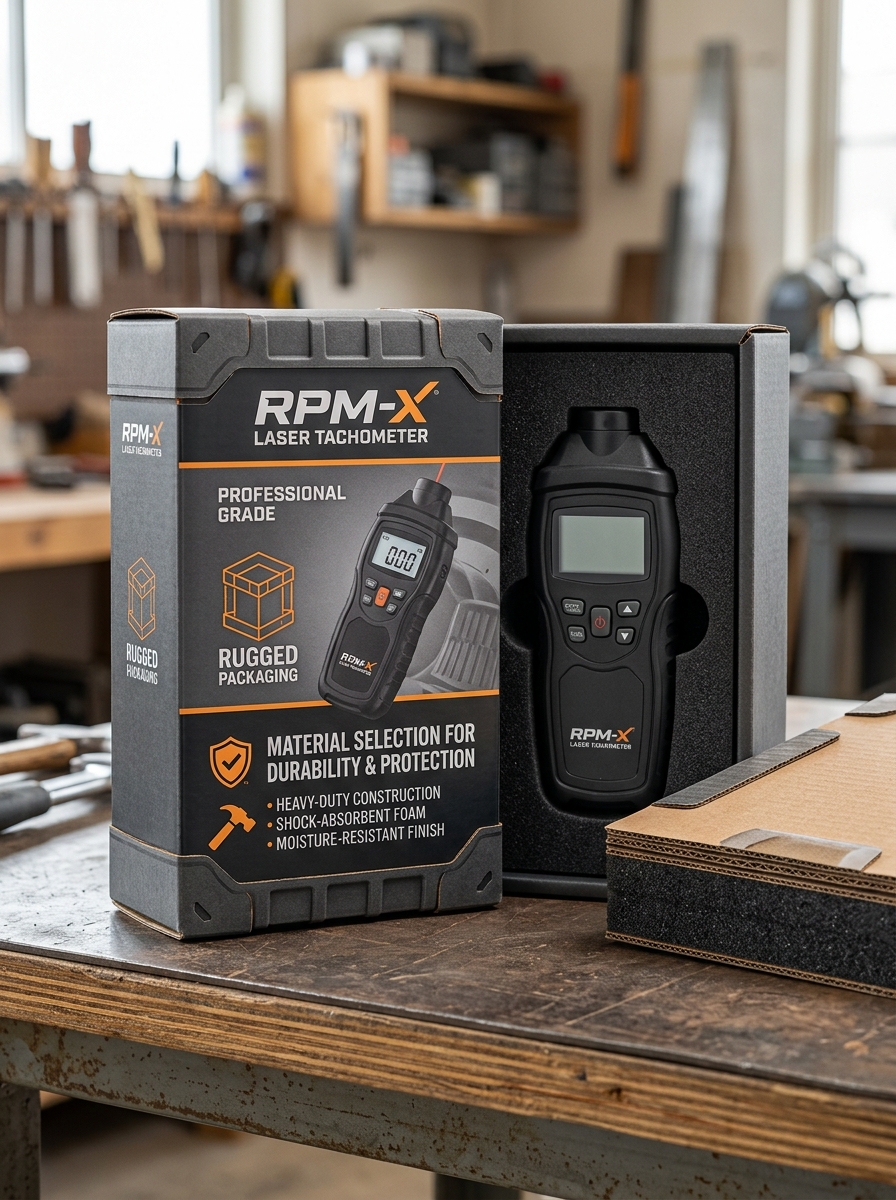
Material Selection for Durability and Protection
To ensure peak performance in demanding industrial environments, a laser tachometer requires robust construction materials. Manufacturers primarily utilize high-impact ABS plastic for the outer housing to provide superior resistance against drops and mechanical stress.
Durability is further enhanced through rubberized overmolds or thermoplastic elastomers (TPE), which offer vital shock absorption and an ergonomic, non-slip grip. The sensitive internal optics and laser diodes are typically secured within reinforced internal frames to maintain precision alignment despite heavy machinery vibrations.
For environmental protection, high-quality units feature scratch-resistant polycarbonate display shields. This strategic material selection, often engineered to meet IP54 or IP65 ingress protection standards, safeguards the internal circuitry against dust, moisture, and oil exposure, ensuring long-term reliability during field inspections.
The Impact of Color Theory on Technical Devices
In the design of laser tachometers, color theory plays a vital role in balancing workplace safety with functional precision. Manufacturers frequently utilize high-visibility colors, such as industrial yellow or safety orange, to ensure these handheld devices are easily locatable in cluttered or dimly lit mechanical environments. This strategic application of color minimizes the risk of tool loss and enhances operator safety during high-speed RPM measurements.
Beyond the exterior, the contrast between the device casing and the user interface is critical. Darker tones like charcoal or matte black are often used for the body to convey durability and professional reliability, while high-contrast buttons improve tactile navigation. Even the red laser beam itself is a choice of color science, providing a sharp wavelength that stands out against metallic surfaces for accurate data acquisition.
Information Architecture and Essential Specifications
The information architecture of a laser tachometer is engineered for rapid data interpretation, centered around an integrated digital interface. This structural design prioritizes real-time RPM visualization, often supported by internal memory for retrieving maximum, minimum, and last measured values.
To ensure industrial precision, the following essential specifications define device performance:
- Measurement Range: Typically spans from 2.5 to 99,999 RPM.
- Accuracy: High-end sensors provide a precision rate of ±(0.05% + 1 digit).
- Detection Distance: Non-contact infrared sensors operate effectively between 50mm and 500mm.
- Resolution: Precise increments of 0.1 RPM for low speeds and 1 RPM for higher ranges.
- Sampling Time: Rapid data acquisition, usually refreshed every 0.8 seconds.
These specifications ensure the device provides the logical data hierarchy necessary for mechanical diagnostics and maintenance.
Enhancing the Unboxing Experience for Professionals
For industrial engineers and maintenance technicians, the unboxing of a high-precision laser tachometer is the first touchpoint of quality. A professional-grade experience prioritizes functional organization, utilizing custom-fitted protective cases that ensure instrument safety during field transit.
To maximize operational efficiency, the packaging should include essential components like reflective adhesive tape, NIST-traceable calibration certificates, and intuitive quick-start manuals. This immediate access to critical accessories minimizes setup time, allowing for rapid RPM diagnostics on rotating machinery.
By focusing on durable materials and a logical layout, manufacturers reinforce a commitment to precision and reliability. A seamless unboxing experience validates the professional's investment, ensuring the tool is ready for rigorous industrial environments from the moment it is opened.
Sustainable Materials in Industrial Packaging Design
Modern industrial manufacturers are prioritizing eco-friendly solutions for housing precision instruments such as the laser tachometer. Sustainable packaging design focuses on utilizing recycled corrugated fiberboard and molded pulp inserts to provide superior impact resistance during transit.
These biodegradable materials effectively replace traditional non-recyclable foams, significantly reducing the environmental footprint without compromising the safety of sensitive optical sensors. By integrating FSC-certified paper and soy-based inks, manufacturers ensure that the protective casing for high-speed measurement tools aligns with global circular economy goals.
Adopting sustainable materials ensures that the technical precision of a laser tachometer is matched by corporate environmental responsibility. This strategic approach meets both rigorous protective requirements and the increasing demand for sustainable industrial practices.
Graphic Elements and Typography for Readability
In high-speed industrial environments, the readability of a laser tachometer is essential for operational safety and data accuracy. Manufacturers prioritize high-contrast typography, often utilizing bold, sans-serif fonts on backlit LCD or OLED screens. This ensures that RPM measurements remain legible from various angles and in diverse lighting conditions.
Integrated graphic elements enhance the user interface by providing intuitive visual cues. Effective designs typically include:
- Function Icons: Clear symbols for Max, Min, and Average (AVG) modes.
- Status Indicators: Battery life, data-hold, and laser-emission warnings.
- Visual Scales: Bar graphs that represent speed fluctuations in real-time.
By combining a clean typographic hierarchy with minimalist icons, laser tachometers allow operators to capture critical data instantly, reducing eye strain and preventing measurement errors during equipment inspections.
Future Trends in Optical Tool Branding
The branding landscape for laser tachometers is shifting toward digital integration and user-centric innovation. As industrial environments modernize, manufacturers are repositioning optical tools as part of a broader IoT ecosystem. Future branding will likely emphasize smart connectivity, where devices sync via Bluetooth to mobile apps for instant data logging and predictive maintenance analytics.
Sustainability is also becoming a key differentiator. Expect brands to highlight eco-friendly materials and long-life rechargeable power systems over traditional batteries. Furthermore, precision-focused messaging will evolve to include "ruggedized" aesthetics, blending high-accuracy optical sensing with durable industrial design. By focusing on seamless software integration and ergonomic reliability, brands ensure their laser tachometers remain essential assets for the next generation of engineers and maintenance professionals.
Leave a comment