
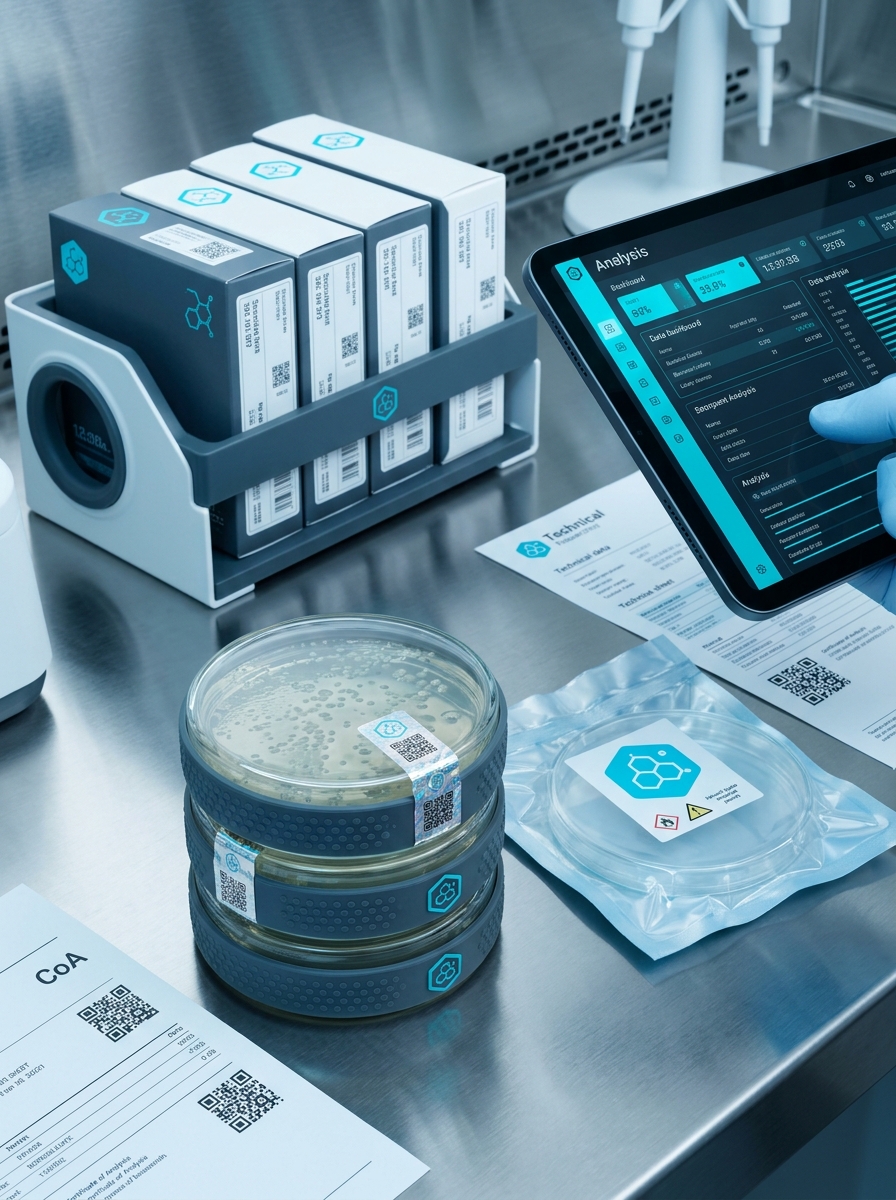
Petri dish packaging serves as the critical first line of defense for laboratory sterility and sample integrity. Designing these specialized containers requires a meticulous balance between structural durability and visual clarity. Beyond mere containment, effective packaging must ensure airtight seals and incorporate ergonomic features tailored for rapid, repetitive handling in high-stakes research settings.
Modern design principles extend into visual aesthetics, where color-coded labeling and minimalist typography play a vital role in reducing administrative errors and enhancing brand recognition. By integrating high-quality material science with intuitive graphic communication, manufacturers can transform basic laboratory disposables into precision instruments. Understanding these essential concepts is key to optimizing both the functionality and professional appeal of scientific equipment in today's demanding clinical and educational environments.
Fundamentals of Laboratory Sterility and Protection
Maintaining absolute sterility is paramount when using a Petri dish to ensure accurate microbiological results. Laboratory protection begins with selecting the appropriate material: heat-resistant borosilicate glass, which withstands repeated sterilization via autoclaving, or pre-sterilized, disposable polystyrene for single-use applications.
To prevent cross-contamination, researchers must employ rigorous aseptic techniques. This involves working within a laminar flow hood or near a Bunsen burner to create a sterile field. The dish lid is a critical protective feature, designed to allow essential gas exchange while filtering out airborne contaminants. Proper handling-minimizing the duration the dish remains open and utilizing sterilized loops-safeguards the culture's integrity. Ultimately, high sterility standards, including gamma radiation for plasticware, ensure that only the intended microorganisms flourish during incubation.
Material Science in High-Performance Dish Packaging
The integrity of a petri dish depends heavily on high-performance packaging engineered through advanced material science. Manufacturers utilize medical-grade polymers and specialized barrier films to ensure long-term sterility and structural protection during transport and storage.
Key material considerations in this field include:
- Thermal Stability: Packaging materials must withstand rigorous sterilization methods, such as Gamma irradiation or Ethylene Oxide (EtO), without degrading or becoming brittle.
- Barrier Performance: Advanced plastics provide essential moisture and gas barriers, preventing the dehydration of agar-filled dishes and protecting against atmospheric contaminants.
- Biocompatibility: Modern resins are designed to be chemically inert, ensuring no leachable substances compromise sensitive microbial cultures.
By integrating these sophisticated materials, laboratory suppliers maintain the high optical clarity and contamination-free environment essential for precise scientific research.
Ergonomic Features for Lab Efficiency and Safety
Modern Petri dish designs prioritize ergonomics to enhance laboratory productivity and researcher safety. High-quality dishes often feature integrated stacking rings, which provide superior stability during transport and storage, significantly minimizing the risk of accidental spills or culture loss.
To ensure both safety and biological integrity, many lids incorporate ventilation lugs that facilitate consistent gas exchange while preventing vacuum formation. For improved handling, textured gripping rims allow for secure, one-handed manipulation, reducing the likelihood of contamination from drops. Additionally, frosted marking areas and high-clarity polymers streamline sample identification and microscopic analysis. These ergonomic refinements optimize high-throughput workflows, reduce repetitive strain, and maintain sterile environments in microbiological research and clinical diagnostics.
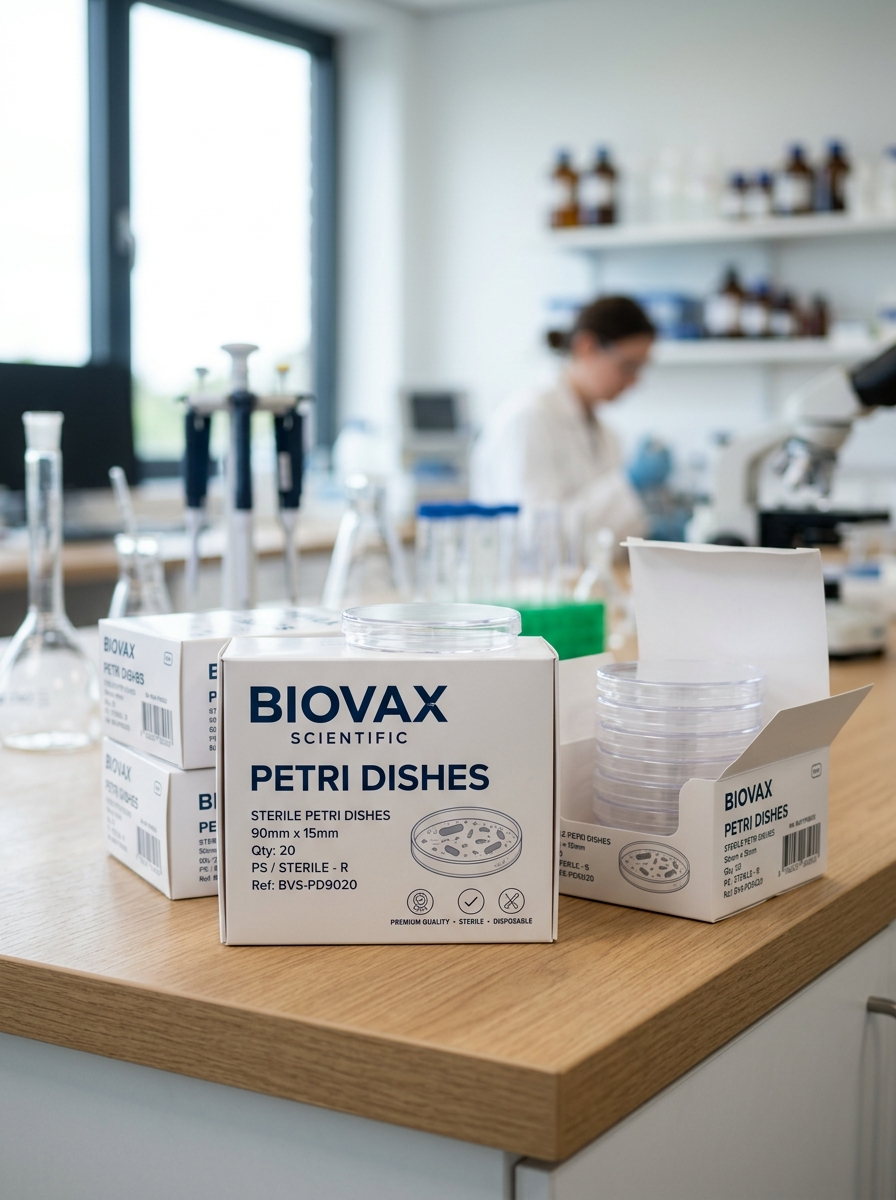
Visual Hierarchy and Branding in Scientific Supply
In the competitive landscape of laboratory equipment, visual hierarchy and branding are essential for safety, efficiency, and market differentiation. For the common petri dish, manufacturers employ strategic design to communicate technical specifications and quality standards instantly.
Effective branding signals adherence to rigorous sterility levels and material integrity, building trust with researchers. Visual organization on packaging and product labeling prioritizes critical data, such as surface treatment types (e.g., TC-treated), dimensions, and lot numbers. This structural clarity minimizes human error in fast-paced lab environments.
Furthermore, distinct color-coding and typography help distinguish specialized vessels-such as those for anaerobic microbiology-from standard agar plates. By optimizing these visual cues, scientific suppliers ensure their products are recognizable functional assets that support experimental reproducibility and laboratory efficiency.
Structural Integrity for Global Distribution Chains
Ensuring the structural integrity of a Petri dish is paramount for maintaining biological consistency across global distribution chains. These essential laboratory vessels must withstand significant mechanical stresses, including high-frequency vibrations, stack-pressure, and rapid temperature fluctuations encountered during international transit.
Modern manufacturing utilizes medical-grade, virgin polystyrene to achieve an ideal balance of rigidity and optical clarity. Critical engineering features include:
- Reinforced Rims: These prevent edge-cracking and breakage during high-speed automated handling.
- Uniform Wall Thickness: Consistency ensures thermal stability and prevents warping during sterilization or incubation.
- Dimensional Stability: Precision molding ensures compatibility with global laboratory automation and robotics.
By prioritizing robust physical design, suppliers mitigate the risk of hairline fractures that compromise sterility, ensuring researchers receive reliable, contaminant-free tools for sensitive microbial cultivation regardless of the distance traveled.
Compliance and Regulatory Labeling Standards
Petri dishes must adhere to rigorous compliance and regulatory labeling standards to ensure laboratory safety and experimental integrity. In the medical and diagnostic fields, these tools often fall under ISO 24998, which specifies requirements for plastic laboratory ware.
Standardized labeling provides essential data for quality control and traceability, including:
- Sterility Indicators: Clearly marking items as "Sterile R" (gamma radiation) or "EO" (ethylene oxide).
- Traceability Codes: Batch or lot numbers used to track manufacturing history.
- Regulatory Marks: Such as the CE mark for European markets or FDA registration for In Vitro Diagnostic (IVD) use.
- Material Specifications: Identifying the type of polymer, such as optical-grade polystyrene.
Proper labeling ensures researchers can maintain high standards of reproducibility while meeting legal requirements for clinical applications.
Sustainable Materials for Greener Laboratory Practices
The environmental impact of traditional petri dishes, typically manufactured from single-use polystyrene, has prompted a significant shift toward eco-friendly laboratory solutions. To foster sustainable microbiology, many facilities are transitioning back to reusable borosilicate glass dishes, which provide excellent thermal shock resistance and can withstand repeated autoclave sterilization cycles.
Furthermore, innovations in biodegradable bioplastics and recyclable polymers are emerging as viable alternatives for specialized cultures. These materials aim to maintain high optical clarity and sterility while reducing plastic waste. By adopting these sustainable materials, laboratories can minimize their carbon footprint and align their research workflows with green chemistry principles, ensuring that scientific advancement does not come at the cost of environmental health.
Stackability and Spatial Optimization in Storage
Modern Petri dishes are engineered for maximum laboratory efficiency through specialized stackable designs. Most dishes feature a raised outer rim on the lid or a slightly recessed base, creating an interlocking mechanism that ensures vertical stability. This design prevents slipping and tipping, which is crucial when transporting multiple cultures or organizing high-density samples.
Spatial optimization is essential in microbiology, where incubator and refrigerator space is often limited. By allowing for secure vertical stacking, Petri dishes minimize their footprint, enabling researchers to manage hundreds of samples simultaneously. This organized storage approach also improves airflow and temperature uniformity around the plates. Furthermore, standardized dimensions facilitate the use of automated stacking systems and storage racks, streamlining laboratory workflows and reducing the risk of accidental cross-contamination or breakage.
Emerging Trends in Specialized Bio-Packaging
The evolution of the Petri dish is increasingly driven by innovations in specialized bio-packaging. Modern trends focus on maintaining sterility while promoting sustainability. Manufacturers are transitioning toward biodegradable, medical-grade polymers that offer chemical resistance without the environmental footprint of traditional plastics.
Key advancements include:
- Smart Packaging: Integration of RFID tags and temperature sensors for real-time monitoring of sensitive cultures.
- Enhanced Sterilization: Gamma-irradiated, vacuum-sealed multi-packs that extend shelf life and prevent contamination.
- Automated Compatibility: Ergonomic designs featuring anti-slip ribs and stackable geometries optimized for high-throughput robotic workflows.
These bio-packaging breakthroughs ensure that Petri dishes provide a stable, gas-permeable environment, critical for accurate microbial analysis and cellular research.
Integrating Aesthetics with Functional Laboratory Design
The evolution of the Petri dish demonstrates how aesthetic precision enhances laboratory functionality. In modern research environments, the design of these vessels goes beyond simple containment. High-quality borosilicate glass and crystal-clear polymers are selected not only for durability but for their optical clarity, which is essential for high-resolution imaging and accurate manual observation.
Integrating sleek, stackable geometries and uniform dimensions streamlines workflow efficiency and improves spatial organization within incubators. Aesthetic clarity reduces visual noise, allowing researchers to identify microbial colonies and morphological changes with greater accuracy. By prioritizing a "form follows function" approach, contemporary Petri dishes facilitate a more intuitive scientific process. This synergy between elegant design and rigorous technical standards ensures the laboratory remains a space of both high productivity and professional sophistication.
Leave a comment