
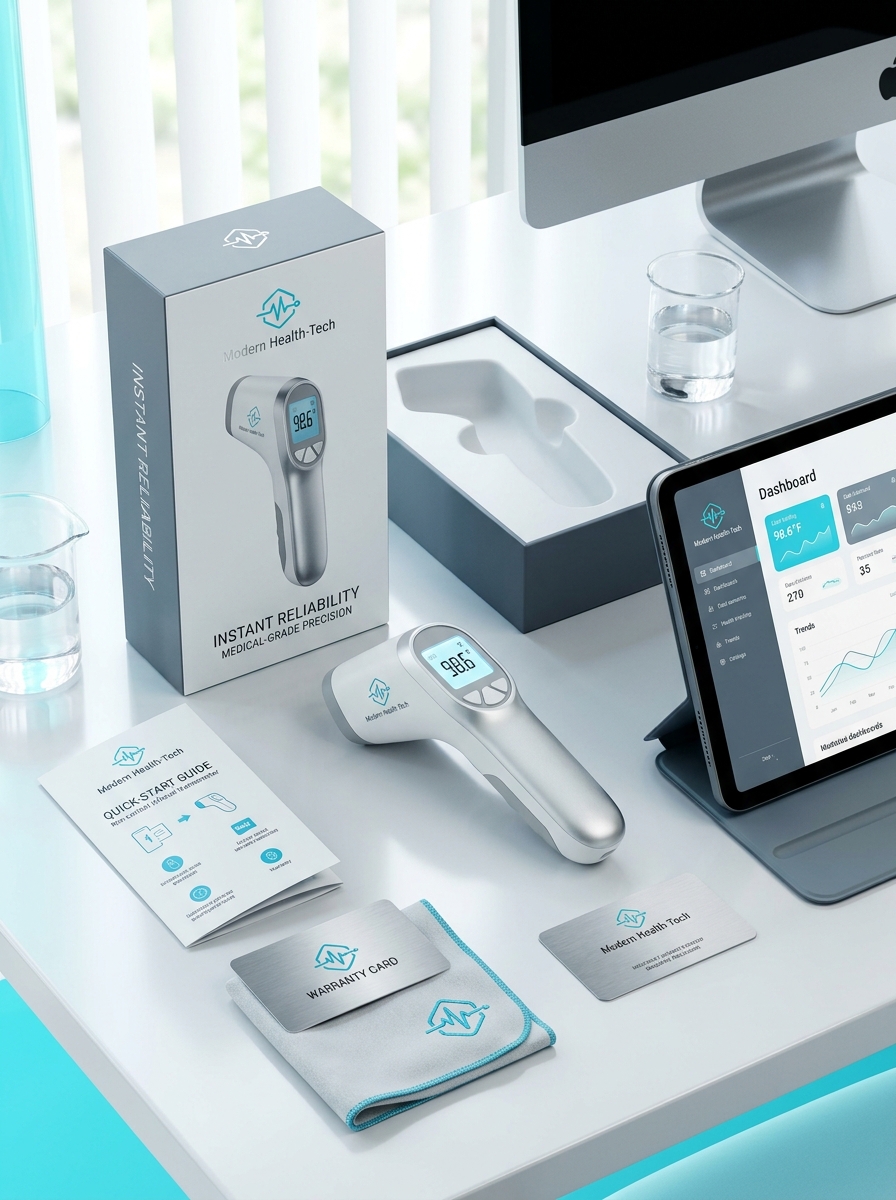
Modern medical technology requires a visual language that balances clinical precision with user accessibility. For infrared thermometer packaging design, the exterior serves as the primary touchpoint for building consumer confidence and ensuring safety compliance. Effective packaging transcends mere protection; it acts as a silent communicator of accuracy and reliability.
By integrating minimalist aesthetics with clear hierarchical information, manufacturers can bridge the gap between technical complexity and everyday usability. This exploration of key aesthetic and conceptual guidelines delves into how strategic color palettes, structural ergonomics, and sustainable materials define the next generation of non-contact thermal diagnostics. Mastering these design principles is essential for brands aiming to differentiate their hardware in the healthcare market while maintaining a professional, sterile, and trustworthy visual identity.
The Evolution of Infrared Thermometer Packaging Standards
The evolution of infrared thermometer packaging reflects significant advancements in precision electronics and global health regulations. Early packaging prioritized basic impact resistance; however, modern standards have shifted toward comprehensive environmental shielding and clinical compliance.
Current industry benchmarks now mandate ISO-compliant materials that incorporate anti-static linings to protect sensitive thermopile sensors. To ensure long-term accuracy, packaging often includes moisture-vapor barriers that prevent internal component oxidation.
Furthermore, the transition to medical-grade packaging includes sterile barrier systems and UDI (Unique Device Identification) for enhanced traceability. As the industry moves toward sustainability, manufacturers are adopting biodegradable substrates that maintain structural integrity. This evolution ensures that infrared thermometers remain calibrated and reliable, transitioning safely from high-tech production lines to critical point-of-care environments.
Defining the Visual Identity for Medical Grade Devices
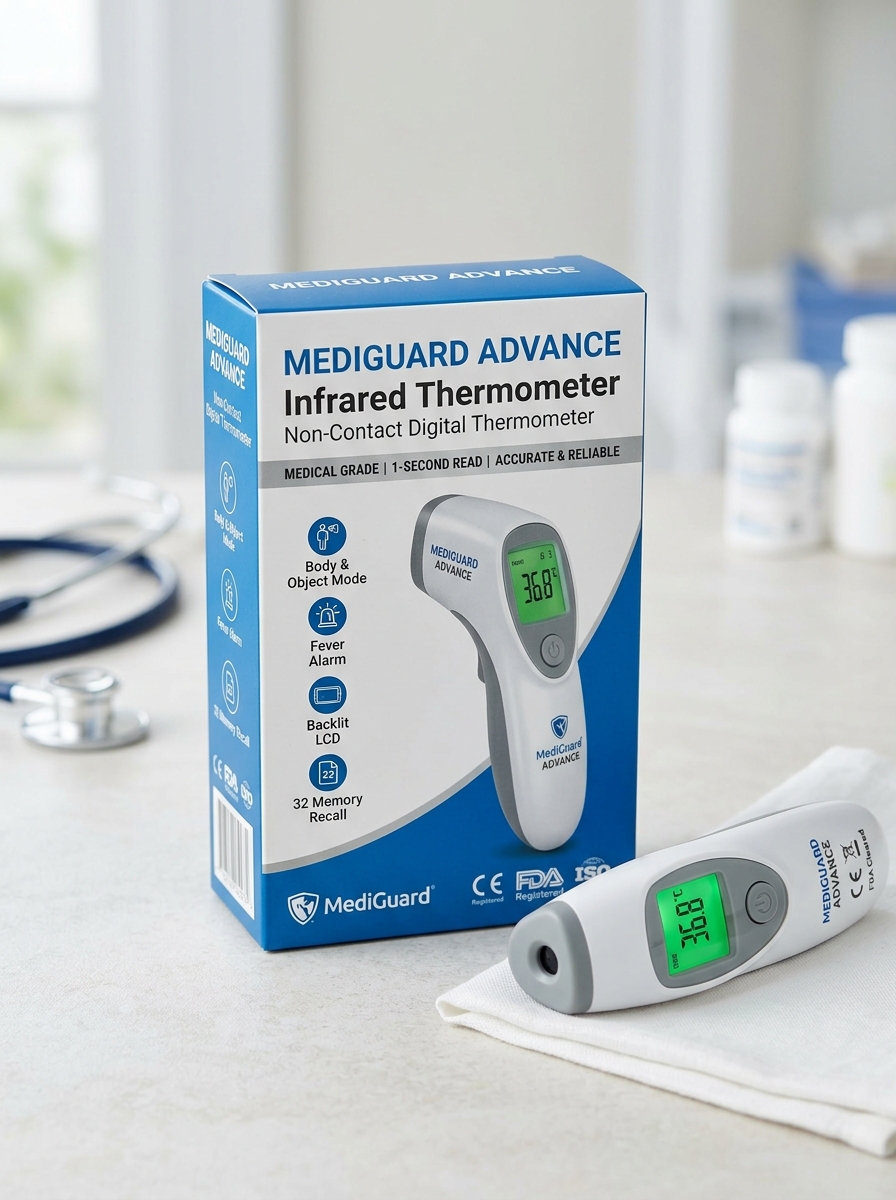
The visual identity of a medical-grade infrared thermometer is meticulously engineered to communicate precision, safety, and clinical trust. Unlike standard consumer electronics, these devices utilize a specific design language characterized by ergonomic forms and intuitive interfaces that ensure speed and accuracy in high-pressure healthcare environments.
Key elements defining this professional visual identity include:
- Clinical Color Palettes: Use of sterile whites, soft cyans, and "hospital blues" to reinforce hygiene and professional reliability.
- Visual Feedback Systems: High-contrast LCD screens featuring color-coded backlighting (Green, Orange, Red) for instant fever identification.
- Material Integrity: Smooth, non-porous medical-grade plastics designed to withstand frequent chemical disinfection without degradation.
By balancing minimalist aesthetics with functional clarity, the visual identity distinguishes a certified diagnostic tool from basic hardware, fostering immediate confidence for both practitioners and patients.
Color Psychology in Healthcare Product Design
In the design of infrared thermometers, color psychology is essential for establishing user trust and clinical authority. Manufacturers typically select a palette of white, light gray, and soft blue to communicate sterility, precision, and professional reliability. White symbolizes cleanliness and hygiene, while blue accents evoke calmness, helping to reduce patient anxiety during temperature screenings.
Beyond aesthetics, functional color mapping is critical for rapid diagnostics. Many digital thermometers utilize color-coded LCD backlights to provide immediate visual feedback: green indicates a normal temperature, yellow signals a low-grade fever, and red alerts the user to high-risk fever levels. This intuitive use of color ensures that data is interpreted instantly and accurately. By aligning visual design with psychological triggers, infrared thermometers become more accessible and effective tools in both clinical and home environments.
Typography and Information Hierarchy for Readability
For an infrared thermometer, display design is critical for rapid data interpretation. A well-defined information hierarchy ensures that the user's eye is immediately drawn to the most vital data: the temperature reading.
To optimize readability, manufacturers utilize specific typographic strategies:
- Primary Focal Point: The current temperature is displayed in a large, bold, sans-serif font to ensure it is legible from a distance.
- Secondary Data: Measurement units (°C or °F), battery life, and mode indicators (Body vs. Surface) are scaled smaller to prevent visual clutter.
- Visual Coding: Backlight color-coding (green, yellow, red) acts as a non-verbal layer of hierarchy, providing instant feedback on fever status.
By prioritizing typography and logical grouping, these devices allow for quick, error-free assessments in high-pressure medical or industrial environments.
The Role of High Quality Product Imagery and Renderings
For an infrared thermometer, high-quality imagery and 3D renderings are essential for bridging the gap between technical specifications and consumer understanding. These visuals allow potential buyers to inspect the non-contact sensor, ergonomic grip, and backlit LCD interface in vivid detail.
Photorealistic renderings provide a 360-degree perspective, highlighting the device's build quality and internal components like the thermopile sensor. In medical and industrial sectors, where precision is vital, professional imagery builds immediate credibility and trust.
By utilizing high-resolution visuals and lifestyle shots, manufacturers can demonstrate the thermometer's ease of use in real-world environments. Clear, detailed imagery effectively communicates the product's value proposition, ensuring that customers feel confident in the accuracy and reliability of their temperature measurement tool.
Material Selection and Eco-Friendly Packaging Solutions
The manufacturing of high-precision infrared thermometers focuses on durability and sustainability. The device housings are typically constructed from medical-grade ABS plastic, chosen for its impact resistance and antimicrobial properties. Internal components, such as thermopile sensors and germanium lenses, are selected for their long-term stability, reducing electronic waste through product longevity.
To further minimize environmental impact, manufacturers are pivoting toward eco-friendly packaging. Traditional plastic blister packs are being replaced with 100% recyclable, FSC-certified cardboard and molded pulp inserts. By utilizing soy-based inks and eliminating non-biodegradable foams, brands ensure that the packaging is as advanced as the thermal sensing technology inside. These sustainable practices meet global regulatory standards while appealing to environmentally conscious consumers, balancing technical performance with a reduced ecological footprint.
Enhancing User Experience Through Intuitive Unboxing
The initial interaction with an infrared thermometer significantly impacts user satisfaction and device trust. An intuitive unboxing experience focuses on immediate utility, ensuring the tool is ready for non-contact temperature measurement straight out of the box.
To optimize this process, manufacturers prioritize the following semantic elements:
- Ready-to-Use Setup: Including pre-installed batteries and calibration certificates to eliminate operational friction.
- Visual Quick-Start Guides: Simplified instructions that highlight the laser-guided aiming system and backlit LCD interface.
- Accessible Ergonomics: Packaging that presents the trigger and mode buttons (Celsius/Fahrenheit) prominently.
By streamlining the transition from packaging to professional use, brands reinforce the device's precision and reliability. A seamless unboxing ensures that whether for medical, industrial, or culinary applications, the user feels confident in the thermometer's accuracy and safety protocols from the very first second.
Regulatory Compliance and Technical Specification Layouts
Ensuring the safety and precision of infrared thermometers requires strict adherence to international standards. Regulatory compliance is foundational, often involving FDA 510(k) clearance for medical-grade devices or CE Marking for the European market. Manufacturers must also follow ISO 13485 quality management systems to guarantee consistent production standards and RoHS compliance for environmental safety.
Technical specification layouts provide critical data for performance verification. Key parameters include the Distance-to-Spot (D:S) ratio, emissivity settings (fixed or adjustable), and spectral response. For clinical use, high-accuracy ranges (typically ±0.2°C) are highlighted, while industrial layouts prioritize wide temperature ranges and rapid response times. Standardized layouts ensure users can quickly identify battery life, data logging capabilities, and environmental operating limits, ensuring the thermometer meets specific application protocols.
Building Consumer Trust with Minimalist Aesthetic Principles
In the medical device industry, an infrared thermometer must communicate accuracy and reliability at a glance. Utilizing minimalist aesthetic principles is a strategic way to foster consumer trust. By stripping away non-essential visual elements, the design highlights the device's core functionality: providing fast, non-contact temperature readings.
A clean, intentional design reduces user anxiety and cognitive load, which is essential during health screenings. Key semantic features include:
- Intuitive Interfaces: Simple button configurations that ensure error-free operation.
- High-Contrast Displays: Large, clear typography for immediate data interpretation.
- Sleek Ergonomics: Uncluttered forms that signal professional-grade technology and hygiene.
When an infrared thermometer looks streamlined and purposeful, users perceive it as more precise. This minimalist approach aligns product appearance with technological sophistication, building lasting brand credibility through transparency and ease of use.
Future Trends in Smart and Connected Device Packaging
As infrared thermometers become central to home health monitoring, packaging is evolving into an interactive extension of the device. Future trends focus on integrating smart connectivity and sustainability to enhance user experience and device longevity.
- NFC and QR Integration: Smart packaging will feature embedded NFC tags, allowing users to instantly sync their infrared thermometer with mobile health apps for automated data logging and calibration checks.
- Active Protective Materials: Innovations in moisture-wicking and anti-static sustainable materials will better protect sensitive thermopile sensors from environmental degradation.
- AR-Enabled Tutorials: Augmented Reality (AR) markers on the box will provide 3D visual guides, teaching users the precise distance and positioning required for accurate non-contact readings.
These advancements in intelligent packaging ensure that digital thermometers remain precise, secure, and seamlessly integrated into the modern connected health ecosystem.
Leave a comment