
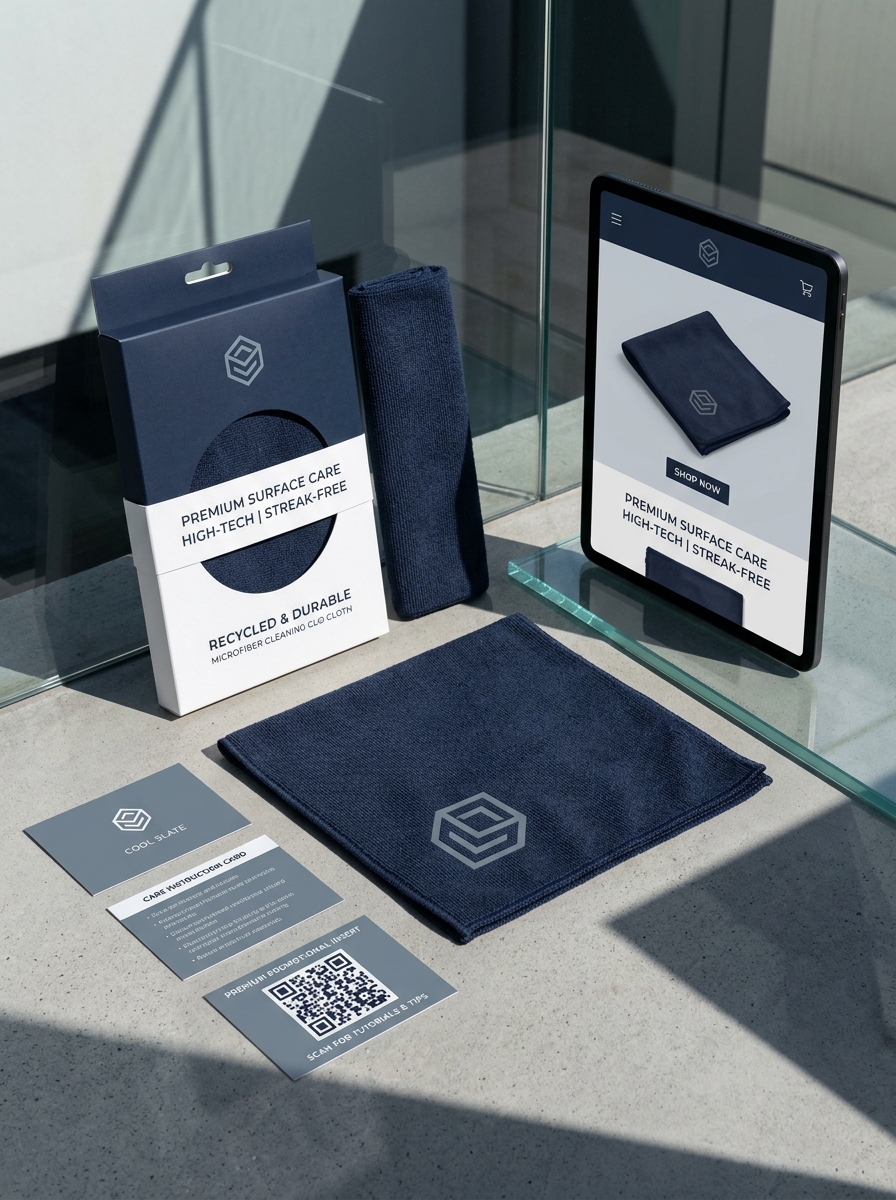
The evolution of the home care industry has transformed microfiber cleaning cloth packaging from a basic necessity into a powerful vehicle for brand storytelling. As consumers increasingly seek quality and performance, the design aesthetics of a product's exterior serve as the first point of contact, signaling both the cloth's premium texture and its cleaning efficiency.
Successful visual brand concepts leverage a strategic mix of minimalist typography, color psychology, and tactile finishes to differentiate products on crowded retail shelves. By integrating sustainable materials and transparent windows that showcase the fabric's weave, brands can foster trust and communicate functional value instantly. This article examines the core principles of high-impact packaging design, focusing on how visual identity influences buyer psychology and strengthens market positioning for modern cleaning solutions.
Defining the Visual Identity for Premium Microfiber Products
Establishing a visual identity for premium microfiber cleaning cloths requires a focus on material density and specialized finishing. High-performance products are visually distinguished by their GSM (grams per square meter); a higher, plusher pile signals superior absorbency and durability to the consumer.
Key aesthetic markers of quality include ultrasonic laser-cut edges or silk-banded borders, which prevent fraying and surface scratching. Furthermore, a professional color-coding system-ranging from deep automotive blues to streak-free glass greens-helps define the brand's utility. By highlighting the intricate "split-fiber" technology through clear, high-resolution textures, brands communicate technical excellence. This cohesive visual strategy ensures that premium microfiber tools are immediately recognizable as high-end, reliable solutions for professional detailing and household maintenance.
Target Audience Alignment and Market Positioning Strategies
Successful market positioning for microfiber cleaning cloths involves aligning specific product attributes with distinct consumer segments. To achieve competitive advantage, brands should categorize their strategies based on utility and value propositions:
- Professional Maintenance: Position high-GSM (grams per square meter) cloths as durable, industrial-grade tools that lower long-term overhead by reducing chemical use.
- Eco-Conscious Households: Emphasize sustainability, highlighting how reusable microfibers eliminate the need for single-use paper products.
- Automotive Specialists: Focus on scratch-free guarantees and high-absorbency waffle weaves for premium vehicle detailing.
- Electronics & Optics: Target tech users with ultra-fine, lint-free microfibers designed for sensitive screens and lenses.
By utilizing these semantic alignments, manufacturers can differentiate their offerings from generic competitors, effectively justifying premium pricing through specialized performance metrics and targeted messaging.
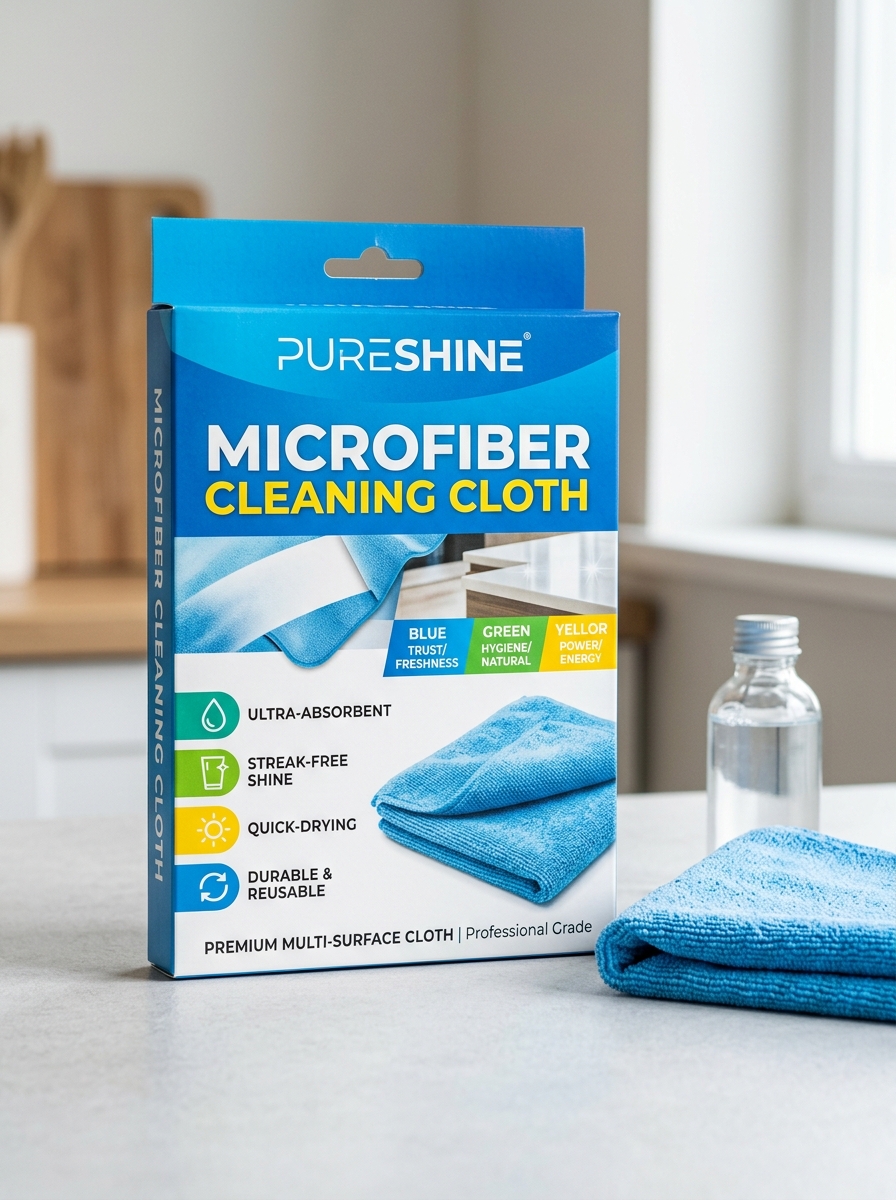
Color Psychology in Cleaning Tool Packaging Design
Color psychology is a strategic element in microfiber cleaning cloth packaging, significantly influencing consumer trust and perceived effectiveness. Manufacturers use specific palettes to communicate the primary function of the tool. Blue is frequently used to represent water, hygiene, and clarity, making it ideal for glass-cleaning microfibers. Green accents typically signal eco-friendly materials or sustainable manufacturing processes.
For heavy-duty tasks, vibrant shades like yellow or orange evoke a sense of energy and powerful degreasing capabilities. Meanwhile, white or neutral tones suggest purity and medical-grade sanitation. By leveraging these visual cues, brands can subconsciously guide shoppers toward the correct cloth for specific tasks-such as automotive detailing or high-shine surface polishing-ultimately enhancing the user's confidence in the product's performance before it is even unwrapped.
The Importance of Texture Windows and Tactile Interaction
When purchasing a microfiber cleaning cloth, tactile interaction plays a pivotal role in consumer confidence. Texture windows-die-cut openings in packaging-allow users to physically feel the material's weave, density, and softness before buying. Since the efficacy of microfiber is determined by its GSM (grams per square meter) and split-fiber technology, a hands-on experience is essential for verifying quality.
This sensory engagement helps customers distinguish between high-performance polishing cloths and standard utility rags. Tactile feedback confirms the cloth's ability to trap dust and absorb moisture without scratching sensitive surfaces. By prioritizing tactile interaction through strategic packaging design, brands provide the physical proof of quality that visual descriptions alone cannot convey, ultimately driving higher conversion rates and ensuring user satisfaction.
Typography Trends for Modern Utility Brands
In the competitive landscape of microfiber cleaning cloths, typography plays a crucial role in establishing brand authority and communicating technical excellence. Modern utility brands are increasingly adopting minimalist sans-serif typefaces to project a clean, high-tech image that mirrors the precision of synthetic fiber engineering.
Current trends favor geometric fonts with generous kerning, which enhances legibility on tactile packaging. Bold, heavy weights are often utilized to signal durability and industrial-strength performance, while lowercase styling provides a contemporary, approachable feel for household consumers.
By prioritizing clarity and functional aesthetics, brands can effectively highlight key product attributes-such as absorption rates and lint-free technology-ensuring that the visual language aligns with the advanced performance of modern microfiber textiles.
Sustainable Material Choices for Eco-Conscious Consumers
For eco-conscious consumers, selecting a high-quality microfiber cleaning cloth involves balancing cleaning efficiency with environmental responsibility. While traditional microfiber is synthetic, its extreme durability offers a sustainable alternative to single-use paper towels, significantly reducing household waste.
To further minimize your ecological footprint, look for cloths manufactured from recycled polyester (rPET). These innovative textiles repurpose post-consumer plastics into split-fiber technology that traps dust and grease without the need for harsh chemical detergents.
By choosing long-lasting, recycled materials, you support a circular economy. To ensure a truly green cleaning routine, use a laundry filtration bag when washing your cloths to prevent microplastic runoff. Investing in premium, sustainable microfiber ensures a professional-grade clean while protecting the planet for future generations.
Optimizing Information Hierarchy and Technical Specifications
To maximize the efficacy of microfiber cleaning cloths, it is essential to prioritize technical specifications within a clear information hierarchy. High-performance microfiber is defined by three primary metrics:
- GSM (Grams per Square Meter): Indicates density and absorbency; higher GSM values are superior for heavy-duty liquid retention and buffing.
- Fiber Blend: Typically an 80/20 or 70/30 ratio of polyester to polyamide. Polyamide provides the "closeness" and water absorption, while polyester offers structural scrubbing power.
- Split-Fiber Construction: Technical-grade cloths must feature split fibers to create microscopic hooks that mechanically trap bacteria and allergens.
By organizing data around these specifications, users can accurately match cloth density and weave types-such as waffle, suede, or terry-to specific tasks, ensuring optimal cleaning efficiency and surface safety.
Utilizing Iconography for Instant Product Use Visualization
Effective microfiber cleaning cloth packaging leverages intuitive iconography to enhance user comprehension. By replacing dense text with universal visual cues, consumers can instantly identify a cloth's specific application-whether it is engineered for streak-free glass polishing, heavy-duty kitchen scrubbing, or delicate electronic dusting.
Semantic icons act as a functional bridge, communicating surface compatibility and care instructions across language barriers. For instance, a water droplet symbol indicates high absorbency for wet spills, while a diamond icon highlights premium lint-free performance. This visual strategy reduces cognitive load, ensuring the right tool is selected for the right task, ultimately improving cleaning efficiency and prolonging the life of specialized textiles.
Elevating the Unboxing Experience for Brand Loyalty
The first physical interaction with a microfiber cleaning cloth significantly shapes consumer perception. Elevating the unboxing experience is a strategic way to cultivate brand loyalty and differentiate in a saturated market. Premium, eco-friendly packaging that protects the integrity of the ultra-fine fibers conveys a message of quality and professionalism.
Incorporating thoughtful touches-such as branded storage pouches, QR codes for care tutorials, or recycled paper wraps-enhances the perceived value of the product. This meticulous attention to detail transforms a simple cleaning tool into a professional-grade solution. By creating a memorable "reveal," brands trigger positive emotional responses and encourage customer retention. Ultimately, a superior unboxing experience reinforces the cloth's performance benefits, ensuring users trust the brand for all their delicate surface-care needs.
Maintaining Visual Consistency Across Multi-Surface Product Lines
Establishing visual consistency within microfiber cleaning cloth product lines is vital for brand recognition and functional organization. For multi-surface collections, manufacturers utilize standardized color-coding systems to help users distinguish between specific tasks, such as blue for glass and yellow for dusting. This visual shorthand prevents cross-contamination and improves workflow efficiency.
Consistency is further achieved by maintaining uniform fabric specifications, including GSM (grams per square meter), edge stitching styles, and texture patterns across the entire range. By aligning these physical attributes with cohesive packaging and logo placement, brands create a professional, trustworthy aesthetic. This semantic design approach ensures that whether a cloth is designed for automotive detailing or kitchen sanitation, it remains an identifiable part of a high-performance ecosystem, reinforcing quality expectations for the end consumer.
Leave a comment