
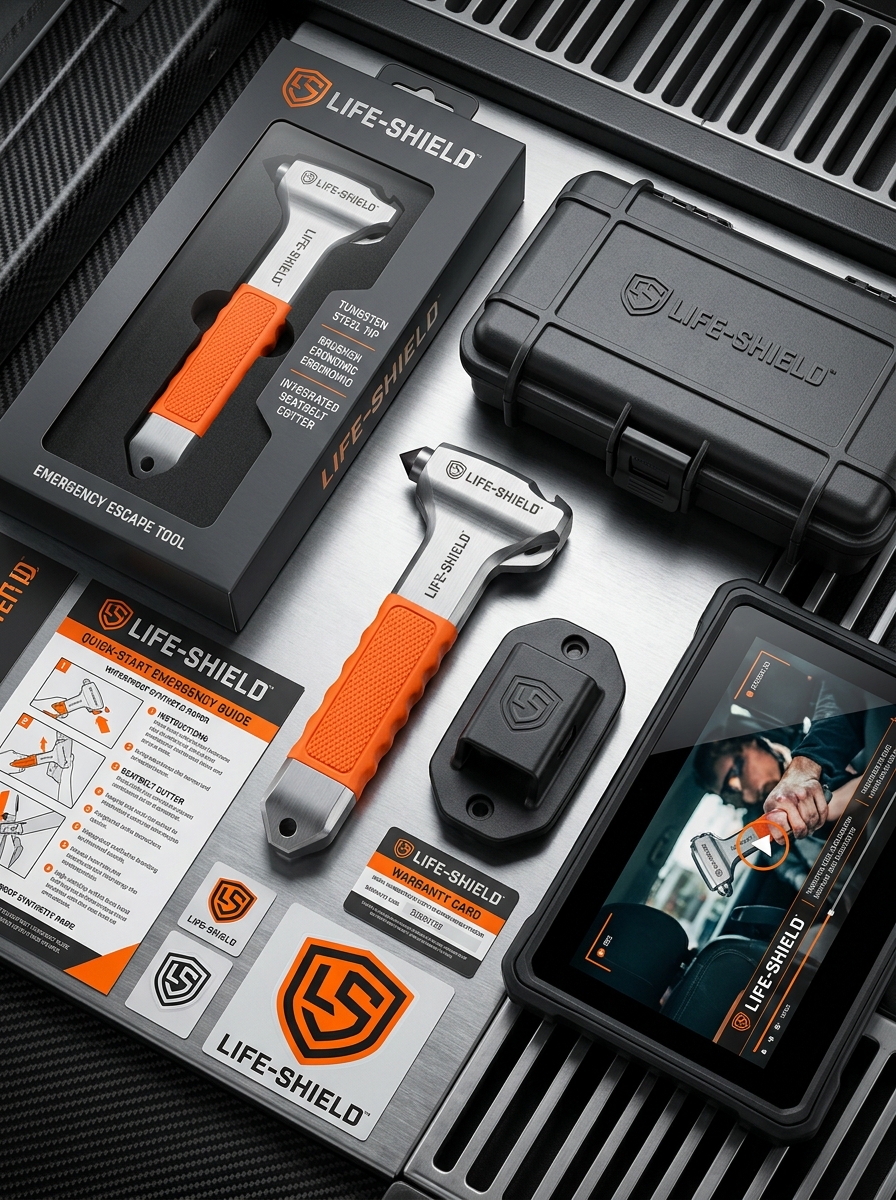
During life-threatening vehicular emergencies, response time is the ultimate determinant of survival. For safety equipment such as glass breakers and seatbelt cutters, the packaging design serves as the critical bridge between storage and deployment. Optimizing these containers requires a strategic focus on high-contrast visibility and rapid accessibility to ensure users can locate and retrieve tools under extreme stress or low-light conditions.
Effective packaging concepts move beyond mere protection, incorporating ergonomic release mechanisms and luminous indicators that minimize cognitive load. By prioritizing intuitive interaction and strategic placement, manufacturers can significantly reduce the precious seconds required to escape a compromised vehicle. This analysis examines how advanced structural design and sensory cues transform standard tool housing into an essential component of emergency preparedness.
The Critical Role of Visibility in Emergency Tool Packaging
In high-stress scenarios like vehicle submersions or cabin fires, every second is vital. The visibility of emergency escape tool packaging directly impacts survival rates. High-contrast colors, such as fluorescent orange or neon yellow, ensure that essential devices like window breakers and seatbelt cutters are immediately identifiable under extreme duress.
Effective packaging design often incorporates reflective strips or glow-in-the-dark materials. These features address environmental challenges such as low-light conditions, thick smoke, or total power failure. By prioritizing optical prominence, manufacturers reduce the "search time" for a panicked user. Strategic, high-visibility packaging ensures that the tool is not just present, but accessible, bridging the critical gap between a crisis and a successful escape.
Utilizing High-Contrast Color Palettes for Instant Recognition
In life-critical situations, every second counts. Emergency escape tools are strategically engineered with high-contrast color palettes-such as safety orange, neon yellow, or signal red-to ensure instant recognition amidst chaos. These vibrant hues create a sharp visual break from dark vehicle interiors or smoke-filled environments, significantly reducing reaction time.
By leveraging the principles of visual salience, manufacturers prioritize high-visibility finishes that stand out in low-light conditions. Whether it is a window breaker or a seatbelt cutter, the use of bold, luminous colors serves as a vital navigational cue. This strategic design choice enhances accessibility for all users, ensuring that life-saving equipment is easily locatable when visibility is compromised and adrenaline is high.
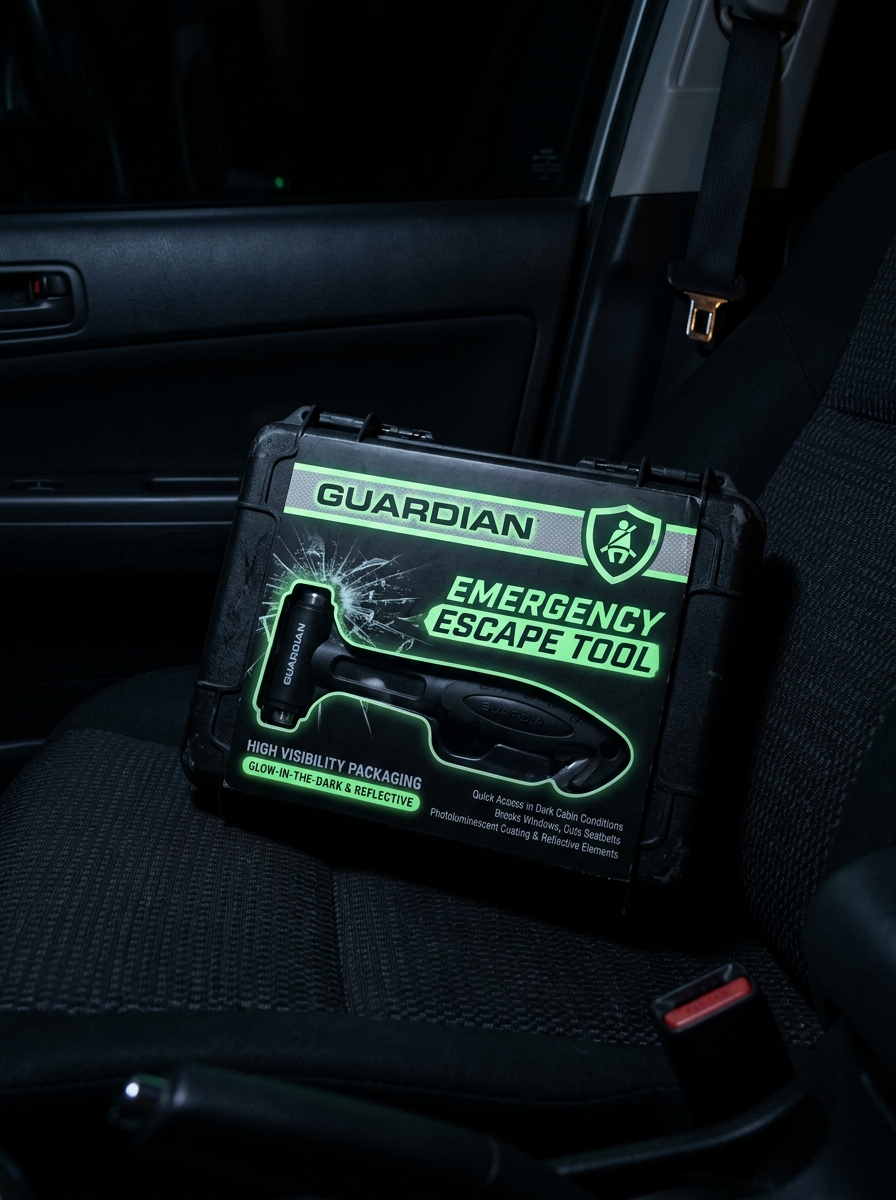
Integrating Photoluminescent and Reflective Elements for Dark Cabin Conditions
In critical emergencies, visibility is often the first casualty due to power failure, smoke, or submersion. To ensure an emergency escape tool is immediately locatable, modern designs integrate dual-visibility features: photoluminescent coatings and high-intensity reflective elements.
Photoluminescent materials absorb ambient light and provide a persistent glow, allowing users to identify the tool in total darkness without an external power source. Complementing this, reflective strips react instantly to flashlights or emergency beacons, creating a high-contrast visual signal. This hybrid approach minimizes search time during high-stress evacuations, ensuring that life-saving components like glass breakers and seatbelt cutters are accessible when every second counts. By prioritizing visual accessibility in low-light cabin conditions, these enhancements significantly improve survival outcomes during nighttime or subterranean accidents.
Designing Intuitive One-Motion Opening Mechanisms
In life-threatening situations, fine motor skills and cognitive processing speeds significantly decline. Designing one-motion opening mechanisms for emergency escape tools is critical for ensuring rapid egress. These mechanisms focus on "instinctive ergonomics," allowing a user to deploy the tool through a single, fluid action-such as a firm pull or a direct push-without navigating complex latches.
Key design elements for semantic optimization and safety include:
- Tactile Feedback: Textures that guide hand placement in low-visibility environments.
- High-Contrast Visuals: Color-coded triggers that stand out during a crisis.
- Zero-Obstruction Pathing: Eliminating secondary safety locks that could cause fatal delays.
By reducing the required physical steps to a singular motion, engineers minimize the panic-induced hesitation that often occurs during vehicle or building evacuations, ultimately saving lives through simplified mechanical engineering.
The Importance of Universal Mounting Systems for Quick Access
In life-threatening situations, accessibility is as vital as the tool itself. A universal mounting system ensures that emergency escape tools, such as window breakers and seatbelt cutters, are securely positioned and immediately reachable. These systems offer the necessary versatility to fit various vehicle interiors, from compact cars to heavy-duty trucks.
By utilizing standardized mounts, users can establish a consistent, intuitive location-such as the headrest, center console, or sun visor-reducing the "panic search" during a crisis. Secure mounting also prevents tools from becoming dangerous projectiles during a collision or getting lost under seats. For effective emergency preparedness, a universal mount guarantees that your life-saving equipment remains stable, visible, and ready for instant deployment when every second matters most.
Prioritizing Visual Clarity Through Simplified Instructional Pictograms
In high-stress emergency scenarios, the ability to process complex text diminishes significantly. Our emergency escape tool utilizes simplified instructional pictograms to ensure immediate, intuitive operation when every second counts. These universal visual cues are designed to bypass language barriers and cognitive delays, providing clear guidance on deploying the seatbelt cutter and identifying optimal glass strike points.
By prioritizing visual clarity, the design minimizes user hesitation during a crisis. High-contrast graphics ensure visibility in low-light or smoke-filled environments, allowing for rapid identification of functional components. This streamlined approach to instructional design ensures that any individual, regardless of their technical familiarity, can execute life-saving maneuvers effectively. Integrating non-verbal, high-recognition symbols is a critical safety standard for high-performance extraction devices.
Optimizing Material Durability Without Compromising Deployment Speed
In critical survival situations, an emergency escape tool must achieve a perfect equilibrium between structural resilience and instantaneous functionality. To maximize material durability, high-performance tools utilize heat-treated tungsten carbide tips and aerospace-grade aluminum bodies. These materials provide the hardness necessary to shatter tempered glass effortlessly without suffering structural fatigue or blunting over time.
Crucially, enhancing durability does not necessitate added bulk. By prioritizing high strength-to-weight ratios, engineers ensure that the tool remains lightweight for rapid, one-handed deployment. Advanced spring-loaded mechanisms and ergonomic grips allow for a low-inertia strike, ensuring that the device activates the moment it makes contact. This technical synergy between hardened composites and streamlined mechanical design ensures that users can execute a life-saving extraction in seconds, even under extreme physiological stress or underwater conditions.
Tactile Feedback and Textured Surfaces for Low-Visibility Situations
In critical emergencies like vehicle submersion or smoke-filled cabins, visibility is often non-existent. A high-quality emergency escape tool must rely on tactile feedback to ensure life-saving functionality when the user cannot see.
Manufacturers utilize textured surfaces, ergonomic ridges, and non-slip grips to guide the hand instinctively toward critical components. These physical cues allow survivors to differentiate between the seatbelt cutter and the glass breaker by touch alone.
By incorporating knurled patterns or specific contours, the tool remains operable even with wet or trembling hands. This sensory-focused design eliminates fumbling during high-stress moments, facilitating a rapid exit. In low-visibility environments where every second counts, tactile-optimized tools are essential for successful self-extraction and survival.
Validating Accessibility Through Stress-Simulated User Testing
To ensure an emergency escape tool performs reliably during a crisis, it must undergo rigorous stress-simulated user testing. This process evaluates the tool's accessibility by replicating high-pressure environments, such as vehicle submersions or low-visibility scenarios, where fine motor skills are often compromised by panic and adrenaline.
Testing focuses on the ergonomics of the device, ensuring it is intuitive for diverse users, including children and the elderly. Key validation criteria include:
- Tactile Feedback: Can the user identify and orient the tool by touch alone?
- Force Requirements: Does the activation mechanism accommodate users with limited physical strength?
- Deployment Speed: How quickly can the tool be retrieved and utilized under duress?
By simulating real-world stressors, manufacturers can refine designs to eliminate cognitive load, ensuring the tool remains a life-saving asset when seconds matter most.
Future Trends in Smart Packaging for Emergency Response Devices
The evolution of the emergency escape tool is increasingly driven by smart packaging innovations designed to maximize accessibility and situational readiness. Future trends focus on IoT integration and active packaging solutions that bridge the gap between storage and immediate action.
Key advancements shaping the industry include:
- NFC and QR Connectivity: Packaging that provides instant, offline digital instructions or emergency contact triggers via smartphone.
- Integrated Sensors: Smart labels that monitor environmental conditions or alert users when a tool has been tampered with or moved.
- Enhanced Visibility: Use of photo-luminescent materials and RFID tracking to ensure devices are locatable in zero-visibility conditions.
By prioritizing digital connectivity and intuitive design, these smart packaging trends ensure that life-saving equipment remains functional, visible, and easy to use during critical seconds of a crisis.
Leave a comment