
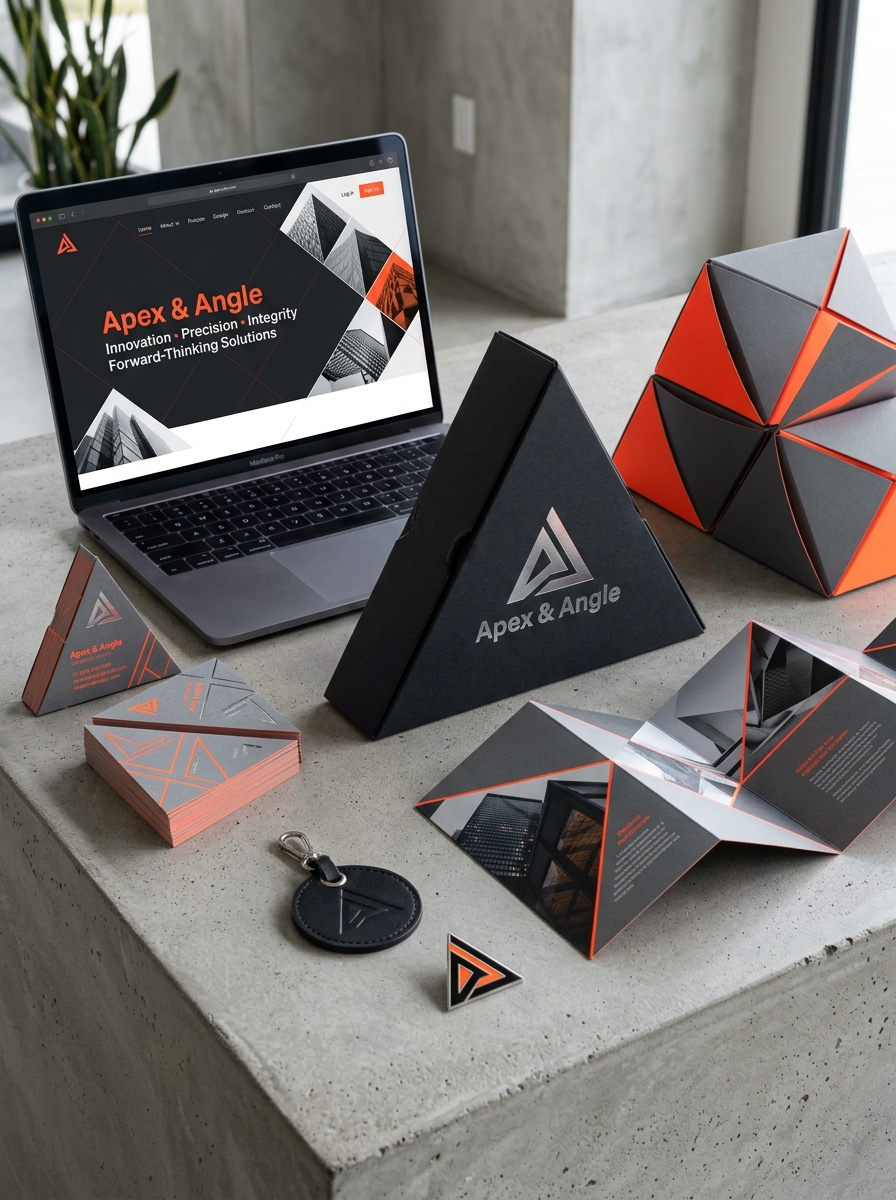
Triangular packaging design represents a sophisticated fusion of mathematical precision and creative artistry. By breaking away from standard rectangular norms, this geometric approach offers brands a unique opportunity to enhance shelf presence while maintaining structural integrity.
Mastering the principles of triangular structure involves understanding the balance between load-bearing efficiency and ergonomic handling. As modern brands seek distinctive identities, leveraging sharp lines and dynamic angles creates visually arresting containers that command attention. This exploration delves into the core elements of the triangular prism, focusing on how geometric stability and minimalist aesthetics combine to redefine the consumer experience through innovative form and function.
The Geometry of Triangular Structures in Modern Packaging
In modern packaging design, the triangle is prized for its inherent structural rigidity. Unlike other polygons, a triangle cannot be deformed without changing the length of its sides, making it the most stable geometric form. This property allows engineers to create lightweight containers that offer exceptional compression resistance and durability.
Triangular geometry is frequently utilized in corrugated reinforcements and prismatic box designs to maximize the strength-to-weight ratio. By distributing external pressure evenly across three planes, these structures protect fragile contents while reducing material consumption. Furthermore, the aesthetic appeal of triangular facets provides a contemporary edge in branding, while certain tessellated patterns allow for efficient nesting during transit. This fusion of geometric physics and sustainable design makes triangular structures a cornerstone of innovative logistical solutions.
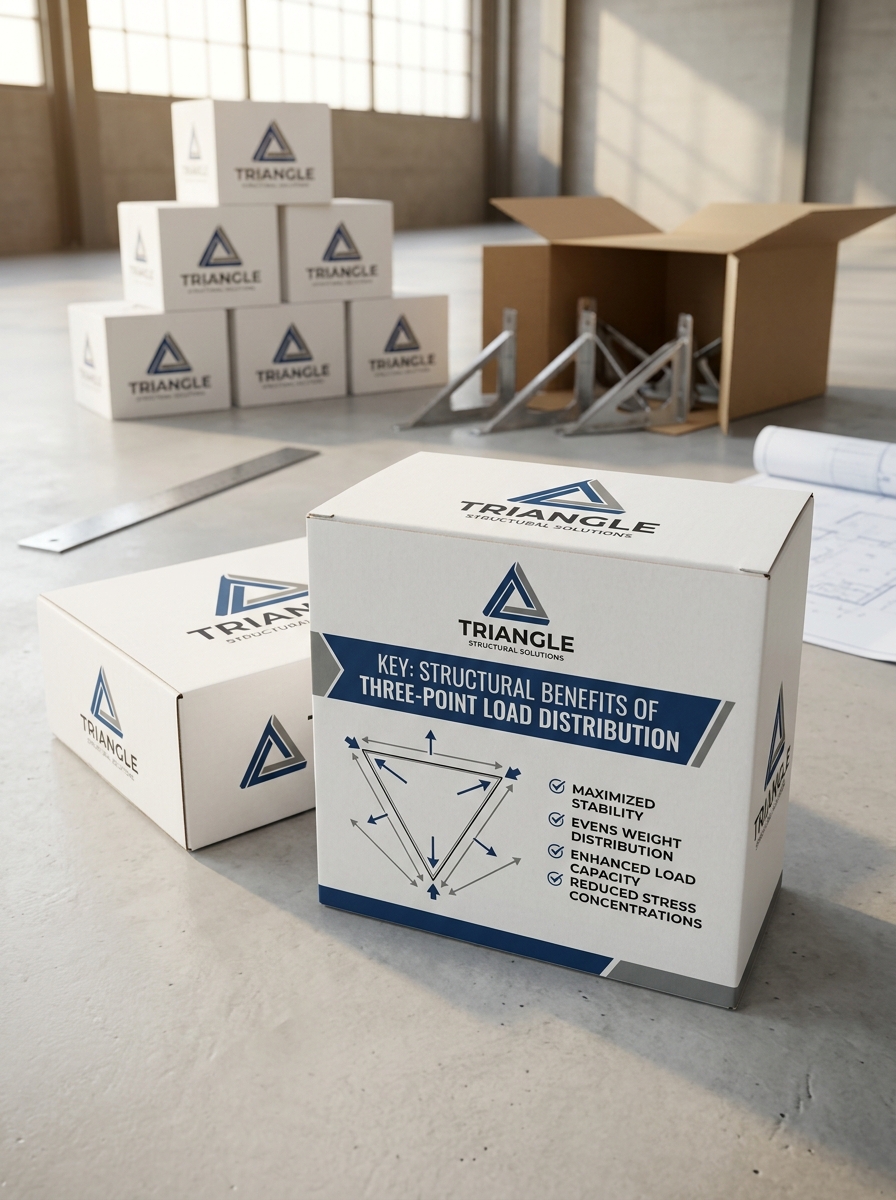
Structural Benefits of Three-Point Load Distribution
The triangle is the only polygon that inherently maintains its shape without requiring auxiliary reinforcements. This structural integrity stems from three-point load distribution, a principle where any force applied to a vertex is immediately dispersed across its three sides.
In engineering and architecture, this "tripod effect" offers several key advantages:
- Planar Stability: Three points define a unique plane, ensuring a stable foundation even on uneven surfaces.
- Geometric Rigidity: Unlike quadrilaterals, a triangle cannot be deformed into another shape without changing the physical length of its sides.
- Stress Management: Weight is efficiently converted into tensile and compressive forces, reducing the risk of structural failure.
This efficient weight-bearing capability makes triangular trusses essential for bridges, roof supports, and modern skyscrapers, providing maximum strength with minimal material weight.
Achieving Visual Balance with Asymmetric and Symmetric Forms
In geometric design, the triangle is a powerful tool for establishing visual weight and direction. Symmetric triangles, such as equilateral and isosceles forms, provide a sense of stability, permanence, and order. Their equal proportions create a centered focal point, making them ideal for grounded, harmonious compositions.
In contrast, asymmetric triangles-like scalene forms-introduce dynamic tension and movement. Because their sides and angles vary, they lead the eye along an active path, suggesting energy or progression. Achieving true visual balance involves a strategic blend of these two types. While symmetry anchors the viewer, asymmetry prevents stagnation. By manipulating these triangular forms, designers can create a sophisticated geometric hierarchy that guides attention while maintaining a cohesive and aesthetically pleasing structural equilibrium.
Tessellation Patterns for Optimized Logistics and Storage
Triangular tessellation is a vital geometric strategy used to achieve maximum spatial density in logistics and warehouse management. Unlike circular objects, equilateral triangles tile a two-dimensional plane perfectly without gaps or overlapping, ensuring 100% packing efficiency.
In storage environments, adopting triangular patterns eliminates the "dead space" typically found in traditional layouts. This geometric arrangement offers two primary advantages:
- Volume Utilization: Maximizes the number of units stored within a fixed footprint.
- Structural Integrity: The triangle's inherent rigidity allows for stable, high-density vertical stacking that resists deformation under heavy loads.
By utilizing these patterns, supply chain operations can optimize containerization, reduce shipping costs, and enhance the speed of automated retrieval systems through predictable, gapless spatial organization.
Material Science for Durable Geometric Enclosures
In structural engineering, the triangle serves as the fundamental building block for durable geometric enclosures. Unlike other polygons, triangles are inherently rigid, maintaining their shape under significant pressure without the need for additional reinforcement. Material science enhances this stability by utilizing advanced composites, high-strength alloys, and weather-resistant polymers tailored for triangular frameworks.
By selecting materials with high tensile strength and low thermal expansion, engineers can construct geodesic domes and faceted enclosures that withstand extreme environmental stress. These structures benefit from the triangle's unique ability to distribute loads evenly across its vertices, minimizing material fatigue.
Modern innovations in material engineering allow for lighter, more sustainable triangular modules. This synergy between geometric integrity and specialized material properties ensures the longevity and resilience of complex architectural enclosures in diverse climates.
Visual Hierarchy and Typography on Angular Surfaces
Designing within a triangular framework requires a strategic approach to visual hierarchy. Because the human eye naturally gravitates toward the apex, designers typically place primary headings at the sharpest point to establish an immediate focal point. Typography on angular surfaces must account for varying line lengths; as the shape narrows, text density increases, requiring precise leading and kerning adjustments to maintain legibility.
Alignment is crucial-centered text often complements the symmetry of equilateral triangles, while flush-left alignment creates dynamic tension on right-angled planes. Utilizing diagonal grids helps align letterforms with the surface's slant, preventing visual distortion. By balancing negative space against the diminishing width of the triangle, designers ensure that hierarchical depth is preserved without compromising the readability of the typeface.
Tactile Branding and the Ergonomics of the Triangle
Tactile branding leverages the triangle's unique geometry to create distinctive sensory associations. Ergonomically, the triangular form is highly effective; its three-sided structure provides natural anchor points for the human hand. This is frequently observed in ergonomic writing tools and hardware, where a triangular cross-section reduces muscle strain and prevents slipping.
In product design, the triangle's vertices offer clear haptic feedback, signaling precision and direction. Because the human grip often mimics a tripod shape, triangular objects offer an intuitive interface that balances comfort with control. Brands utilize these ergonomic advantages to ensure physical touchpoints feel secure and intentional.
By integrating the triangle into packaging and product architecture, companies bridge the gap between aesthetic identity and functional utility, making the brand experience both memorable and effortless to handle.
Innovation in Fold Lines and Die-Cutting Techniques
Triangle is at the forefront of packaging evolution, integrating advanced die-cutting techniques and precise fold line technology to enhance structural integrity. By utilizing high-precision tooling and automated mechanical systems, we ensure every crease is perfectly executed, minimizing material stress and reducing industrial waste.
Modern innovations in perforation and creasing allow for complex packaging geometries, catering to the growing demand for unique, shelf-ready designs. These refined processes significantly improve assembly speed and ensure consistency across high-volume production runs. By optimizing the interaction between the cutting blade and the substrate, Triangle achieves cleaner edges and stronger joints, resulting in superior product protection. Our commitment to engineering excellence drives operational efficiency while supporting sustainable manufacturing goals through highly optimized material usage.
Environmental Impact of Minimizing Excess Packaging Volume
Optimizing the Triangle of logistics-balancing cost, efficiency, and sustainability-begins with reducing excess packaging volume. Eliminating "shipped air" directly shrinks a company's environmental footprint by maximizing cargo density. When packaging is right-sized, more units fit into a single shipment, leading to fewer vehicles on the road.
Key environmental advantages include:
- Reduced Carbon Emissions: Fewer transport trips significantly lower fuel consumption and greenhouse gas output.
- Resource Conservation: Minimizing box dimensions decreases the demand for raw materials and secondary void fillers, such as plastic film or polystyrene.
- Waste Mitigation: Streamlined designs reduce the volume of post-consumer waste destined for landfills.
By addressing this critical vertex of the packaging Triangle, businesses achieve sustainable distribution while supporting global decarbonization goals.
Future Trends in Polyhedral and Prismatic Brand Identity
The evolution of visual storytelling is increasingly leaning toward polyhedral and prismatic designs, fundamentally anchored by the structural strength of the triangle. Future branding trends suggest a shift from static logos to dynamic, multifaceted geometries that adapt to immersive digital environments.
Designers are leveraging triangular facets to simulate 3D depth and light-refraction effects, symbolizing innovation, clarity, and multidimensionality. As Augmented Reality (AR) becomes a branding standard, the triangle serves as the primary building block for flexible, scalable systems.
Expect to see a rise in generative design, where triangular grids shift in real-time to reflect data or user interaction. This mathematical precision allows brands to maintain a cohesive identity while projecting a futuristic, avant-garde aesthetic that resonates with tech-forward audiences.
Leave a comment