
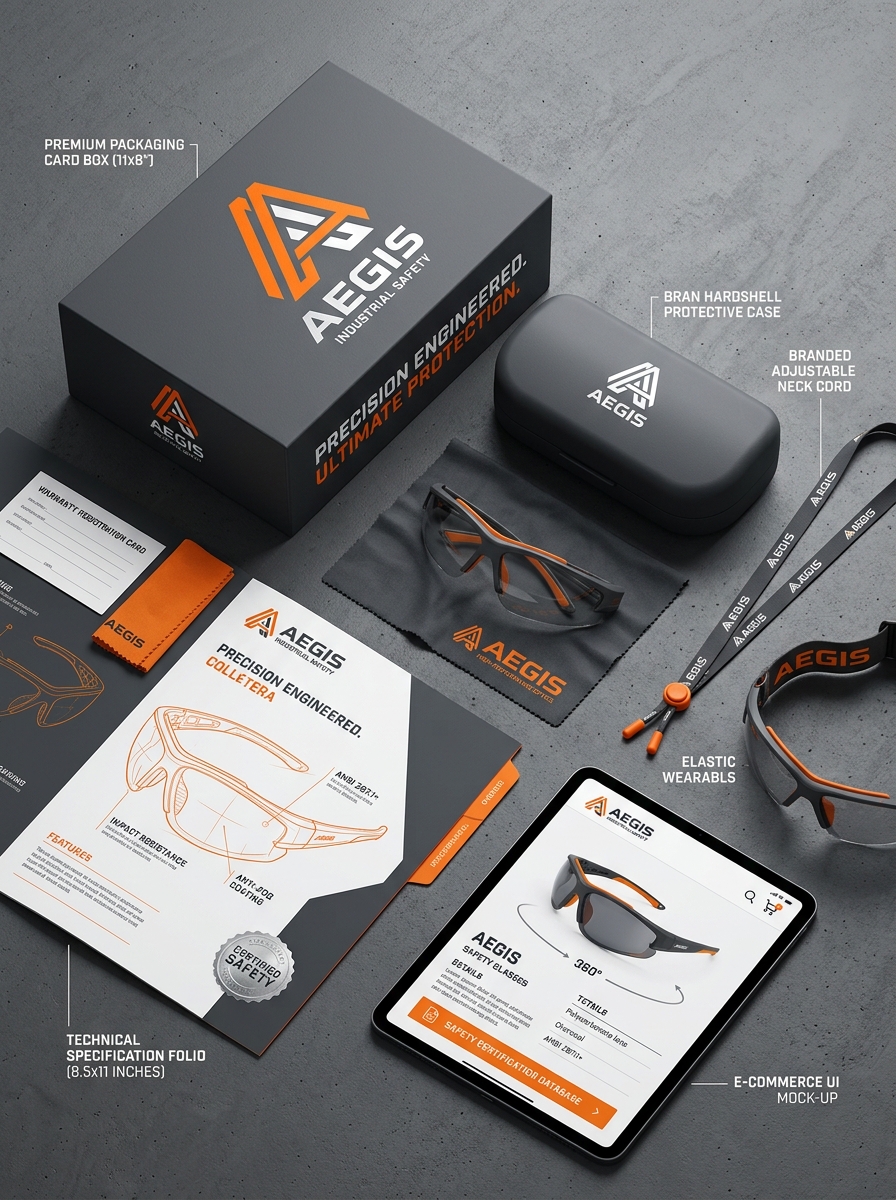
Modern safety eyewear requires a strategic approach to packaging that bridges the gap between rugged utility and high-end brand identity. Developing safety glasses packaging design involves more than just containment; it necessitates a sophisticated synergy of technical specifications and visual appeal. To succeed in both industrial and retail markets, designers must prioritize structural integrity to prevent lens degradation while integrating clear regulatory compliance data.
This exploration examines the core principles of achieving excellence in this niche, focusing on how material selection and ergonomic considerations enhance the user experience. By merging aesthetic refinement with mandatory safety standards, manufacturers can elevate their products from basic personal protective equipment to premium professional tools. Understanding these dual requirements is essential for creating packaging that protects, informs, and captivates the modern workforce.
Defining the Role of Packaging in Professional Safety Equipment
In the personal protective equipment (PPE) industry, packaging is far more than a logistical necessity; it is a critical safeguard for product integrity. For professional safety glasses, specialized packaging prevents surface abrasions, lens scratches, and structural compromises during transit and storage.
Strategically designed packaging also serves as a primary source of regulatory information. It displays essential certifications, such as ANSI Z87.1 or EN166 standards, ensuring users understand the specific impact ratings and UV protection levels provided.
Furthermore, professional-grade packaging supports workplace hygiene by keeping eyewear free from contaminants until the point of use. By integrating clear technical specifications and maintenance instructions, packaging ensures that safety eyewear remains compliant, functional, and reliable for high-risk industrial environments.
Material Selection for Durability and Environmental Responsibility
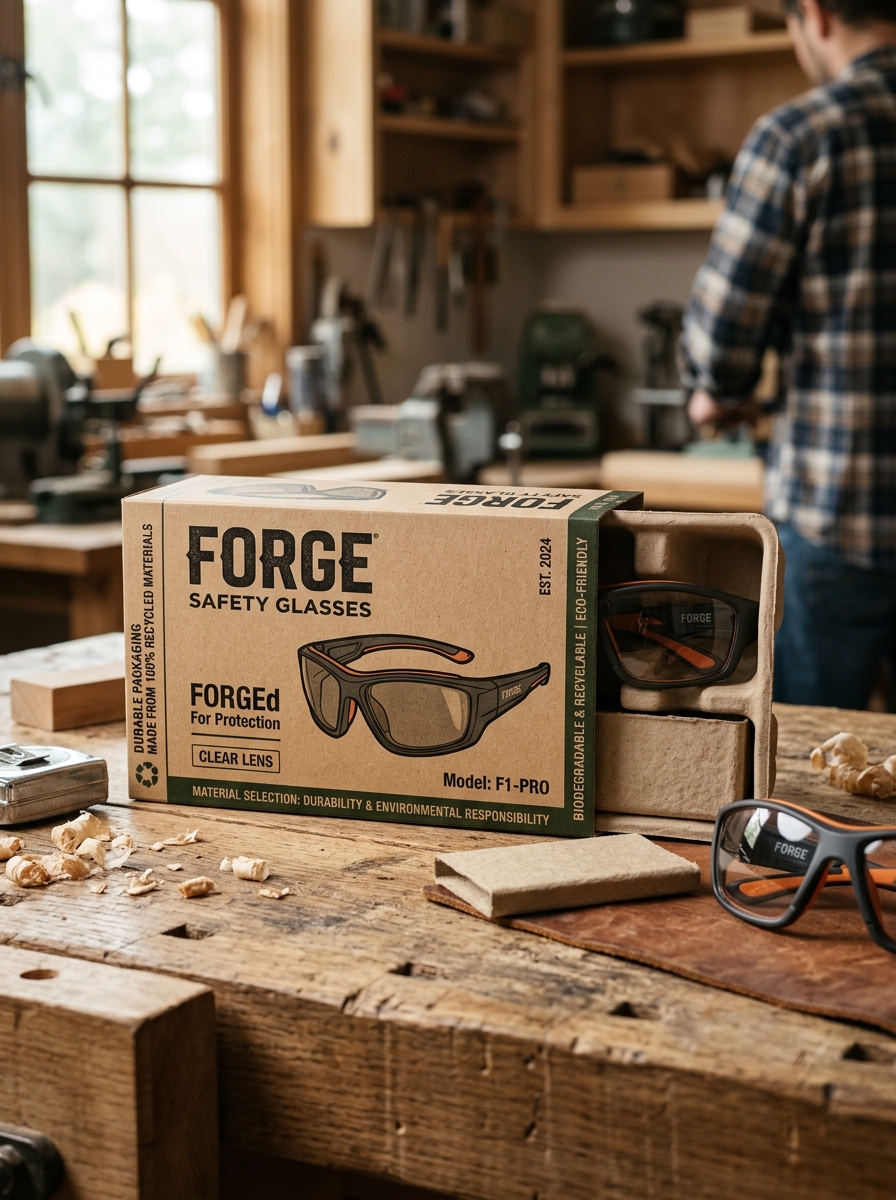
Selecting the right materials for safety glasses is essential for balancing high-impact protection with ecological stewardship. Polycarbonate remains the industry standard for durability, offering superior shatter resistance and lightweight comfort. To extend product lifecycles, advanced anti-scratch and UV-protective coatings are applied, which reduces industrial waste by minimizing the frequency of replacements.
Modern manufacturing is increasingly integrating environmental responsibility by utilizing recycled polymers and bio-based resins. These sustainable alternatives maintain rigorous ANSI Z87.1 safety standards while lowering the carbon footprint of production. By prioritizing high-performance, responsibly sourced materials, organizations can ensure workplace safety while supporting a circular economy. Choosing durable, recyclable eyewear protects both the workforce and the planet.
Integrating Brand Identity with Industrial Safety Aesthetics
Modern safety glasses bridge the gap between rigorous industrial protection and corporate branding. Integrating brand identity with industrial safety aesthetics involves customizing eyewear with company colors, logos, and sleek designs that resonate with a professional image. This approach transforms standard Personal Protective Equipment (PPE) into a cohesive part of a worker's uniform, boosting employee morale and compliance.
By utilizing advanced materials and ergonomic styling, manufacturers ensure that protective eyewear meets ANSI or EN166 safety standards without sacrificing visual appeal. Strategic branding on safety gear enhances corporate visibility and fosters a sense of unity across the workforce. Ultimately, aligning aesthetic design with functional requirements ensures that safety glasses serve as both essential protection and a powerful extension of a company's unique identity in the marketplace.
Maximizing Product Visibility through Strategic Window Design
In the competitive safety glasses market, packaging design is vital for converting browsers into buyers. Strategic window placement allows customers to inspect critical features-such as lens clarity, frame aesthetics, and specialized coatings-without compromising the product's sterile environment. By showcasing the actual protective eyewear, manufacturers build immediate consumer trust and verify material quality.
Effective window design highlights ergonomic bridges and wrap-around side shields, which are essential for workplace compliance. High-quality transparent cut-outs ensure that anti-fog and anti-scratch treatments are visually apparent, helping professionals select the right PPE for their specific tasks. Ultimately, optimizing visibility through clever packaging geometry balances structural integrity with maximum shelf impact, ensuring that the precision and durability of the safety gear are the primary focus of the retail experience.
Regulatory Compliance and Essential Certification Labeling
To ensure maximum workplace protection, safety glasses must adhere to rigorous national and international standards. Compliance guarantees that eyewear has been tested for impact resistance, optical quality, and chemical durability. The most recognized standard in the United States is ANSI/ISEA Z87.1, which dictates performance requirements for eye and face protection.
When selecting equipment, look for specific permanent markings on the frames or lenses:
- Z87: Basic impact rating.
- Z87+: High-velocity impact rating for superior protection.
- EN166: The European standard for personal eye protection.
- CSA Z94.3: The Canadian certification for industrial eye protectors.
Verifying these certification labels is essential for OSHA compliance and risk mitigation. Using non-certified eyewear in hazardous environments significantly increases the risk of preventable ocular injuries and employer liability.
Engineering Structural Integrity for Storage and Logistics
Safety glasses are engineered to endure the rigorous demands of global supply chains. Structural integrity begins with the selection of high-impact polycarbonate, chosen for its exceptional strength-to-weight ratio. During logistics, frames are designed with specific flexural strength to withstand vibration and compression forces encountered in bulk transit and automated sorting systems.
To ensure long-term reliability in storage, anti-warp geometry and chemical stabilizers are integrated into the polymer matrix. These engineering choices prevent material degradation and brittleness caused by fluctuating warehouse temperatures or humidity. Furthermore, reinforced bridge points and heavy-duty hinges allow for high-density stacking without compromising optical alignment. By prioritizing structural durability, manufacturers ensure that personal protective equipment remains functional, compliant, and ready for immediate use upon arrival at the job site.
Optimizing Information Hierarchy for Technical Specifications
Establishing a clear information hierarchy for safety glasses ensures that critical protection data is immediately accessible to safety officers and end-users. Technical specifications should be structured logically to prioritize compliance and performance over aesthetic features.
- Regulatory Compliance: Lead with primary safety standards, such as ANSI Z87.1+ or EN 166, to verify impact resistance.
- Optical Performance: Detail lens materials (e.g., polycarbonate), VLT percentages, and specialized coatings like anti-fog or anti-scratch treatments.
- Physical Attributes: Group secondary data including frame dimensions, weight, and bridge type to facilitate fit-testing.
Using semantic HTML elements helps search engines and assistive technologies parse these specifications efficiently. This structured approach reduces cognitive load, allowing users to make informed decisions based on workplace hazard assessments and protective requirements.
Enhancing User Experience through Ergonomic Unboxing
The user journey for safety glasses begins at the moment of arrival. Ergonomic unboxing focuses on a frustration-free experience, utilizing easy-tear tabs and accessible packaging that eliminates the need for sharp tools. This prevents accidental scratches to the lenses and ensures the eye protection is ready for immediate deployment.
Thoughtful packaging design incorporates tactile elements and clear labeling, reinforcing PPE compliance and brand trust. By streamlining the transition from box to face, manufacturers reduce setup time and enhance workplace safety. Semantic design choices, such as nested compartments for accessories like microfiber pouches or neck cords, ensure that every component of the protective eyewear is presented logically. Ultimately, an ergonomic unboxing process reflects the quality of the equipment inside, fostering a positive first impression and encouraging consistent use in hazardous environments.
Visual Communication Strategies for Retail Shelf Impact
To maximize retail shelf impact for safety glasses, manufacturers must leverage strategic visual communication. High-contrast packaging and transparent windows allow customers to inspect frame durability and lens clarity instantly.
- Safety Iconography: Use standardized symbols, such as ANSI Z87.1 compliance, to establish immediate trust and technical authority.
- Color Coding: Differentiate lens tints-such as smoke, amber, or indoor/outdoor-using bold, color-coordinated headers to guide users based on their specific work environment.
- Benefit Callouts: Utilize clear typography to highlight high-demand features like anti-fog coatings, scratch resistance, and UV protection.
By combining lifestyle imagery with concise technical specifications, brands create a compelling narrative that emphasizes both style and workplace protection, converting browsing professionals into confident buyers.
Sustainable Life Cycle Considerations in Safety Gear Packaging
The manufacturing of safety glasses now extends beyond ocular protection to include environmental responsibility. Sustainable life cycle considerations focus on reducing the carbon footprint of PPE packaging through circular economy principles. This involves replacing traditional single-use plastics with biodegradable materials and FSC-certified recyclable cardboard.
Key sustainable strategies include:
- Material Reduction: Utilizing minimalist designs to decrease waste and optimize shipping density.
- Eco-friendly Inks: Implementing soy or water-based inks to ensure non-toxic decomposition during recycling.
- Plastic-Free Alternatives: Swapping polyethylene bags for compostable paper sleeves.
By analyzing the entire life cycle-from raw material extraction to end-of-life disposal-manufacturers ensure that safety gear protects both the worker and the planet. Transitioning to sustainable packaging reduces landfill contributions while maintaining the integrity and hygiene of the safety eyewear.
Leave a comment