
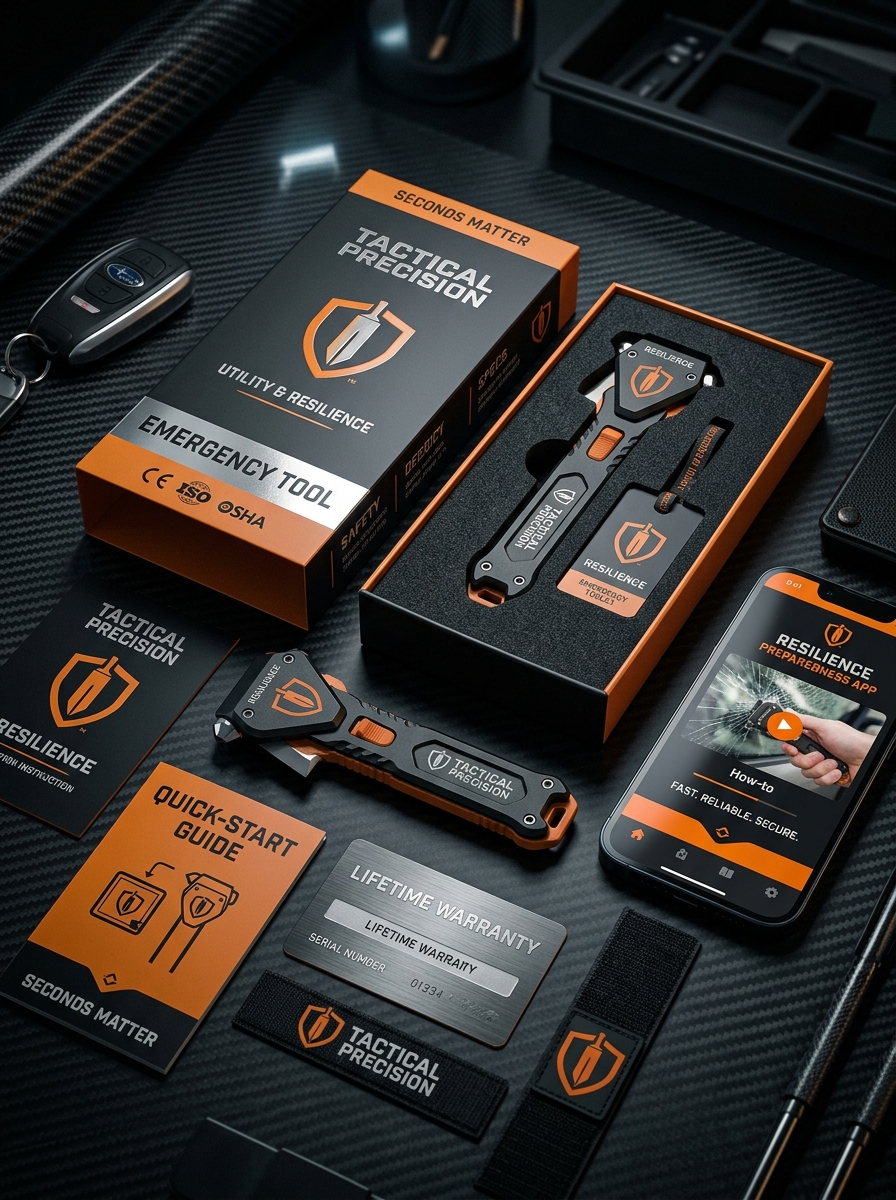
Effective seat belt cutter packaging serves a dual purpose: ensuring the integrity of a life-saving tool while communicating immediate utility during high-stress scenarios. Modern design principles prioritize intuitive accessibility and structural durability to withstand harsh automotive environments. By integrating high-visibility visual aesthetics with ergonomic form factors, manufacturers can significantly enhance user confidence and brand credibility.
This exploration delves into the technical requirements and creative strategies necessary to develop packaging that is both functional and market-ready. Focusing on materials that provide maximum protection without hindering rapid deployment, we examine how color psychology and tactile elements play a pivotal role in safety product presentation. Understanding these essential design pillars is crucial for creating a product that stands out on the shelf and performs flawlessly during an emergency.
The Evolution of Emergency Tool Packaging
Historically, seat belt cutters were sold in rigid, theft-resistant clamshells that required secondary tools to open-a dangerous irony for life-saving equipment. As automotive safety standards prioritized speed, packaging evolved toward frustration-free designs and immediate accessibility.
Modern emergency tool packaging now emphasizes integrated mounting solutions. Instead of being buried in retail boxes, seat belt cutters are frequently packaged with custom visor clips, adhesive mounts, or glow-in-the-dark holsters. This evolution ensures the tool is not just protected during shipping, but remains visible and reachable during a rollover or submerged vehicle crisis.
Current trends focus on tactile identification and high-contrast visuals, allowing users to locate the device in low-light environments. This shift from secure retail display to user-centric safety accessibility reflects a broader commitment to reducing response times during critical roadside emergencies.
Visual Hierarchy for Instant Safety Recognition
In life-threatening emergencies, visual hierarchy ensures a seat belt cutter is identifiable within milliseconds. Manufacturers utilize high-contrast colors, such as fluorescent orange or neon yellow, to ensure the tool remains visible against dark vehicle upholstery or in low-light conditions. This immediate color recognition reduces the cognitive load on a panicked user, allowing for a faster response.
Beyond color, the physical form factor guides the user instinctively. Key design elements include:
- Distinctive Silhouettes: Shapes that clearly differentiate the handle from the cutting head.
- Tactile Cues: Textured grips that signal where to hold the device without looking.
- Guided Entry: Visual "funnels" that lead the webbing directly toward the protected blade.
By prioritizing these visual and structural signals, the design transforms a simple tool into an intuitive life-saving device that functions under extreme stress.
Balancing Structural Integrity with Rapid Accessibility
An effective seat belt cutter must harmonize rugged durability with instantaneous deployment. Structural integrity is achieved using high-carbon stainless steel blades and reinforced polymer housings, ensuring the tool withstands impact and resists corrosion without dulling. This robust construction allows the blade to slice through high-tensile polyester webbing in a single motion during vehicle extractions.
To ensure rapid accessibility, these tools feature ergonomic grips, thumb-loops, and high-visibility finishes. Strategic mounting-via integrated magnets, Velcro, or visor clips-keeps the device within reach during emergencies. Manufacturers utilize protected blade channels to prevent accidental injury, optimizing the design for "blind" use in low-light or high-stress scenarios. This engineering synergy ensures the cutter remains a reliable, life-saving instrument that functions flawlessly when seconds count.
Color Psychology in Automotive Safety Branding
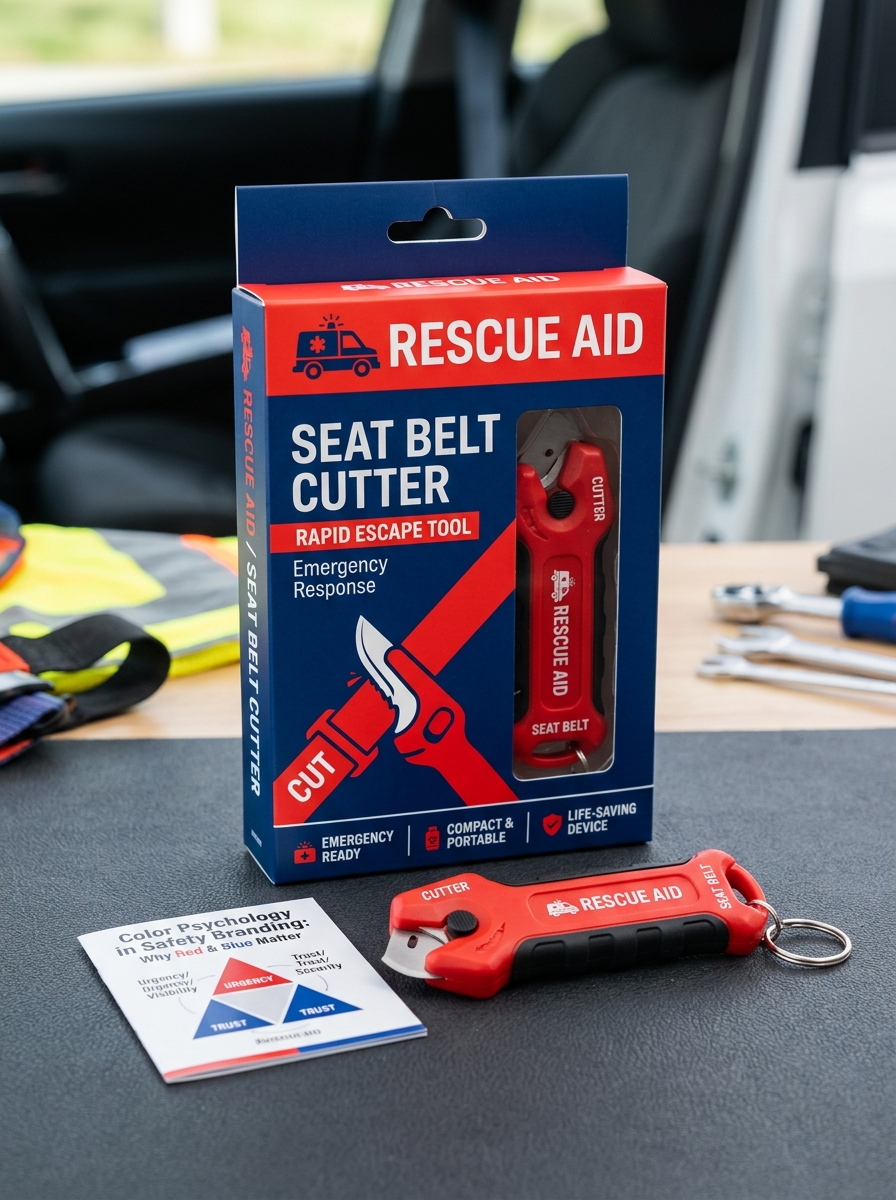
In automotive safety, color psychology is a critical factor for seat belt cutters and emergency extraction tools. Manufacturers prioritize high-visibility hues such as emergency red, vibrant orange, and fluorescent yellow to ensure rapid identification during a crisis.
These specific colors are strategically chosen for the following reasons:
- Urgency: Red signals immediate action and survival, helping users locate the tool instinctively under pressure.
- Visual Contrast: Bright tones stand out against dark vehicle interiors, ensuring the device remains visible in low-light or smoke-filled environments.
- Cognitive Recognition: During high-stress accidents, the brain relies on simple visual cues. Bold branding ensures the tool is recognized as a life-saving device rather than a generic accessory.
By leveraging these psychological triggers, brands enhance the efficacy of rescue tools, significantly reducing response time when every second counts.
Tactile Finishes and Premium Unboxing Experiences
In the automotive safety industry, a seat belt cutter is evolving from a basic utility into a high-end emergency instrument. Manufacturers now prioritize tactile finishes, such as matte rubberized grips or CNC-machined textures. these ergonomic surfaces ensure a non-slip hold during high-stress situations, providing the user with immediate confidence and control when every second counts.
The premium unboxing experience further distinguishes professional-grade tools from generic alternatives. Sophisticated packaging-featuring magnetic closures, precision-cut foam inserts, and instructional inserts-communicates reliability and craftsmanship. This attention to detail transforms a vital safety device into a thoughtful gift for drivers. By blending sensory design with functional excellence, brands ensure that the first physical interaction with the tool reinforces its life-saving potential and high-quality construction.
Information Architecture for Quick Use Instructions
In emergency scenarios, information architecture (IA) must prioritize cognitive speed and immediate action. The structure for seat belt cutter instructions should follow a linear, high-visibility hierarchy to ensure successful deployment under stress.
Effective IA for this safety tool involves three critical layers:
- Visual Prominence: Using high-contrast icons and bold typography to indicate the tool's storage location and blade orientation.
- Simplified Verbiage: Utilizing imperative verbs like "Hook" and "Pull" to minimize mental processing time.
- Step-by-Step Logic: Organizing content into a three-step sequence: identify the belt, secure the tool at a 45-degree angle, and pull firmly.
By streamlining these technical details into a scannable format, the architecture ensures that even untrained users can perform life-saving extractions within seconds, reducing the risk of injury during vehicle entrapment.
Sustainable Materials in Safety Product Housing
Modern manufacturing of seat belt cutters is shifting toward environmental responsibility by integrating sustainable materials into tool housings. Manufacturers are increasingly utilizing recycled polymers, bio-based plastics, and high-grade recycled aluminum to replace traditional virgin synthetics.
These eco-friendly alternatives are specifically engineered to retain the impact resistance and structural integrity necessary for emergency rescue operations. For example, reinforced recycled nylon ensures the housing remains rigid under pressure, allowing the internal blade to slice through webbing without mechanical failure.
By adopting these sustainable practices, safety equipment producers reduce their carbon footprint without compromising life-saving reliability. This evolution ensures that vital emergency tools are as environmentally conscious as they are essential for passenger protection.
Optimizing Retail Presence through Transparent Window Designs
For critical safety equipment like a seat belt cutter, visual accessibility is a primary driver for retail conversion. Utilizing transparent window packaging allows potential buyers to immediately assess the tool's ergonomic grip and integrated blade safety features without compromising the product's integrity. This design strategy builds consumer confidence by showcasing high-quality materials, such as hardened stainless steel, which are essential for emergency escape scenarios.
Strategically placed windows highlight the tool's compact dimensions and high-visibility colors, vital for quick identification during a vehicle crisis. By prioritizing product visibility, retailers enhance the perceived value of these life-saving devices. Clear packaging serves as a silent salesperson, demonstrating the intuitive nature of the seat belt cutter and reinforcing its necessity within a comprehensive automotive safety kit.
The Role of Minimalism in Functional Safety Design
In emergency response, minimalism is a critical component of functional safety design. For a seat belt cutter, a minimalist approach eliminates cognitive overload during high-stress situations, ensuring the tool is intuitive when every second counts.
By stripping away non-essential features, manufacturers focus on ergonomic efficiency and mechanical reliability. A streamlined profile-typically consisting of a protected integrated blade and a high-visibility handle-prevents user error and accidental injury. This purposeful simplicity allows for immediate deployment, enabling survivors or first responders to sever heavy-duty webbing with a single, fluid motion.
Ultimately, minimalist design in safety tools prioritizes reliability over complexity. By reducing a device to its core function, the design ensures that muscle memory can take over, transforming a simple instrument into a life-saving solution through optimized, distraction-free engineering.
Integrating Digital Connectivity and Smart Labeling Features
Modern seat belt cutters are evolving into proactive safety devices through the integration of digital connectivity and smart labeling. By incorporating IoT sensors or Bluetooth technology, these tools can automatically trigger emergency distress signals and transmit precise GPS coordinates to first responders the moment the blade is deployed.
Furthermore, smart labeling via QR codes or NFC tags provides instant access to vehicle-specific extrication guides and instructional content. This ensures that both civilians and emergency personnel can navigate complex safety systems efficiently. Digitally connected cutters also facilitate automated maintenance tracking, notifying users via smartphone apps when components need inspection or blade replacement. This synergy of mechanical reliability and smart technology optimizes life-saving performance, ensuring the tool is always functional and integrated into the broader emergency response ecosystem.
Leave a comment