
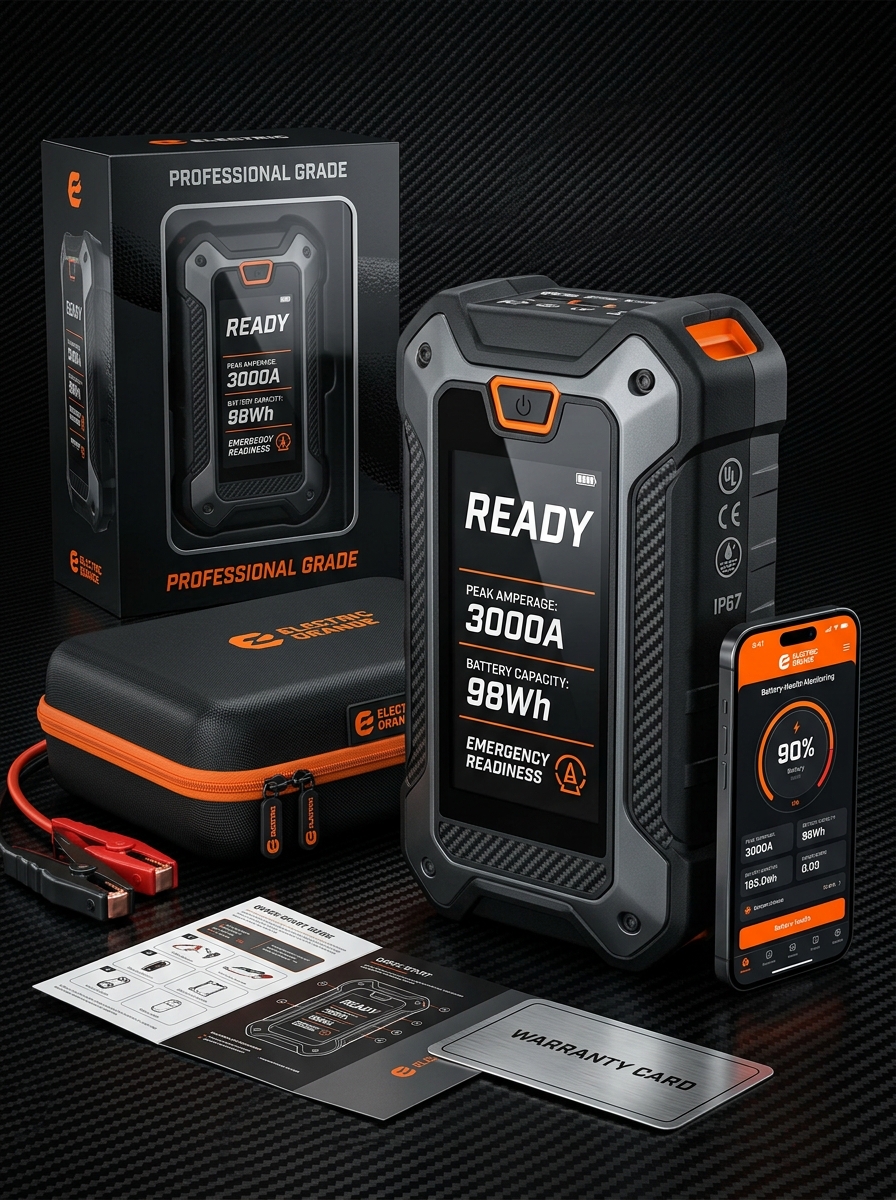
Mastering the art of portable jump starter packaging design requires a strategic blend of rugged reliability and modern aesthetics. As consumers navigate the automotive accessory market, the visual concept of a jump starter must instantly communicate safety, power, and high-performance capability. Effective packaging design serves as a silent brand ambassador, utilizing bold typography and high-contrast color schemes to highlight critical technical specifications like peak amperage and battery capacity.
By prioritizing an ergonomic unboxing experience and clear visual hierarchies, manufacturers can transform a functional emergency tool into a premium consumer electronic. Understanding the intersection of structural integrity and shelf-ready visual appeal is essential for capturing attention. This exploration focuses on how to leverage innovative design concepts to build consumer trust and differentiate products within the modern retail landscape.
The Psychology of Color in Automotive Power Solutions
When selecting a portable jump starter, color choice extends beyond mere aesthetics; it significantly influences user perception and safety. Manufacturers strategically utilize high-visibility hues like vibrant orange and bright yellow to signal caution and ensure the device is easily located in dark trunks or low-light emergency conditions. These colors evoke a psychological sense of reliability and alertness.
Conversely, red is often employed to symbolize power and urgency, mirroring the critical nature of a dead car battery. Sleek black or metallic finishes suggest professional-grade durability and advanced lithium technology. By leveraging color psychology, automotive brands build consumer trust, ensuring that when a vehicle fails to start, the visual cues of the jump starter provide immediate confidence and operational clarity during high-stress roadside situations.
Balancing Technical Specifications with Clean Visual Hierarchy
Effective portable jump starter design requires a strategic balance between dense technical data and immediate readability. During a roadside emergency, a user must identify critical information instantly without being overwhelmed by jargon.
A clean visual hierarchy prioritizes essential performance metrics through logical grouping and high-contrast typography. Key specifications to highlight include:
- Peak Current (Amps): The primary indicator of engine-starting power.
- Battery Capacity (mAh): Essential for understanding total energy reserves and device charging potential.
- Compatibility: Clear labeling for gas and diesel engine limits.
- Safety Status: Intuitive icons for reverse polarity and thermal protection.
By utilizing whitespace and structured layouts, manufacturers ensure that technical prowess translates into functional reliability. This semantic approach allows users to navigate complex electrical specifications quickly, ensuring a safe and successful jump-start every time.
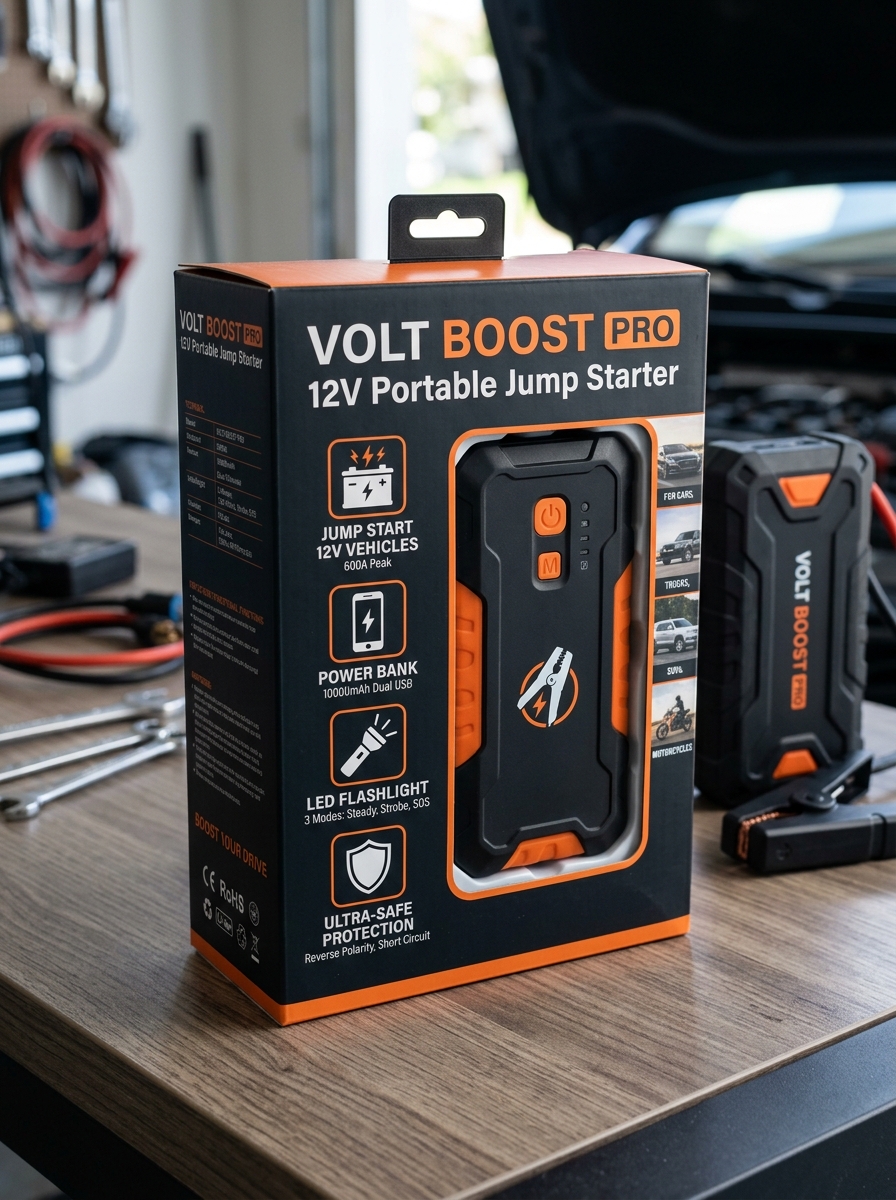
Iconography and Symbolism for Instant Functional Recognition
In high-stress roadside emergencies, clear iconography on a portable jump starter is essential for safety and efficiency. Manufacturers utilize universal symbols to ensure users can operate the device intuitively without language barriers.
- Lightning Bolt: Represents the high-voltage "Boost" or jump-start function.
- Battery Bars: Provide immediate visual feedback on the unit's remaining power capacity.
- Exclamation Triangle: A critical safety symbol indicating reverse polarity or connection errors.
- Beam Icon: Identifies the integrated LED flashlight and its various SOS modes.
These semantic visual cues reduce cognitive load, allowing for instant functional recognition. By prioritizing standardized symbolism, jump starters become accessible tools that guide users through the connection process, ensuring a successful engine start while minimizing the risk of accidental misuse.
High-Impact Product Photography and 3D Renderings
Capturing the power and reliability of a portable jump starter requires a sophisticated blend of high-resolution product photography and precision 3D renderings. To build consumer trust, visual content must highlight critical features such as the high-capacity lithium-ion battery, heavy-duty jumper clamps, and integrated safety ports.
Photorealistic 3D models allow for exploded views that showcase internal circuit protection and thermal management systems, which are difficult to capture through traditional photography alone. Meanwhile, lifestyle imagery demonstrates the device's compact portability and rugged durability in real-world emergency scenarios. By combining these visual assets, brands can effectively communicate technical specifications and ease of use, ensuring the jump starter stands out as an essential automotive accessory. High-impact visuals bridge the gap between technical innovation and user confidence, driving higher engagement and conversion rates.
Typography Choices that Convey Reliability and Strength
For a portable jump starter, typography must communicate immediate trust and power. Selecting bold, sans-serif typefaces-such as Montserrat, Roboto, or Impact-creates a sense of structural integrity and modern engineering. These heavy weights visually suggest that the device can handle high-voltage demands and rugged use without failure.
Key typographic strategies for automotive tools include:
- Geometric Shapes: Reinforce a stable, industrial aesthetic.
- All-Caps Styling: Adds authority and ensures maximum readability during stressful roadside emergencies.
- Thick Strokes: Emphasize durability and professional-grade performance.
By prioritizing high-contrast, impactful fonts, manufacturers reassure users that the jump starter is a heavy-duty tool built for reliability and long-term performance in harsh conditions.
The Role of Texture and Finish in Premium Brand Perception
For a high-end portable jump starter, the physical finish is as critical as its peak amperage. Premium brands leverage tactile design to communicate reliability and sophisticated engineering. A sleek, matte finish or anodized aluminum housing immediately signals a professional-grade tool, distinguishing it from generic plastic alternatives.
Beyond aesthetics, specialized textures like rubberized grips and knurled edges provide essential functional value, offering secure handling in wet or oily conditions. These sensory details foster consumer trust and justify a higher price point by reinforcing the product's perceived durability. In the competitive automotive emergency market, a refined finish transforms a basic utility device into a premium safety essential, solidifying brand loyalty through superior haptic feedback and visual appeal.
Integrating Safety Compliance within Aesthetic Layouts
Modern portable jump starters must balance high-performance engineering with consumer-centric design. Achieving safety compliance-such as UL certifications and short-circuit protection-does not necessitate a bulky, industrial appearance. Instead, top-tier manufacturers embed critical safeguards directly into sleek, ergonomic layouts.
Visual indicators, like intuitive LED displays, serve as both aesthetic highlights and essential safety interfaces, alerting users to reverse polarity or battery health. Furthermore, heat dissipation vents are often integrated into the chassis as stylized geometric patterns, ensuring thermal regulation without compromising the device's minimalist profile.
By utilizing fire-retardant, high-impact materials with refined textures, brands create a professional look that meets rigorous safety standards. This fusion of industrial design and technical compliance ensures that portable jump starters are visually appealing while providing a reliable, secure experience during automotive emergencies.
Modern Minimalism versus Industrial Ruggedness in Design
The aesthetic evolution of the portable jump starter has split into two distinct philosophies: modern minimalism and industrial ruggedness. Minimalist designs mirror contemporary smartphone aesthetics, featuring sleek matte finishes, compact silhouettes, and integrated LED displays. These units are engineered for portability, fitting seamlessly into glove boxes for the everyday commuter.
In contrast, industrial ruggedness focuses on high-impact durability and utility. These devices prioritize reinforced polymer casings, rubberized grips, and oversized heat-dissipation vents. Built to survive harsh automotive environments or off-road adventures, rugged jump starters offer superior protection against drops and extreme weather. Choosing between these styles depends on whether the user prioritizes discreet portability or heavy-duty resilience in their emergency roadside equipment.
Eco-Friendly Materials and Sustainability in Tech Packaging
As the demand for portable jump starters grows, leading manufacturers are shifting toward sustainability by revolutionizing their packaging. To reduce environmental impact, many brands now utilize eco-friendly materials such as recycled corrugated cardboard, biodegradable molded pulp, and FSC-certified paper. These alternatives replace traditional single-use plastics and foams, significantly lowering the carbon footprint of automotive accessories.
In addition to structural changes, the use of soy-based inks and water-based coatings ensures that packaging is fully recyclable and non-toxic. By prioritizing green tech packaging, companies ensure that high-performance lithium-ion jump starters are protected during transit without compromising the planet. This commitment to sustainable design reflects a broader industry movement toward circular economies and responsible consumer electronics manufacturing.
Creating a Memorable Unboxing Experience for the Modern Driver
For the contemporary motorist, a portable jump starter is more than just a utility tool; it is an essential piece of automotive technology. A premium unboxing experience begins with high-quality, durable packaging that immediately signals reliability and sophistication.
As users reveal the product, they should encounter an organized layout featuring the compact power unit, heavy-duty jumper cables, and versatile charging adapters. Modern drivers prioritize:
- Sleek, Ergonomic Design: Tools that feel professional and fit easily in a glove box.
- Intuitive Interface: Clear LED indicators and digital displays for ease of use.
- Simplified Guidance: Visual quick-start guides that provide confidence during roadside emergencies.
By focusing on these tactile details, brands transform a functional necessity into a high-tech gadget that builds lasting driver trust.
Leave a comment