
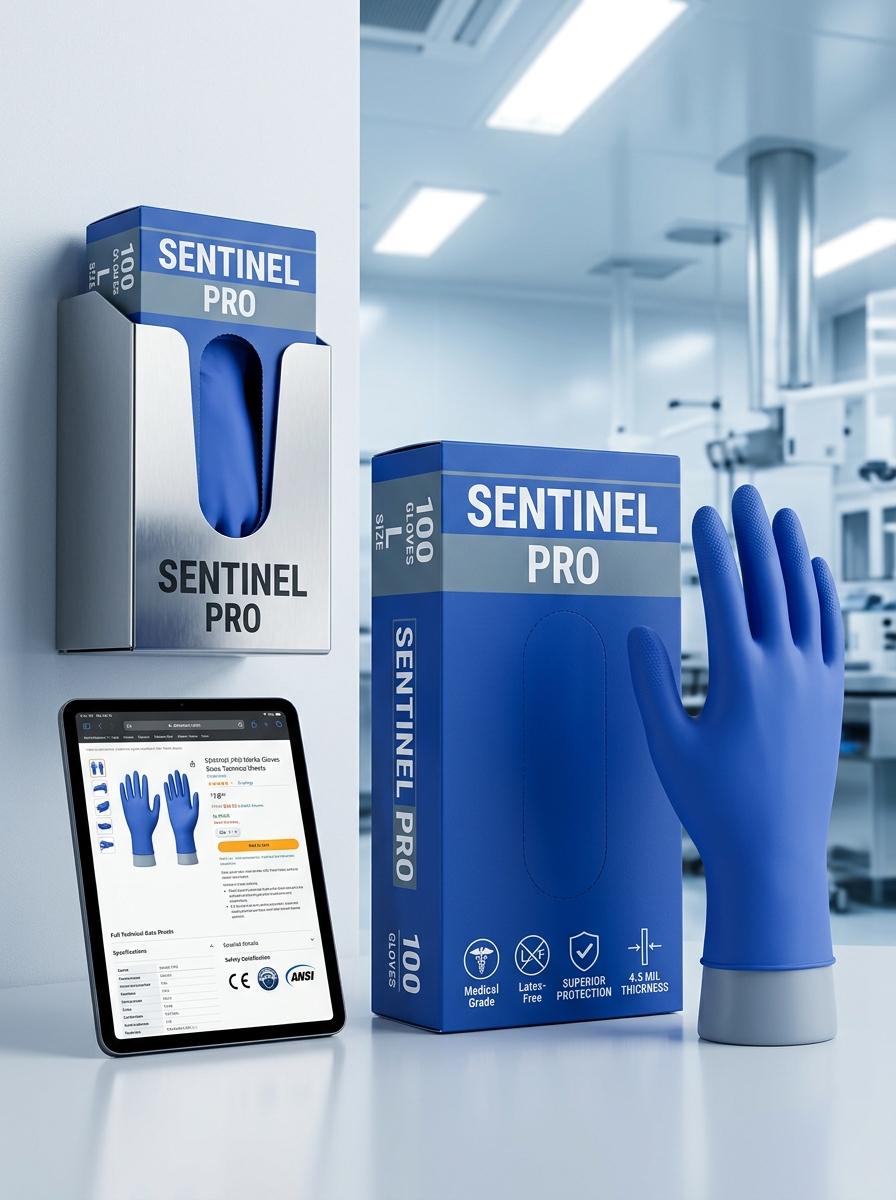
Effective nitrile glove packaging design requires a strategic balance between functional protection and high-impact visual communication. As indispensable tools in healthcare and industrial sectors, these products demand packaging that conveys safety, durability, and professional reliability at a glance.
Adhering to modern aesthetic standards is no longer optional; it is a vital component of brand differentiation and user trust. By integrating ergonomic box layouts with high-legibility typography and color-coded sizing systems, manufacturers can streamline professional workflows. This guide examines the essential packaging concepts that bridge the gap between regulatory compliance and premium brand identity, ensuring that medical-grade disposables meet both technical requirements and evolving market expectations.
The Strategic Role of Nitrile Glove Packaging in Safety Branding
In the competitive personal protective equipment (PPE) market, nitrile glove packaging serves as a vital touchpoint for safety branding. Beyond mere containment, effective packaging design communicates essential performance specifications, including mil thickness, chemical resistance, and regulatory certifications such as FDA or ASTM standards.
Strategic packaging utilizes intuitive color-coding to facilitate rapid identification of sizes and protection levels, enhancing operational efficiency while reducing errors in medical or industrial environments. By integrating clear compliance labeling with a professional visual identity, manufacturers reinforce brand authority and build user trust. High-quality, durable box construction also ensures product integrity during transit, signaling a commitment to reliability. Ultimately, premium nitrile glove packaging transforms a functional commodity into a recognizable symbol of safety and professional excellence.
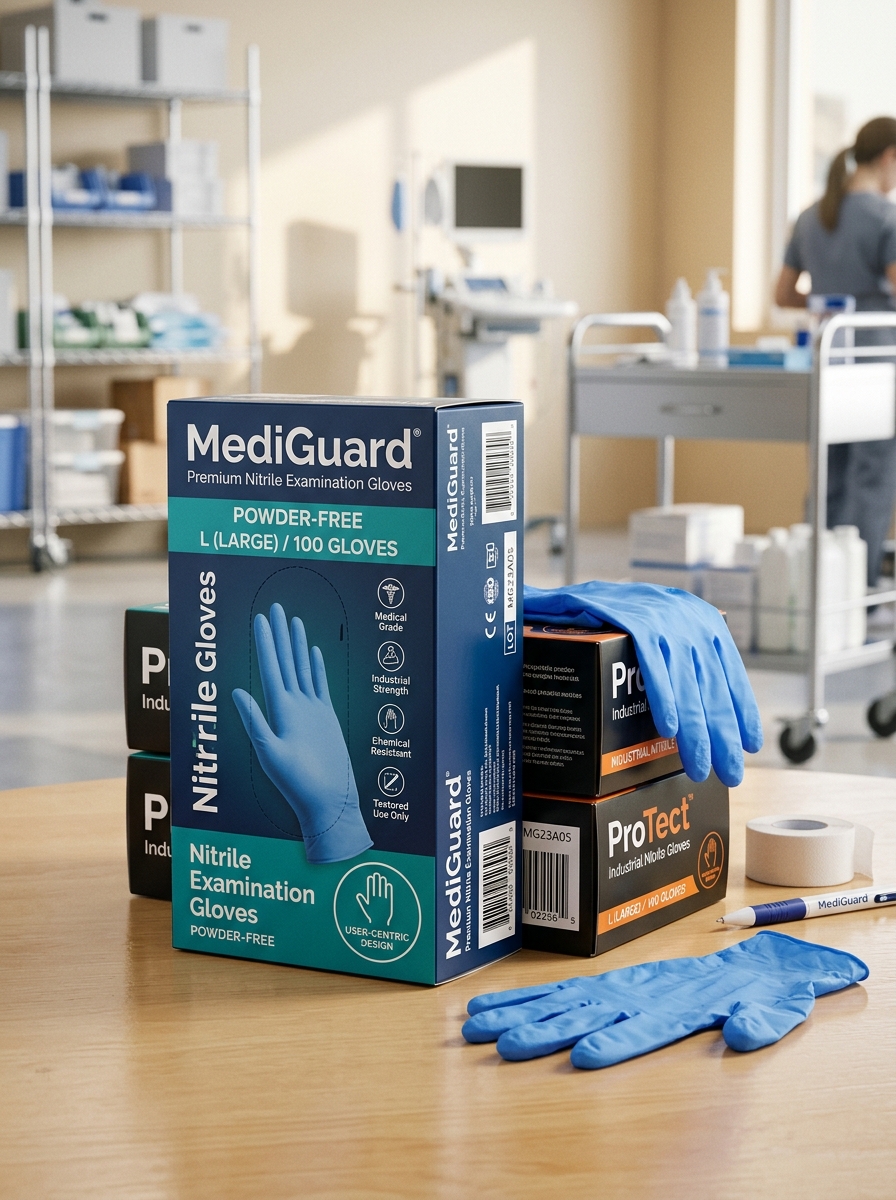
Defining User-Centric Design for Medical and Industrial Markets
User-centric design in the nitrile glove industry prioritizes the specific ergonomic and functional demands of the end-user. For the medical sector, this focus translates to high tactile sensitivity and reliable barrier protection. Gloves are engineered to provide a "second-skin" fit, ensuring precision during delicate procedures while maintaining resistance to bloodborne pathogens.
In industrial markets, design shifts toward durability and specialized safety features. Key elements include:
- Enhanced Grip: Micro-textured fingertips for secure handling in oily or wet conditions.
- Chemical Resistance: Robust formulations that protect against harsh solvents and degreasers.
- Extended Wear Comfort: Ergonomic designs that reduce hand fatigue during long shifts.
By balancing material thickness with flexibility, user-centric nitrile gloves maximize both safety and efficiency across diverse professional environments.
Regulatory Compliance and Essential Labeling Standards
To ensure maximum safety and performance, nitrile gloves must adhere to stringent global regulatory frameworks. In the United States, medical-grade gloves require FDA 510(k) clearance and must meet ASTM D6319 standards for physical properties. In Europe, they must carry the CE mark, complying with EN 455 for medical use and EN ISO 374 for chemical resistance.
Essential labeling standards guarantee transparency and traceability. Compliant packaging must clearly display:
- AQL (Acceptable Quality Level): Typically 1.5 or lower for medical applications.
- Intended Use: Specification between medical-grade and industrial-grade.
- Traceability Data: Lot numbers, expiration dates, and manufacturer details.
- Physical Attributes: Size, thickness, and "powder-free" status.
Adhering to these standards ensures that the gloves provide a reliable barrier against pathogens, punctures, and hazardous chemicals.
Color Theory and Psychological Cues in Protective Equipment
In the selection of nitrile gloves, color serves as a critical functional and psychological tool. Traditionally, blue nitrile gloves denote a clinical environment, fostering a sense of hygiene, trust, and professional reliability. In contrast, black nitrile gloves are favored by mechanics and tattoo artists; the dark hue masks grease, ink, and blood, reducing visual distractions and maintaining a clean appearance during messy tasks.
High-visibility colors like orange or bright green function as safety cues in industrial settings, ensuring hand visibility near machinery. Furthermore, color-coding is a vital strategy in food processing and laboratories to prevent cross-contamination between departments. By applying color theory to personal protective equipment (PPE), organizations can enhance safety compliance, streamline task identification, and utilize psychological triggers to improve workplace efficiency and user confidence.
Optimizing Information Architecture for Instant Recognition
In the high-stakes environment of PPE procurement, optimizing information architecture (IA) for nitrile gloves is essential for safety and efficiency. A semantic structure ensures that users can instantly distinguish between medical-grade, industrial, and chemical-resistant variants.
To achieve instant recognition, organize product data using a clear visual hierarchy and standardized metadata:
- Thickness and Durability: Explicitly state mil thickness to define barrier protection levels.
- Compliance Standards: Prioritize ASTM, FDA, and EN ISO certifications for immediate regulatory verification.
- Functional Attributes: Use distinct icons for texture (e.g., diamond grip), color-coding for sizing, and latex-free labeling.
By streamlining this technical taxonomy, organizations reduce cognitive load for healthcare and industrial professionals. This structured approach ensures that critical protective specifications are communicated at a glance, minimizing selection errors and accelerating the deployment of essential hand protection.
Material Engineering and Structural Integrity of Dispenser Boxes
The material engineering of nitrile glove dispenser boxes is vital for maintaining product hygiene and accessibility. Manufacturers utilize high-caliper, reinforced paperboard to ensure structural integrity during shipping and vertical stacking. This prevents box compression, which can compromise the gloves' physical properties or lead to premature punctures.
Sophisticated design features include precision-cut perforated openings and moisture-resistant exterior coatings. These elements ensure the packaging remains intact in humid clinical or industrial environments while facilitating seamless, single-glove dispensing. By optimizing the tensile strength of the box architecture, manufacturers reduce material waste and mitigate cross-contamination risks. This structural precision ensures that medical-grade and industrial nitrile gloves remain protected from environmental contaminants until the moment of use, balancing durability with sustainable, recyclable fiber technology.
Typography Standards for Clarity in High-Pressure Environments
In high-pressure medical and industrial settings, the typography used on nitrile glove packaging is vital for safety and operational efficiency. To facilitate rapid identification, manufacturers prioritize sans-serif typefaces, which offer superior legibility and reduce visual fatigue. High-contrast color palettes ensure that critical data remains visible under fluorescent or dim lighting.
Key specifications-such as glove size, mil thickness, and chemical resistance ratings-must be displayed in bold, high-point fonts to prevent identification errors. Proper kerning and vertical spacing are essential to avoid character blurring, allowing professionals to distinguish between sterile and non-sterile options at a glance. Adhering to these typographic standards minimizes the risk of cross-contamination and ensures that the correct personal protective equipment (PPE) is selected instantly during emergencies.
Eco-Friendly Innovations and Sustainable Material Choices
The nitrile glove industry is undergoing a green transformation to address the environmental impact of disposable PPE. Traditionally manufactured from petroleum-based synthetic rubber, modern innovations have introduced biodegradable nitrile gloves. These products incorporate organic additives that attract microbes in landfill environments, accelerating the decomposition process from centuries to just a few years without compromising tactile sensitivity or chemical resistance.
Beyond material composition, manufacturers are adopting sustainable practices such as:
- Accelerator-free formulations to reduce chemical toxicity and skin irritation.
- Carbon-neutral manufacturing processes utilizing renewable energy.
- Reduced-waste packaging and material-efficient designs that use less raw NBR (Nitrile Butadiene Rubber) per glove.
By prioritizing these eco-friendly advancements, industries can maintain high safety standards while significantly lowering their plastic waste footprint and supporting a circular economy.
Visual Hierarchy and Brand Differentiation Strategies
In the competitive nitrile glove market, effective visual hierarchy is crucial for safety and efficiency. Packaging must prioritize essential data-such as mil thickness, texture, and size-using bold typography and high-contrast layouts. This allows professionals in medical or industrial sectors to distinguish between exam-grade and heavy-duty options at a glance.
Brand differentiation strategies involve specialized color-coding and unique selling propositions. For instance, black nitrile gloves are often positioned for the automotive and tattoo industries, while violet-blue signifies clinical use. To stand out, manufacturers leverage certifications like chemo-rating or biodegradable technology as primary visual anchors. By combining clear iconography with consistent brand aesthetics, companies transform a commodity into a trusted tool, ensuring product recognition and long-term customer loyalty in a crowded marketplace.
Future Trends in Professional Protective Equipment Aesthetics
Future advancements in nitrile gloves transcend mere functionality, focusing on sophisticated aesthetics that enhance professional identity. Emerging trends highlight a shift toward high-visibility neon palettes for increased safety and matte textures that minimize glare in clinical or industrial settings. Ergonomic design patterns are becoming more prominent, integrating embossed branding with functional, grip-enhancing micro-textures.
Additionally, we are seeing a diversification of color-coded systems tailored to specific workflows, moving beyond traditional blue and black. These aesthetic innovations serve a dual purpose: reinforcing brand presence while improving user compliance through visually appealing, high-performance gear. As protective equipment evolves, the integration of sleek, modern finishes and sustainable, bio-based pigments will define the next generation of professional hand protection and workplace safety gear.
Leave a comment