
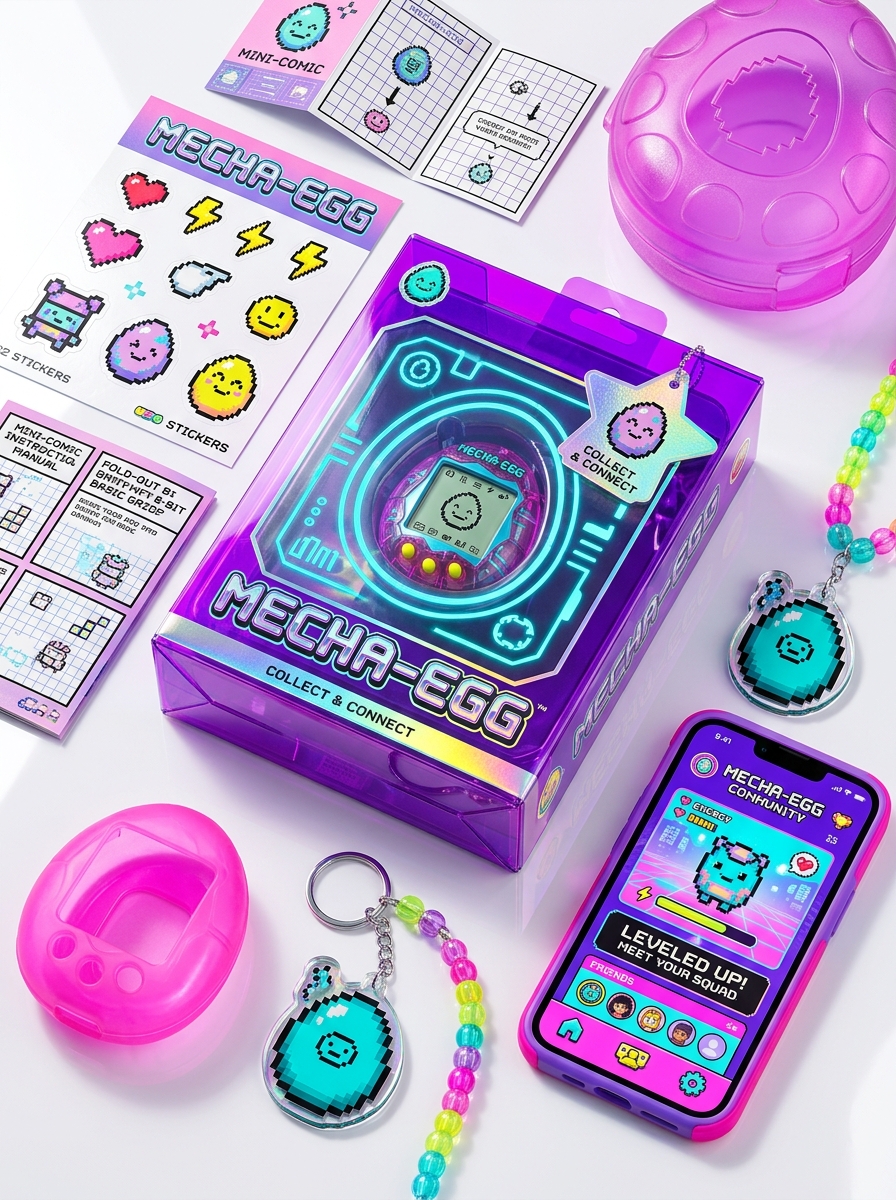
Tamagotchi packaging design represents a sophisticated intersection of retro-tech nostalgia and tactile consumer psychology. By deconstructing the core aesthetic principles-ranging from the iconic egg-shaped blister packs to the use of vibrant, high-contrast palettes-designers can uncover the conceptual frameworks that fueled a global cultural phenomenon.
This analysis delves into how Bandai utilized "kawaii" design theory and maximalist graphic elements to create an immediate emotional connection with the user. From the original 1996 release to contemporary revivals, the packaging serves as more than a protective layer; it is a vital extension of the digital pet experience. Understanding these visual strategies provides essential insights into brand identity and the enduring appeal of the virtual pet genre within the modern retail landscape, highlighting the synergy between hardware and its physical presentation.
Historical Context of Tamagotchi Visual Identity
Launched by Bandai in 1996, the Tamagotchi visual identity serves as a cornerstone of 1990s retro-tech aesthetics. Conceived by Aki Maita and Akihiro Yokoi, the brand name merges the Japanese word "tamago" (egg) with the English "watch," directly influencing its iconic egg-shaped hardware. This silhouette was designed to evoke a sense of life, vulnerability, and portability.
The original visual language was defined by low-resolution LCD pixel art. Utilizing a restricted grid, designers created expressive sprites that fostered deep emotional bonds through minimalist movement. This aesthetic prioritized kawaii (cute) culture and tactile simplicity, featuring a signature three-button interface. While modern versions have transitioned to high-definition color screens, the core visual identity remains anchored in the nostalgic, pocket-sized form factor that revolutionized the virtual pet and handheld gaming industries.
The Psychology of the Egg-Shaped Silhouette
The Tamagotchi's iconic egg-shaped silhouette is a masterful application of psychological design. This ovoid form serves as a universal symbol for life, potential, and fragility, instantly signaling to users that they are nurturing a developing organism. By mimicking organic geometry, the device taps into the "baby schema" (Kindchenschema), evoking innate caregiving instincts and deep emotional attachment.
Ergonomically, the rounded edges provide a tactile comfort that fits naturally in the palm, fostering a sense of physical intimacy and security. This intentional bridge between silicon technology and biological symbolism transforms a plastic toy into a precious entity. The silhouette reinforces the "pet" metaphor, making digital responsibility feel tangible and urgent, which remains a cornerstone of the Tamagotchi's enduring global appeal.
Kawaii Aesthetics and Color Theory in Early Designs
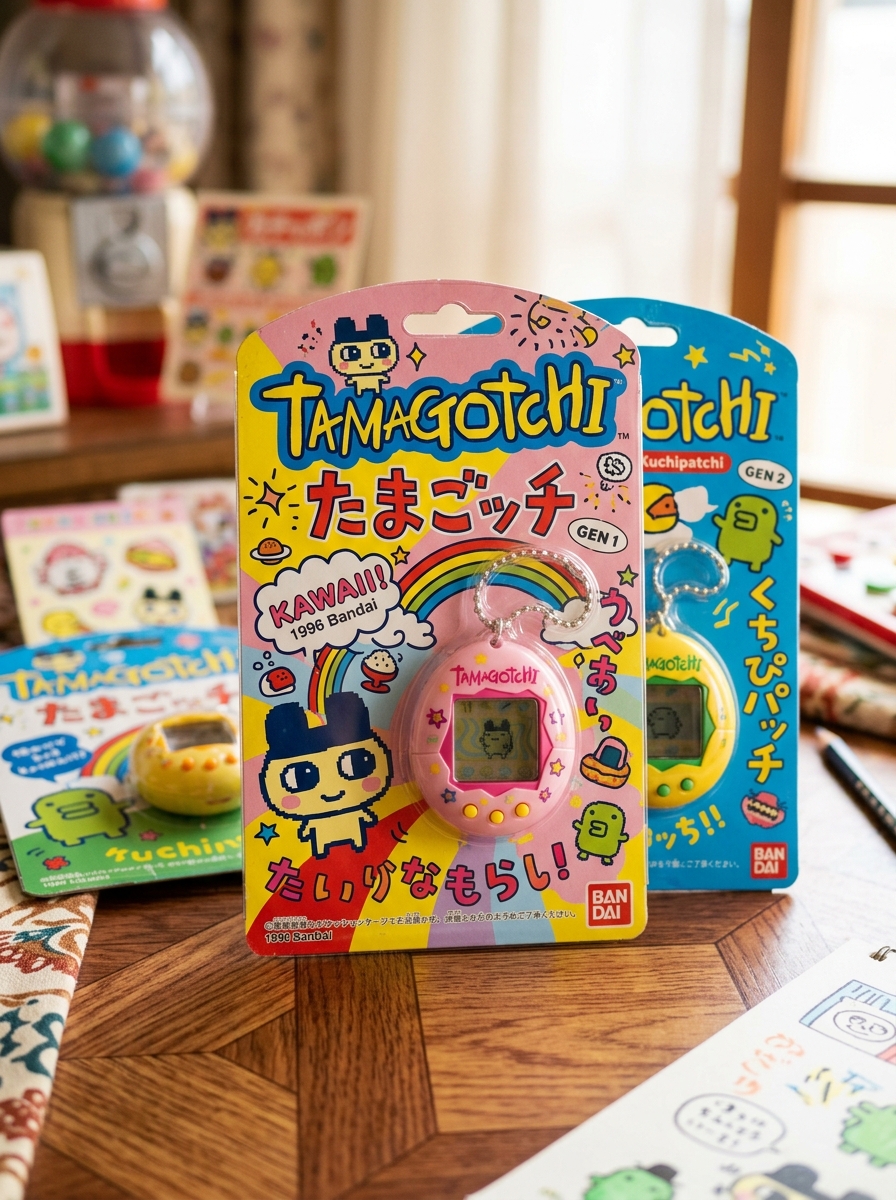
The original Tamagotchi designs were a masterclass in the Japanese kawaii aesthetic, focusing on "lovability" through organic, egg-shaped silhouettes. This rounded form factor served a dual purpose: it made the handheld device feel comfortable to hold and reinforced the metaphor of nurturing a fragile lifeform.
Bandai utilized color theory to evoke specific emotional responses. Early models featured vibrant primary colors and high-saturation neons-like bright teal, coral pink, and lemon yellow-to stimulate playfulness and energy. Translucent "skeleton" shells were also introduced to tap into late-90s futurism, allowing users to see the hardware inside. These bold color palettes, paired with contrasting button colors, ensured the user interface was intuitive. By blending soft shapes with optimistic hues, the design transformed a basic LCD screen into a stylish, emotionally resonant companion for a global audience.
Tactile Experience and the Role of Window Displays
The enduring appeal of Tamagotchis is deeply rooted in their tactile experience. Unlike modern virtual pets on flat touchscreens, the original handheld device offers a physical connection through its iconic egg-shaped plastic casing and three responsive rubber buttons. This sensory feedback-the rhythmic clicking and the portable weight on a keychain-defines the user's emotional bond with the digital creature.
Historically, window displays played a vital role in cementation of this trend. Retailers used vibrant, eye-catching visual merchandising to showcase the vast array of shell designs and limited editions. These glass-fronted exhibits transformed the hardware into a "must-have" fashion accessory. By highlighting the physical variety and collectible nature of the devices, window displays created a tangible sense of desire that digital advertisements could not replicate, driving the global craze for these handheld digital pets.
Cultural Signifiers of Japanese Pop Culture Packaging
The Tamagotchi serves as a prime example of how Japanese pop culture leverages packaging to communicate identity. Its design is rooted in the Kawaii (cute) aesthetic, utilizing vibrant color palettes and bold, character-driven graphics that appeal to a sense of nurturing and play.
Key cultural signifiers include:
- Visual Transparency: The iconic "window" display allows the consumer to see the physical egg, bridging the gap between digital software and tangible companionship.
- Miniaturization: Reflecting the Japanese tradition of netsuke, the compact packaging emphasizes portability and intimacy.
- Graphic Maximalism: Busy, high-energy typography and illustrations reflect the sensory richness of Tokyo's retail landscapes.
These elements transform the box into more than a container; it becomes a semantic bridge to the Japanese values of craftsmanship, emotional design, and high-tech whimsy.
Generational Shifts from Analog to Digital Branding
The evolution of Tamagotchi reflects a significant transformation in consumer engagement, transitioning from isolated analog play to integrated digital ecosystems. In the 1990s, branding focused on the tactile novelty of the handheld "egg," emphasizing individual responsibility and the primitive charm of 8-bit pixels for a generation fascinated by virtual companionship.
Modern branding strategies have pivoted to embrace connectivity and the metaverse. Current models, such as the Tamagotchi Uni, utilize Wi-Fi to foster global social networks, shifting the value proposition from simple pet ownership to community participation. By leveraging nostalgia marketing for Millennials while integrating smart technology for Gen Alpha, the brand has successfully modernized. This shift from a standalone toy to a cross-platform digital experience illustrates how legacy brands adapt to an era defined by constant connectivity and virtual interaction.
Collector Appeal and the Preservation of Mint Condition
For enthusiasts, Tamagotchi collecting is driven by a blend of nostalgia, rarity, and aesthetic variety. Vintage models from the 1990s and limited-edition Japanese releases have become high-value assets. To maintain peak market value, collectors prioritize NIB (New in Box) or MIB (Mint in Box) status, as original packaging is essential for provenance.
Preserving these virtual pets requires specific care to prevent hardware degradation:
- Battery Removal: Vital for preventing terminal corrosion and internal circuit damage.
- UV Shielding: Protecting vibrant plastic shells from yellowing or "sun-fading."
- Climate Control: Avoiding humidity that could damage the LCD screens.
Maintaining mint condition ensures that these digital icons remain functional and visually pristine, securing their long-term investment potential in the secondary collector market.
Minimalism Versus Maximalism in Limited Edition Sets
In the realm of Tamagotchi collecting, limited edition releases often showcase a striking contrast between minimalism and maximalism. Minimalist sets emphasize heritage and "tech-forward" aesthetics, often featuring transparent shells, monochrome palettes, and matte finishes. These designs cater to purists who value the sleek, nostalgic silhouette of the original 1990s hardware.
Conversely, maximalist editions embrace a "more is more" philosophy. These sets, frequently seen in Sanrio collaborations or anniversary specials, boast vibrant neon gradients, glitter-infused plastics, and intricate 3D shell molds. While minimalism focuses on the purity of the device, maximalist designs transform the virtual pet into a bold, decorative fashion statement. This aesthetic duality allows enthusiasts to curate collections that range from understated, sophisticated tech to whimsical, eye-catching masterpieces, ensuring every Tamagotchi fan finds a shell that reflects their personal style.
The Unboxing Ritual as a Virtual Pet Adoption
For enthusiasts, opening a Tamagotchi is more than mere consumerism; it is a formal virtual pet adoption. This ritual begins the moment the owner removes the plastic pull-tab, completing the circuit and triggering the iconic startup beep. This sound signals the "birth" of a new digital life, transforming a handheld device into a living entity that requires immediate care.
As the pixelated egg appears on the LCD screen, the user transitions from a buyer to a caretaker. This emotional bonding is a core element of the Tamagotchi experience. By witnessing the first hatching and setting the internal clock, owners establish a psychological contract of responsibility. This immersive unboxing experience ensures the hardware is perceived as a vulnerable companion rather than just an electronic toy.
Future Directions in Sustainable and Smart Packaging
As the Tamagotchi brand evolves, its packaging is pivoting toward eco-friendly and tech-driven solutions. To reduce the environmental footprint of these iconic digital pets, future releases are increasingly utilizing biodegradable materials, recycled paperboard, and plastic-free inserts.
Simultaneously, "smart packaging" is enhancing the unboxing experience. By integrating NFC tags and QR codes, Bandai can replace bulky paper manuals with interactive digital guides. This shift not only supports sustainability but also allows collectors to unlock exclusive in-game items or access augmented reality (AR) features directly from the box.
By merging green logistics with digital connectivity, the next generation of Tamagotchi packaging aims to meet the demands of environmentally-conscious fans while maintaining the charm and excitement of the original 1990s virtual pet experience.
Leave a comment