
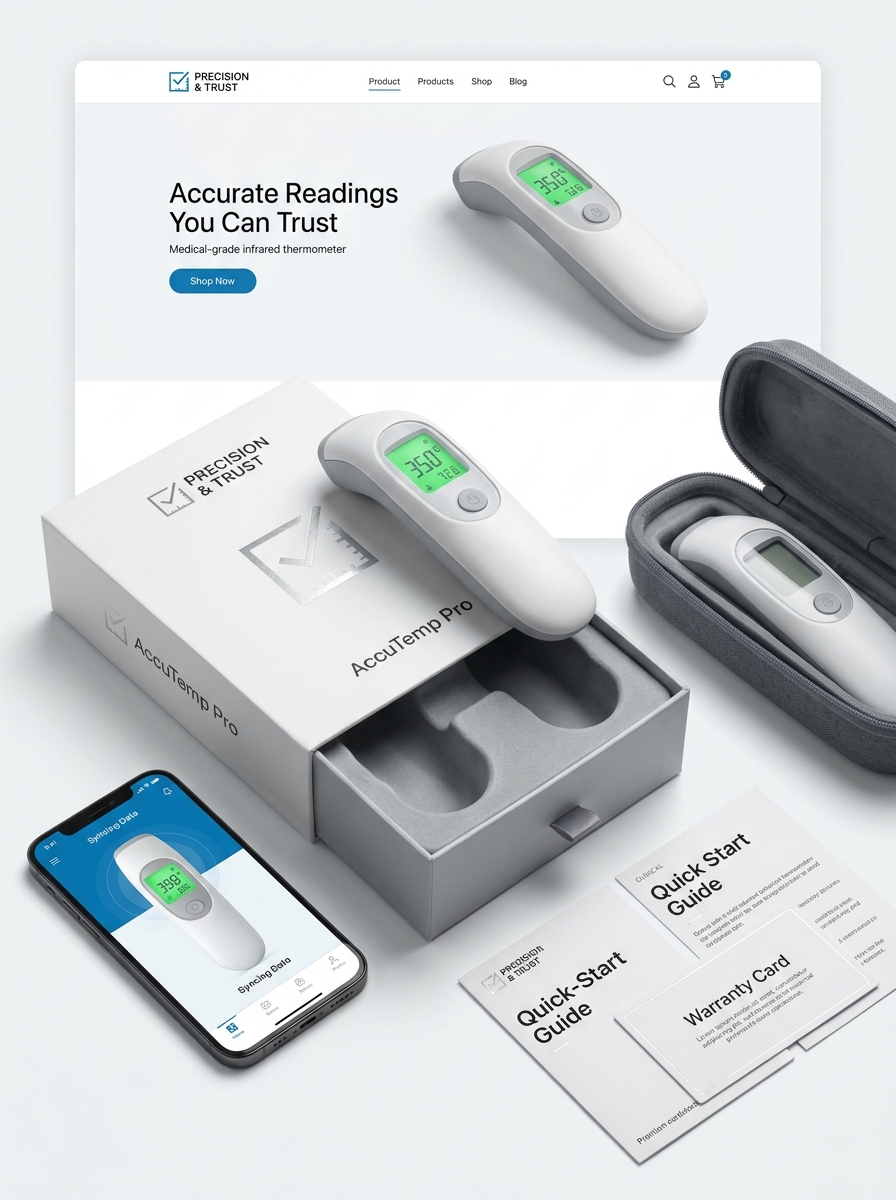
Modern healthcare retail environments demand that digital thermometer packaging serves a dual purpose: ensuring technical protection and establishing immediate consumer trust. As a vital diagnostic tool, the packaging must communicate precision and reliability through its visual aesthetics long before the consumer interacts with the device itself.
Achieving this balance involves integrating essential design principles that prioritize clear information hierarchy, regulatory compliance, and structural integrity. From the selection of moisture-resistant materials to the strategic implementation of minimalist typography, every element influences the perceived quality of the medical device. By focusing on ergonomic layouts and high-contrast color schemes, manufacturers can bridge the gap between clinical functionality and sophisticated shelf presence, ensuring their product remains both accessible and secure for the end-user.
The Importance of Packaging in Medical Device Branding
In the competitive market for digital thermometers, packaging is a vital extension of the brand identity. It serves as the primary touchpoint for establishing consumer trust and clinical authority. Since medical devices are directly associated with health and safety, professional packaging signals quality, reliability, and regulatory compliance.
Strategic packaging design for a digital thermometer should prioritize clarity. Highlighting key features-such as measurement accuracy, high-speed readings, and fever alerts-helps patients make informed decisions quickly. Furthermore, durable and informative materials reinforce a brand's commitment to precision and patient care.
Ultimately, premium packaging protects sensitive electronic components while delivering a cohesive brand message. By combining functional protection with clear, authoritative information, manufacturers can effectively differentiate their products and build long-term loyalty in the healthcare sector.
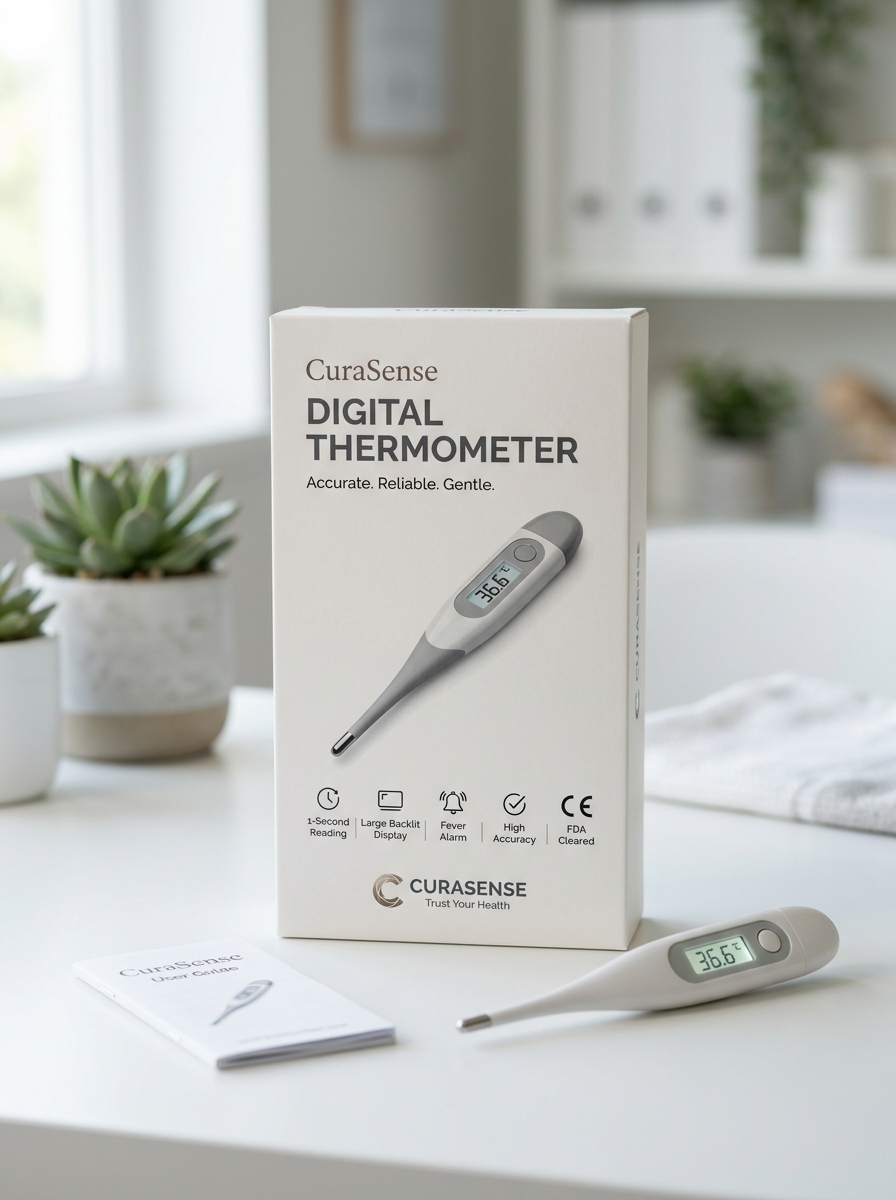
Establishing Trust Through Minimalist Visual Aesthetics
In the medical technology sector, minimalist design serves as a vital indicator of precision and reliability. For a digital thermometer, aesthetic simplicity is not merely a trend; it is a functional requirement that builds user confidence. By stripping away non-essential visual elements, manufacturers highlight the device's core purpose: delivering accurate health data.
A clean interface featuring high-contrast LCD screens and large, legible typography ensures that temperature readings remain the focal point. This uncluttered visual hierarchy reduces cognitive load, allowing users to interpret critical information quickly during high-stress situations.
Furthermore, a professional, streamlined exterior signals clinical quality, reinforcing the perception that the device is a sophisticated diagnostic tool. Through thoughtful, minimalist industrial design, a digital thermometer transforms from a basic utility into a trusted partner in household health management.
Strategic Information Hierarchy for Rapid Comprehension
Digital thermometers utilize a structured information hierarchy to ensure critical health data is interpreted instantly. This design strategy prioritizes information based on clinical urgency, minimizing cognitive load during high-stress monitoring.
- Primary Tier: The current temperature reading is showcased in large, high-contrast digits for immediate recognition.
- Secondary Tier: Visual alerts, such as color-coded backlights (Green for normal, Red for fever), provide instant diagnostic context.
- Tertiary Tier: Ancillary data, including battery life, measurement units (°C/°F), and historical memory logs, are positioned peripherally to avoid visual clutter.
By organizing data through this tiered approach, digital thermometers facilitate rapid comprehension and more accurate health decisions, ensuring the most vital status updates are prioritized at a glance.
Essential Compliance Symbols and Regulatory Requirements
Digital thermometers are classified as medical devices and must adhere to rigorous international standards to ensure clinical accuracy and user safety. The CE Mark is a primary requirement for the European market, indicating the device meets the Medical Device Regulation (MDR) standards. In the United States, FDA Clearance is mandatory, confirming the thermometer has undergone strict performance testing.
Other critical compliance symbols include:
- ISO 13485: Certification for a quality management system specific to medical devices.
- RoHS: Ensures the electronics are free from hazardous substances like lead and mercury.
- WEEE Symbol: Directs the proper disposal and recycling of electronic components.
Adherence to these regulatory requirements guarantees that the digital thermometer provides reliable, high-precision temperature readings essential for accurate health monitoring and diagnosis.
Color Psychology in Healthcare Product Design
In the design of digital thermometers, color psychology is essential for establishing patient trust and ensuring clear communication. Manufacturers prioritize specific palettes to influence emotional responses; for example, white and silver are frequently used to symbolize sterility, hygiene, and clinical precision.
Modern healthcare product design also leverages color for functional diagnostics. Many digital thermometers utilize a "traffic light" system via backlit LCD screens. Green signifies a normal temperature, yellow provides a cautionary alert for low-grade fevers, and red triggers an immediate psychological warning for high fever. This semantic use of color allows users to interpret health data instantly without technical expertise.
By combining calming blues-which evoke stability-with intuitive color-coding, digital thermometers become more accessible, reducing user anxiety and improving the overall user experience in medical monitoring.
Typography Best Practices for Clarity and Accessibility
In digital thermometer design, typography is essential for ensuring health data is interpreted correctly during emergencies. To maximize clarity and accessibility for all users, including the elderly and visually impaired, follow these best practices:
- Font Selection: Use high-legibility sans-serif fonts. Monospaced digits are preferred to ensure temperature values remain stable and aligned on digital displays.
- Scale and Weight: The primary temperature reading should be the largest visual element. Bold weights enhance readability in low-light conditions or through fever-induced blurred vision.
- High Contrast: Maintain a strong contrast ratio between the text and the background (e.g., black digits on a light gray LCD) to meet accessibility standards.
- Spacing: Adequate kerning between numbers and unit symbols (C/F) prevents visual crowding, ensuring critical data is understood at a glance.
Material Selection for Product Protection and Sustainability
The performance of a digital thermometer relies on precise material engineering to balance durability with environmental responsibility. Manufacturers typically utilize medical-grade ABS plastic for the outer casing, providing high impact resistance and protection for internal microprocessors. The probe tip is often crafted from stainless steel, chosen for its rapid thermal conductivity and ability to withstand frequent sterilization.
Sustainability is addressed by replacing hazardous mercury with non-toxic electronic components. Modern designs prioritize BPA-free and latex-free materials to ensure user safety and biocompatibility. Furthermore, the shift toward recyclable polymers and energy-efficient LCD screens extends product lifespans, significantly reducing electronic waste. By selecting high-quality, resilient materials, brands ensure that the device remains accurate and safe while minimizing its long-term ecological footprint.
Incorporating High-Definition Product Imagery and Graphics
High-definition imagery is crucial for showcasing the precision and reliability of a digital thermometer. High-resolution photos allow customers to inspect the clarity of the LCD display, the quality of the probe, and the ergonomic design. Detailed visuals ensure that users can see exactly how the temperature readings are presented, highlighting features like backlit screens and color-coded fever alerts.
In addition to photography, semantic graphics and icons enhance the user experience by visually communicating technical specifications, such as:
- Measurement Speed: Icons indicating rapid-read capabilities.
- Accuracy Levels: Graphics denoting clinical-grade precision.
- Memory Storage: Visual cues for data logging functions.
By utilizing sharp, zoomable images, manufacturers build consumer trust and demonstrate the superior build quality of their medical diagnostic tools.
Optimizing the Unboxing Experience for the End User
The unboxing experience for a digital thermometer is a critical touchpoint for building user trust and ensuring immediate functionality. To optimize this process, manufacturers should utilize frustration-free packaging that protects the sensitive thermal sensors while remaining easy to open.
Key elements for an enhanced user experience include:
- Clear Documentation: Placing a concise quick-start guide on top ensures users understand calibration and operation instantly.
- Ready-to-Use Design: Including pre-installed batteries with a simple pull-tab allows for immediate temperature readings.
- Hygiene Assurance: A visible protective seal on the probe reinforces clinical or culinary safety standards.
By focusing on intuitive layout and tactile quality, the unboxing process transitions seamlessly from product arrival to first use, reinforcing the reliability of the device for the end user.
Future Trends in Digital Health Technology Packaging
The evolution of digital thermometer packaging is driven by sustainability and technological integration. Future trends highlight a significant shift toward eco-friendly materials, where manufacturers replace traditional plastics with biodegradable or recycled substrates to minimize environmental impact.
Smart packaging is another emerging frontier. By incorporating QR codes and NFC tags, brands provide users with immediate access to digital manuals, instructional videos, and calibration certificates. This reduces paper waste while enhancing the overall user experience.
Additionally, compact designs are being refined to protect sensitive infrared sensors and probes without excessive bulk. Innovations such as antimicrobial coatings on external surfaces are also becoming standard to maintain hygiene during transit. These advancements ensure that digital thermometers are delivered safely, sustainably, and with a focus on modern health connectivity.
Leave a comment