
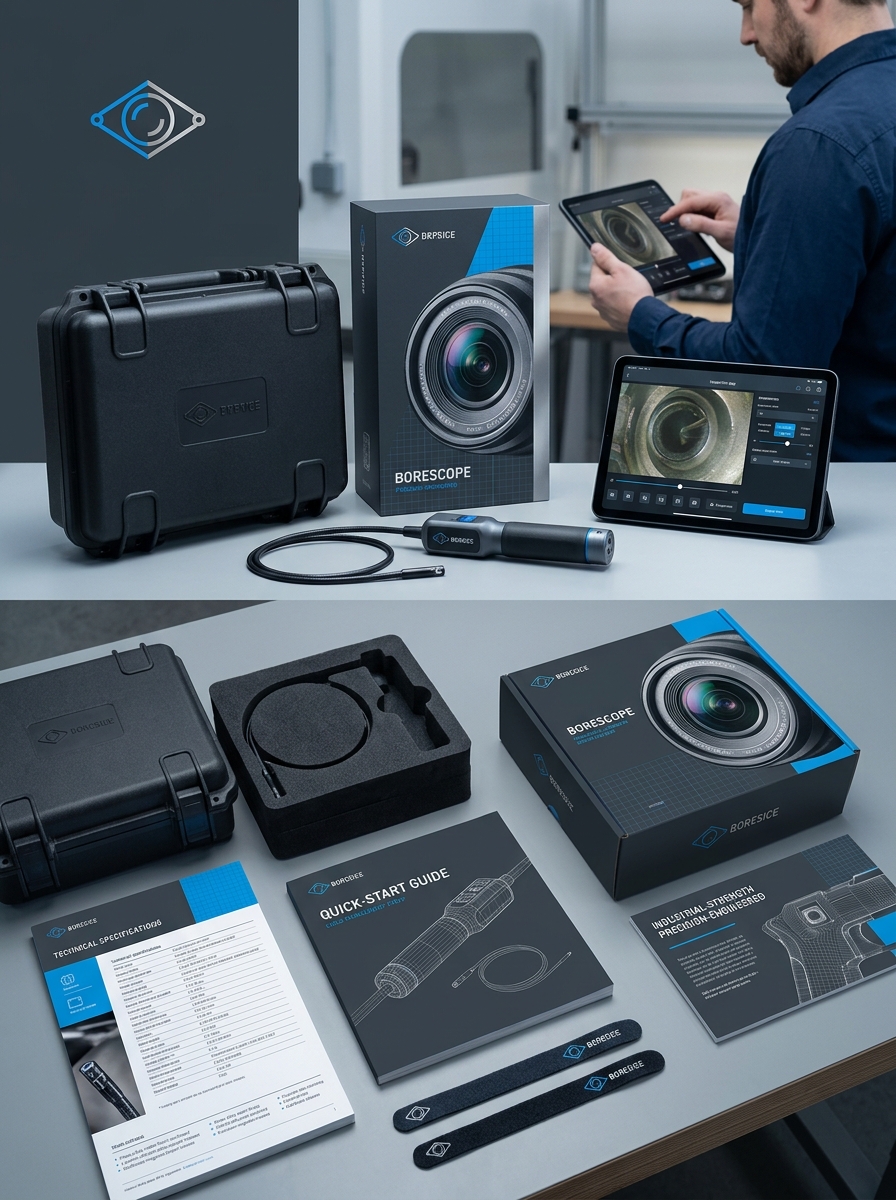
Effective borescope camera packaging design bridges the gap between high-precision engineering and impactful industrial aesthetics. For manufacturers of specialized inspection tools, the unboxing experience serves as the primary testament to product reliability and technical sophistication.
Designing for these sensitive instruments requires a strategic approach that prioritizes structural integrity while reflecting a professional brand identity. To resonate with engineers and technicians, packaging must integrate clear technical specifications with minimalist design elements. By focusing on ergonomic layouts and durable materials, brands can effectively communicate the precision of their hardware.
This guide explores essential tips for balancing functional protection with the high-end visual appeal necessary for the modern industrial marketplace, ensuring your precision instruments stand out through superior craftsmanship and thoughtful presentation.
Defining the Industrial Aesthetic for Professional Inspection Tools
The industrial aesthetic of a modern borescope camera is a strategic blend of rugged durability and functional precision. Unlike consumer electronics, professional inspection tools prioritize a design language that signals reliability in harsh environments. This includes the use of high-impact, over-molded housing, tactile buttons designed for gloved use, and high-visibility accents for dark workspaces.
Materials like reinforced polymers and stainless steel probes are essential, ensuring the device survives exposure to oil, water, and heat. This aesthetic reflects the tool's capability to perform critical diagnostics in aerospace, automotive, and plumbing sectors. By integrating ergonomic grips with high-definition displays, the industrial design ensures that the hardware is not only tough enough for the job site but also precise enough to capture minute structural defects with absolute clarity.
Material Engineering for Protecting High Precision Optical Components
Borescope cameras require advanced material engineering to shield delicate lenses and sensors from extreme industrial environments. To maintain visual clarity, manufacturers utilize scratch-resistant sapphire crystal covers, offering superior hardness and thermal stability. The external housing often features medical-grade stainless steel or titanium alloys to withstand high pressures and corrosive chemicals.
For flexible insertion tubes, multi-layered construction-including tungsten wire braiding and polyurethane coatings-provides exceptional abrasion resistance and tensile strength. These engineering choices prevent mechanical failure and optical distortion, ensuring the longevity of high-precision imaging systems during inspections of aircraft engines, turbines, and narrow piping. By integrating chemically inert materials and heat-resistant glass, borescope optics remain protected against heat-induced warping and environmental degradation, delivering reliable diagnostic data in the most demanding conditions.
Visual Communication of Technical Specifications and Probe Capabilities
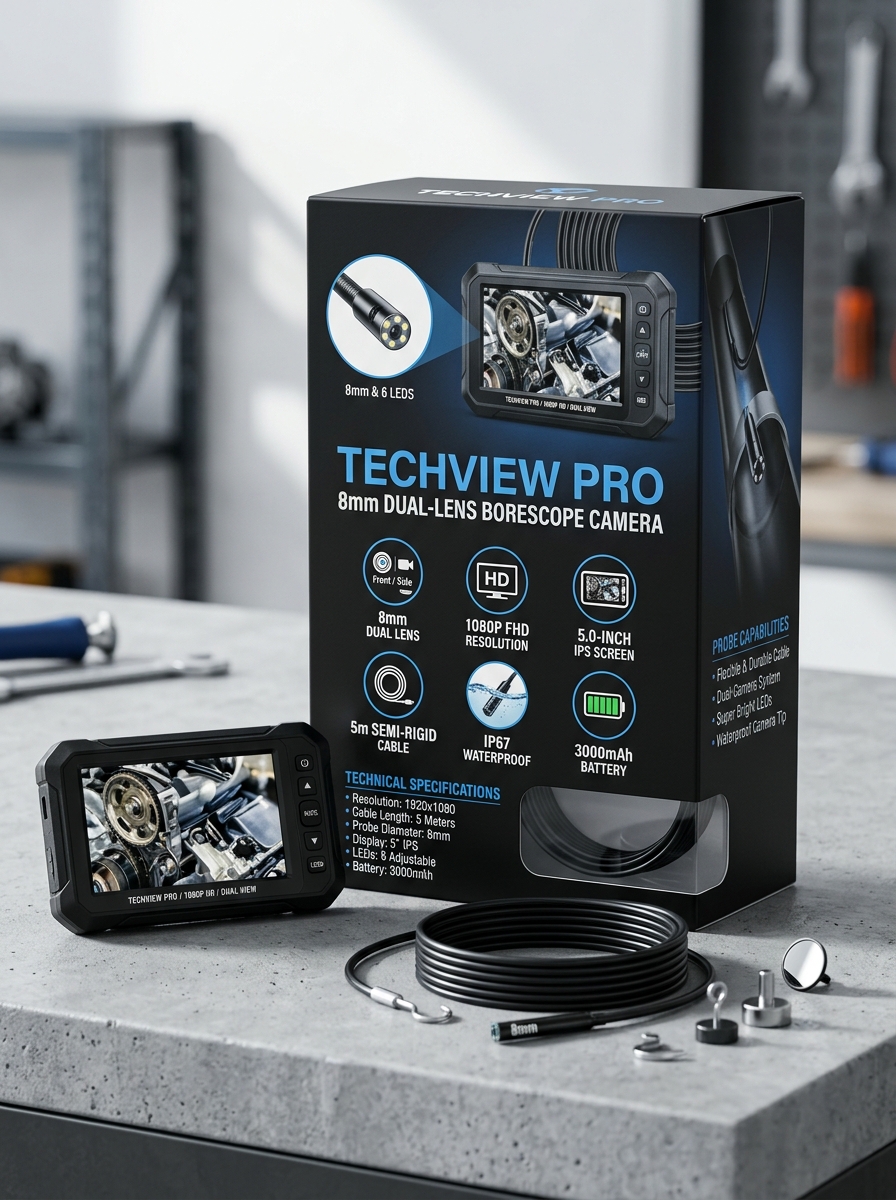
Effective visual communication of borescope camera specifications is crucial for precision inspections. Technical data sheets utilize high-resolution imagery and diagrams to illustrate probe capabilities, such as articulation angles, diameter size, and insertion tube rigidity. By visually detailing the camera sensor's resolution (HD or 4K) and the field of view (FOV), users can better assess the device's suitability for narrow spatial constraints.
Visual aids highlight essential features like adjustable LED lighting and depth of field ranges, ensuring clarity in dark environments. Furthermore, clear iconography represents IP67/IP68 waterproof ratings and probe flexibility-whether semi-rigid or soft-type. Understanding these technical specs through visual benchmarks allows technicians to select the optimal tool for non-destructive testing, engine diagnostics, and industrial maintenance, ensuring maximum accuracy during remote visual inspections.
The Unboxing Experience for Engineering and Maintenance Professionals
For engineering and maintenance professionals, the unboxing of a professional-grade borescope camera signifies the arrival of a critical diagnostic partner. A premium kit is typically housed in a rugged, impact-resistant carrying case, signaling its readiness for harsh industrial environments and secure transport.
The initial experience focuses on hardware integrity. Professionals prioritize a well-organized layout featuring the high-definition monitor, a durable semi-rigid probe, and essential inspection accessories such as magnets, hooks, and side-view mirrors. The tactile quality of the waterproof, oil-resistant cables confirms the tool's industrial utility.
A seamless setup-where the interface is intuitive and the image quality is immediately sharp-is vital. This functionality ensures technicians can transition quickly from unboxing to performing non-destructive testing and complex visual inspections in turbines, engines, or HVAC systems.
Ergonomic Structural Design and Reusable Case Integration
Modern borescope cameras feature a refined ergonomic structural design tailored for comfort and efficiency. The lightweight, contoured handle and intuitively placed controls allow for seamless one-handed operation, significantly reducing hand fatigue during extended industrial inspections. This user-centric approach ensures a secure grip even when navigating the flexible probe through complex engine components or narrow pipelines.
To complement its physical build, the device includes reusable case integration. This heavy-duty storage solution provides superior protection against impact, dust, and moisture. By organizing the display monitor, camera cables, and specialized accessories in a custom-fitted interior, the reusable hardshell case ensures maximum portability and tool longevity. This combination of ergonomic handling and sustainable protection makes the borescope an essential, durable tool for professional technicians and DIY enthusiasts.
Integrating Technical Schematics into Graphic Brand Identity
Incorporating technical schematics into the graphic brand identity of borescope camera manufacturers bridges the gap between industrial precision and visual storytelling. By utilizing detailed blueprints, wireframes, and cross-sectional diagrams of high-definition inspection tools, brands can effectively communicate engineering excellence and transparency.
This design strategy leverages the intricate internal components of fiber optic and digital imaging systems as aesthetic motifs. Integrating these technical illustrations across digital interfaces, product manuals, and packaging reinforces a narrative of reliability and sophisticated craftsmanship.
For professional end-users in aviation or automotive sectors, these schematics serve as visual shorthand for technical superiority. This approach fosters brand trust by highlighting the complex optical and mechanical architecture inherent in high-quality visual inspection technology.
Internal Organization and Custom Foam Insert Optimization
Effective storage for a borescope camera requires precision-engineered internal organization to protect sensitive optical components. Custom foam insert optimization ensures each component-including the digital display, semi-rigid cables, and delicate camera probes-is securely cradled.
By utilizing high-density, laser-cut foam, users achieve several critical advantages for their diagnostic equipment:
- Shock Absorption: High-grade materials protect high-resolution lenses from vibration and impact during transport.
- Cable Integrity: Dedicated channels prevent kinking and internal wiring fatigue in probe leads.
- Operational Efficiency: Organized layouts allow for rapid tool deployment and easy inventory checks.
A tailored internal layout extends the operational lifespan of inspection tools by preventing friction and mechanical stress. Investing in optimized foam inserts ensures your borescope remains calibrated and ready for high-precision industrial applications.
Sustainability Strategies for Industrial Grade Protective Packaging
Protecting high-precision borescope cameras requires robust containment, yet modern manufacturing is pivoting toward eco-friendly solutions. Sustainable strategies for industrial-grade packaging focus on replacing traditional non-recyclable foams with biodegradable inserts or molded fiber alternatives that provide superior shock absorption for sensitive optics.
Key initiatives include:
- Material Innovation: Utilizing recycled high-density polyethylene (HDPE) for durable, reusable transit cases.
- Waste Reduction: Implementing modular packaging designs that minimize excess volume and material use.
- Circular Economy: Designing fully recyclable outer shells and internal cushioning to align with global ESG standards.
These advancements ensure that delicate inspection equipment remains secure during transport while significantly reducing the environmental footprint of the industrial supply chain.
Regulatory Compliance and Safety Information Hierarchy
The borescope camera regulatory hierarchy ensures device safety, environmental protection, and electromagnetic compatibility across global markets. This structured approach prioritizes international directives to mitigate operational risks during industrial inspections.
- Certifications: Compliance with FCC (radio interference), CE (European safety), and RoHS (restriction of hazardous substances) is mandatory for legal distribution.
- Safety Standards: Devices must adhere to IEC/EN 62471 for LED photobiological safety and IP67/IP68 ratings for water and dust ingress protection.
- Battery Protocols: UN38.3 certification governs the safe transport and operation of integrated lithium-ion batteries.
Adhering to this hierarchy guarantees that inspection cameras operate reliably in volatile environments while protecting users from electrical hazards and optical strain.
Blending Rugged Durability with Modern Technological Aesthetics
Modern borescope cameras represent a perfect synergy between industrial resilience and cutting-edge design. Engineered for high-stakes environments, these inspection tools feature ruggedized housings, IP67 waterproof ratings, and abrasion-resistant semi-rigid cables designed to withstand oil, moisture, and heavy impact.
Beyond mere toughness, the latest models embrace modern technological aesthetics. Sleek, ergonomic grips are paired with high-definition IPS displays and intuitive digital interfaces, mirroring the sophistication of premium consumer electronics. Advanced features, such as wireless smartphone integration and multi-lens systems, are housed within streamlined, shock-proof frames.
By combining robust construction with a polished, professional appearance, today's borescopes provide technicians with a reliable diagnostic tool that doesn't compromise on style or visual clarity. This balance ensures long-term performance during complex automotive, HVAC, or plumbing inspections.
Leave a comment