
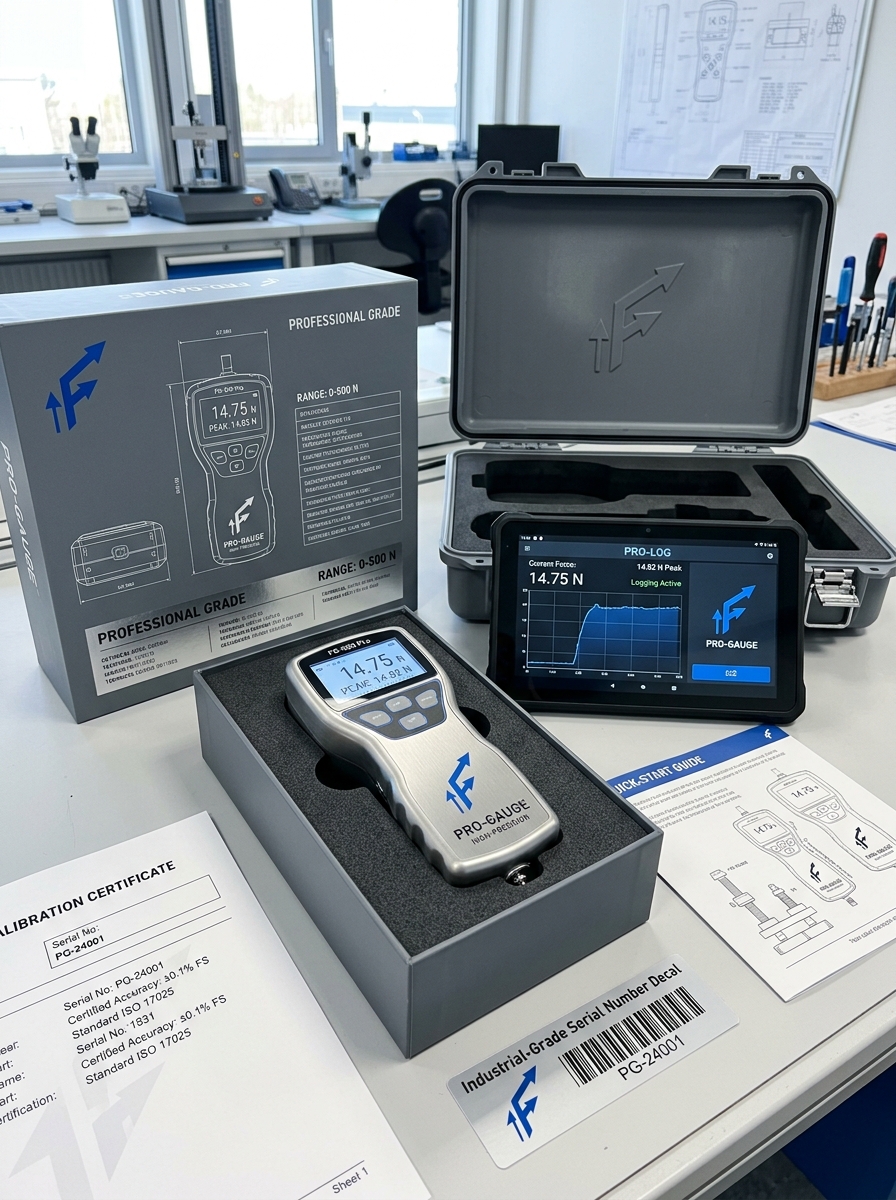
Precision measurement instruments require more than functional containment; they demand a sophisticated housing that mirrors their internal accuracy. Professional force gauge packaging design acts as a vital bridge between engineering excellence and user perception. By harmonizing robust structural protection with refined aesthetic standards, manufacturers can secure delicate sensors while projecting an image of high-tier reliability.
This exploration covers the core concepts of industrial instrument packaging, focusing on how technical specifications and visual identity converge to create a premium unboxing experience. Mastering these design principles ensures that high-precision devices remain shielded throughout the logistics chain while reinforcing market authority through disciplined, minimalist layouts and intuitive ergonomics.
The Role of Packaging in Protecting High Precision Measurement Instruments
Maintaining the integrity of a force gauge begins with specialized packaging. As high-precision instruments, these devices contain sensitive internal load cells and electronics that are highly susceptible to mechanical shock, vibration, and environmental factors. Robust protective packaging acts as a vital shield during transit and storage.
Strategic packaging solutions, including custom-molded foam inserts and anti-static barriers, are engineered to preserve calibration accuracy. By absorbing physical impacts, the packaging prevents sensor misalignment or structural damage that could compromise measurement data. Additionally, moisture-resistant materials prevent corrosion of delicate internal components. For professionals, high-quality packaging is not just a container; it is an essential component in ensuring the long-term reliability and precision of professional force measurement tools.
Core Structural Engineering for Shock and Impact Resistance
In high-precision force gauges, structural engineering is paramount to maintaining measurement integrity during volatile testing. To withstand sudden kinetic energy and impact loads, these devices utilize reinforced internal frames and ruggedized housings, typically constructed from die-cast metal or high-impact polymers.
Key engineering features include:
- Mechanical Overload Protection: Physical stops that prevent the load cell from deforming beyond its elastic limit during accidental surges.
- Shock-Absorbing Mounts: Internal dampening systems that isolate sensitive electronics and transducers from high-frequency vibrations.
- High Safety Factors: Robust designs often rated to handle up to 200% of the device's maximum capacity.
These advancements ensure durability and long-term calibration stability, allowing the gauge to deliver repeatable results even after exposure to harsh industrial environments or rapid force applications.
Material Selection for Industrial Durability and Sustainability
Selecting premium materials for force gauge construction is essential for ensuring long-term reliability in rigorous testing environments. Manufacturers increasingly utilize high-strength aircraft-grade aluminum and stainless steel for external housings to provide maximum protection against mechanical impacts and repetitive stress.
From a sustainability perspective, the industry is shifting toward recyclable alloys and RoHS-compliant components to minimize environmental impact. Durable materials extend the product lifecycle, significantly reducing electronic waste and the need for frequent replacements. By integrating rugged, eco-friendly materials, force gauges maintain their structural integrity and measurement precision over years of use. This strategic material selection ensures that force measurement tools remain functional in harsh industrial conditions while supporting corporate green manufacturing initiatives and long-term resource efficiency.
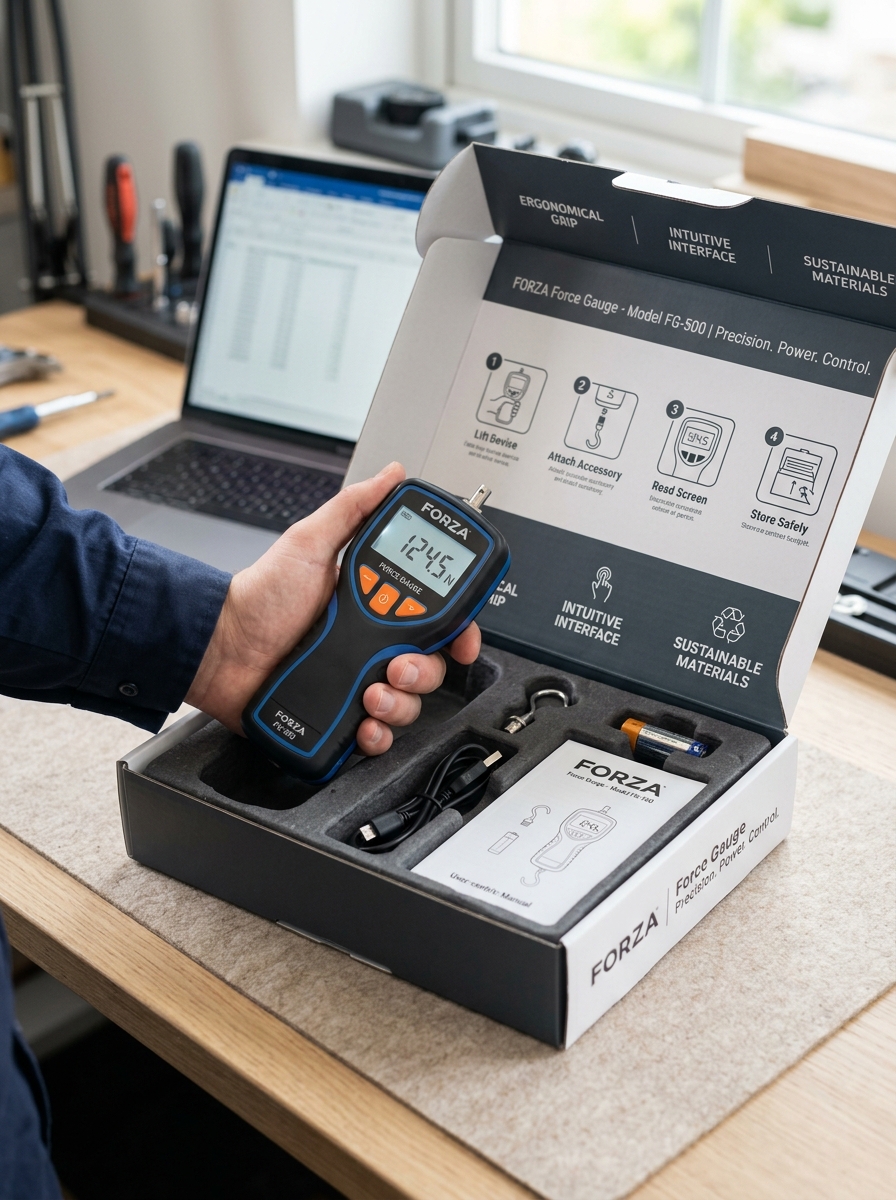
Ergonomic Unboxing and User Centric Design Frameworks
In precision measurement, the force gauge unboxing experience serves as the initial touchpoint for user-centric design frameworks. Manufacturers prioritize ergonomic packaging to ensure technicians can safely access sensitive load cells and accessories without physical strain or risk of equipment damage.
Effective design frameworks focus on the device's physical form factor to enhance long-term usability. Key elements include non-slip tactile grips, balanced weight distribution for handheld testing, and intuitive button mapping that reduces repetitive motion fatigue. By integrating these ergonomic principles, brands ensure a seamless transition from the box to the laboratory. This holistic approach minimizes cognitive load and operational errors, ensuring that high-accuracy tension and compression data collection remains safe, comfortable, and efficient for every operator throughout the instrument's lifecycle.
Visual Brand Identity and Aesthetic Alignment for Force Gauges
A force gauge's visual brand identity is essential for establishing market authority and ensuring user trust. Aesthetic alignment involves integrating signature brand colors, typography, and ergonomic design into both the physical hardware and the digital interface. For high-precision industrial measurement tools, a professional aesthetic conveys durability and accuracy.
Key elements of visual alignment include high-contrast displays for optimal readability, ruggedized casings reflecting brand toughness, and intuitive button layouts that follow established corporate design systems. By maintaining a consistent visual language across handheld units and motorized test stands, manufacturers reinforce brand recognition. This strategic alignment ensures the instrument looks as reliable as it performs, effectively bridging the gap between functional engineering and perceived value in rigorous quality control environments.
Optimizing Internal Layout for Accessories and Calibration Tools
Efficient internal configuration of a force gauge is critical for maintaining measurement accuracy and operational longevity. A strategic layout ensures that essential accessories-such as specialized grips, hooks, and extension rods-can be utilized without compromising the sensitive load cell or internal circuitry.
- Spatial Efficiency: Maximizing internal volume allows for a compact device footprint while providing secure housing for calibration ports and interface modules.
- Component Protection: Proper spacing prevents mechanical interference and protects the transducer from accidental stress during tool transitions.
- Calibration Integration: Dedicated internal architecture facilitates seamless alignment with NIST-traceable calibration tools, ensuring the device meets ISO/ASTM precision standards.
By optimizing these internal structures, manufacturers improve the durability and versatility of force measurement instruments, leading to more reliable data in high-precision industrial testing environments.
Essential Labeling Standards and Technical Documentation Integration
Maintaining compliance for force gauges requires strict adherence to international labeling standards and the seamless integration of technical documentation. Every device must feature a permanent identification plate specifying the manufacturer, model, serial number, and maximum load capacity to ensure user safety and device traceability.
Technical documentation provides the essential framework for measurement accuracy and regulatory audits. Key components include:
- Calibration Certificates: Documentation verifying accuracy levels against ISO/IEC 17025 or NIST standards.
- Declarations of Conformity: Evidence that the gauge meets CE, UKCA, or FCC requirements.
- Operation Manuals: Guidance on mounting, peak-hold functions, and data output protocols.
Properly integrated documentation ensures that force measurement data remains scientifically valid and legally defensible, streamlining quality control processes across industrial applications.
Balancing Minimalist Design with Industrial Ruggedness
Modern force gauges bridge the gap between user-centric aesthetics and heavy-duty performance. A minimalist design prioritizes an intuitive user interface, featuring clean digital displays and ergonomic housings that reduce operator fatigue. This simplicity ensures rapid data collection during tension and compression testing without technical bottlenecks.
However, simplicity does not compromise industrial ruggedness. High-performance gauges are encased in machined aluminum or impact-resistant polymers to survive harsh manufacturing floors. By shielding sensitive load cells and internal electronics from vibrations, dust, and moisture, these instruments maintain high precision in demanding environments. This dual approach provides a durable, reliable metrology solution that pairs sophisticated force measurement technology with the physical resilience required for long-term industrial use.
Sustainable Innovation in Professional Hardware Packaging
Precision instruments like a force gauge require robust protection to maintain sensor accuracy and calibration integrity during transit. Sustainable innovation in professional hardware packaging focuses on replacing traditional single-use plastics with eco-friendly materials such as recycled polymers and biodegradable inserts.
Modern packaging solutions for force measurement tools prioritize high-impact resistance while reducing environmental impact. By utilizing FSC-certified paperboard and modular designs, manufacturers ensure that sensitive load cells are shielded from mechanical shock. This shift toward green packaging not only supports the circular economy but also reduces the carbon footprint of industrial distribution. Transitioning to lightweight, sustainably sourced materials ensures that professional-grade hardware remains protected, portable, and environmentally responsible.
Performance Testing and Quality Assurance for Transport Safety
A force gauge is an indispensable tool in performance testing and quality assurance within the transportation industry. These precision instruments measure the tension and compression forces necessary to ensure vehicle components meet stringent safety standards. By utilizing high-accuracy digital force gauges, engineers can evaluate the functional integrity of seatbelts, the opening force of emergency exits, and the securement strength of cargo restraints.
Reliable transport safety relies on rigorous mechanical verification. Force measurement tools identify potential structural failures before deployment, ensuring compliance with international regulatory mandates. From automotive crash testing to aerospace fastener inspections, integrating force gauges into the quality control process minimizes risks and enhances passenger protection through precise, data-driven analysis of mechanical performance.
Leave a comment