
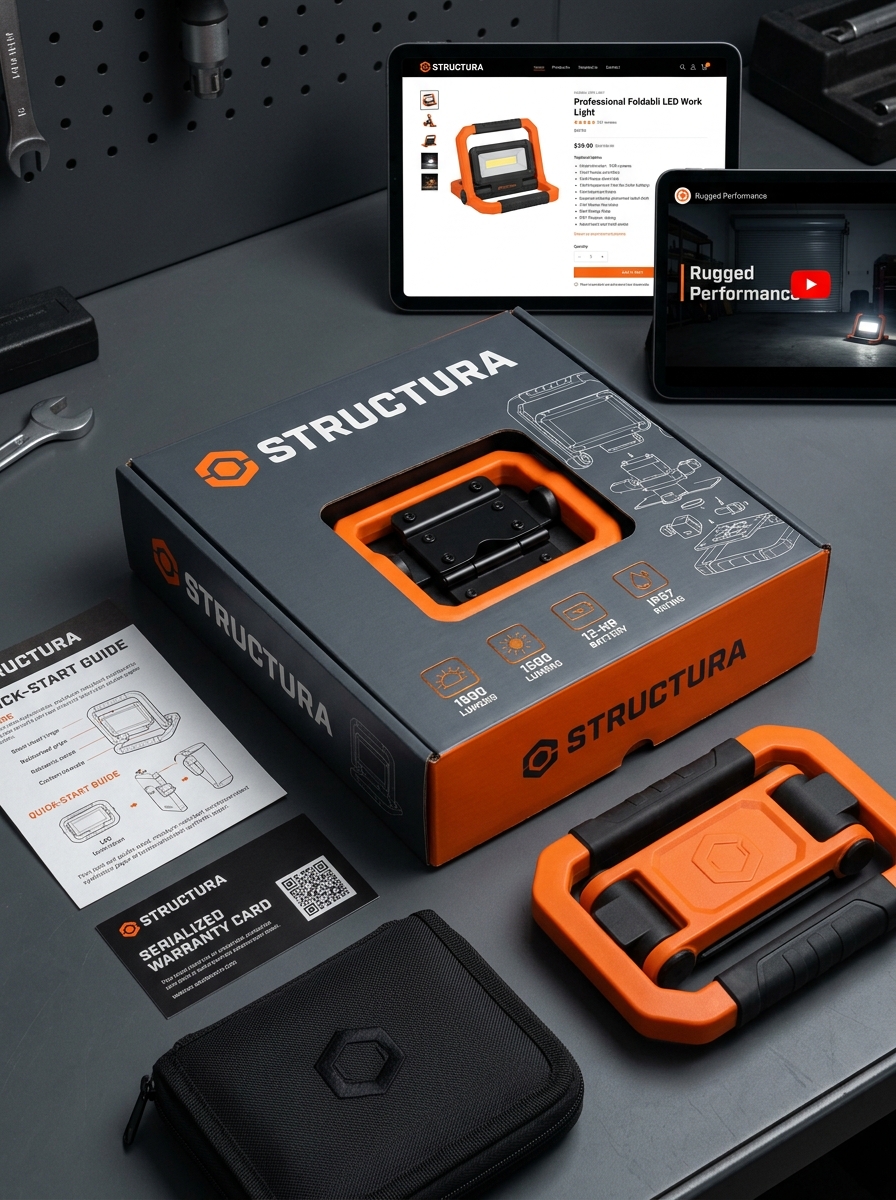
Designing effective packaging for a foldable work light requires a strategic blend of robust structural engineering and sophisticated visual aesthetics. As portable industrial lighting solutions become essential for both professionals and DIY enthusiasts, the packaging serves as a critical bridge between product functionality and consumer perception. This guide explores the core principles of packaging design, focusing on materials that safeguard sensitive LED components while highlighting the tool's compact versatility.
By prioritizing clear technical typography and high-contrast imagery, manufacturers can communicate power, lumen output, and battery longevity at a glance. Understanding how to balance protective structural layers with minimalist branding is vital for creating a premium unboxing experience. Elevating the shelf presence of these utility tools starts with an intentional approach to form, function, and professional-grade aesthetic appeal.
The Strategic Role of Packaging in Modern Lighting Solutions
In the competitive portable illumination market, packaging serves as a critical touchpoint for a foldable work light. Beyond simple containment, strategic packaging protects sensitive LED components and multi-angle hinges from transit damage, ensuring product reliability upon arrival. For manufacturers, the box acts as a silent salesman, utilizing high-impact visuals and clear technical data-such as lumen output and battery life-to guide consumer purchasing decisions.
Moreover, modern packaging solutions emphasize sustainability and portability, reflecting the professional user's values. By integrating ergonomic designs and eco-friendly materials, brands can enhance the perceived value of their lighting tools. Ultimately, effective packaging bridges the gap between innovative engineering and shelf-ready appeal, making it an indispensable element of the modern lighting supply chain.
Structural Integrity and Product Protection Requirements
To ensure long-term durability, a foldable work light must adhere to rigorous structural integrity standards. The chassis should be constructed from high-impact materials, such as reinforced ABS or aluminum, to meet IK07 impact resistance ratings, protecting internal components from drops and mechanical shocks.
The folding hinge mechanism is a critical stress point; it requires high-tensile strength and endurance testing to survive thousands of articulation cycles without losing tension. Additionally, environmental protection is vital. Implementing IP54 or IP65 ratings ensures the device is sealed against dust ingress and water splashes, common in construction environments.
Finally, effective thermal management and battery housing protection prevent overheating and internal damage during continuous high-lumen output, ensuring the light remains safe and functional under heavy-duty professional use.
Visualizing Foldability Through Dynamic Graphic Elements
Dynamic graphic elements are essential for demonstrating the versatile mechanics of a foldable work light. By utilizing intuitive icons and motion-based diagrams, manufacturers can effectively communicate 360-degree rotation and multi-angle adjustment capabilities to the user.
These visual cues highlight critical pivot points and hinge durability, showcasing how the device transitions from a compact storage mode to a high-output industrial illumination tool. Semantic graphic treatments enhance the user experience by illustrating:
- Total degrees of motion for precise light positioning.
- Ergonomic folding patterns for hands-free operation.
- Space-saving benefits for enhanced portability and transport.
Integrating these dynamic elements ensures professionals understand the structural flexibility and rugged design of the light, guaranteeing it meets the rigorous demands of various job site environments.
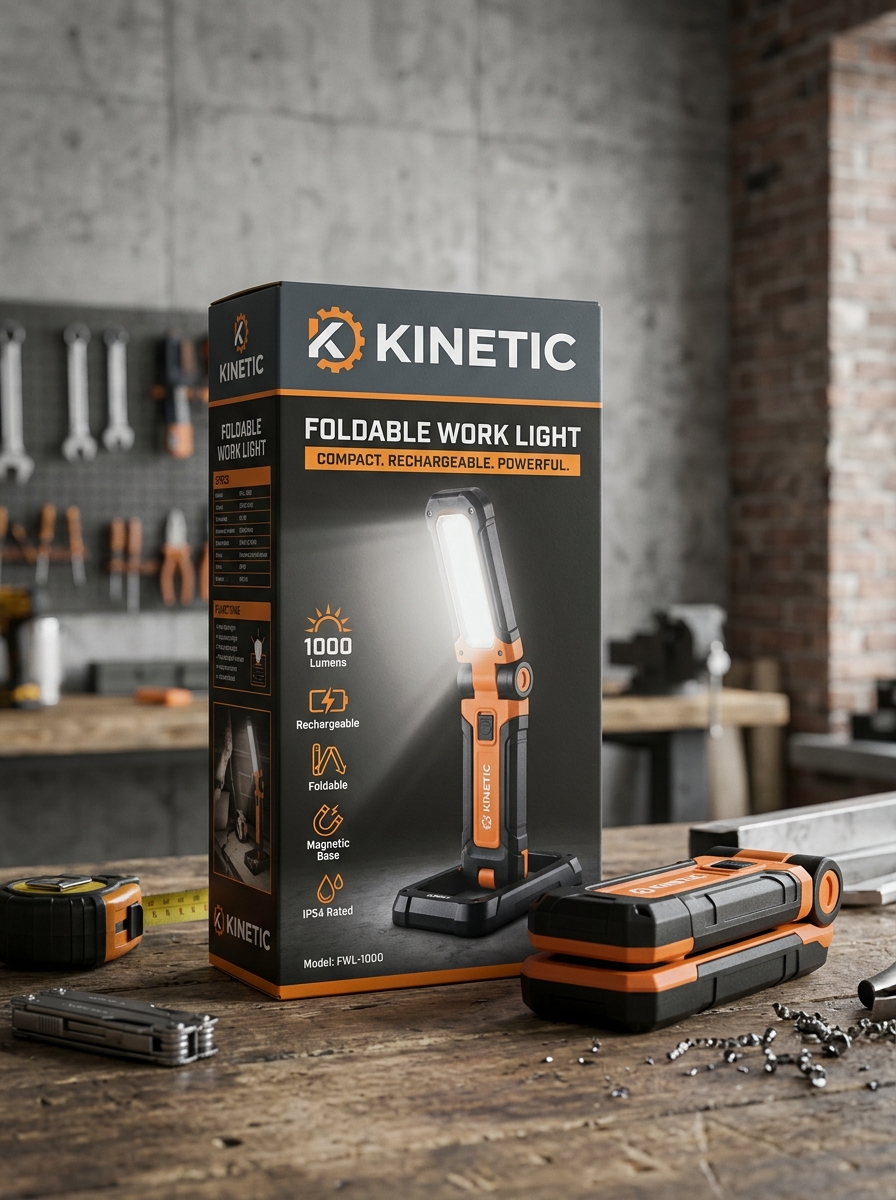
Establishing Brand Identity and Visual Hierarchy
For a foldable work light, establishing a cohesive brand identity is vital for building trust and market recognition. Manufacturers achieve this by integrating signature color schemes-often high-visibility yellow or industrial black-alongside a prominent logo that signifies durability and professional-grade performance.
Implementing a clear visual hierarchy ensures that potential buyers immediately grasp the product's value proposition. By utilizing strategic typography and layout, the most essential features-such as adjustable lumen output, magnetic mounting, and 360-degree rotation-are prioritized. This structured design approach guides the consumer's eye through technical specifications efficiently, reinforcing the brand's position as a leader in innovative lighting solutions. By balancing aesthetic consistency with functional information, companies can effectively communicate quality and reliability to professional tradespeople and DIY enthusiasts alike.
Optimizing Technical Specifications for Consumer Clarity
To choose the best foldable work light, consumers must understand how technical metrics translate to real-world performance. Prioritizing clear data helps users match the tool to their specific needs:
- Lumen Output: High-efficiency LEDs providing 500 to 1,200 lumens ensure ample brightness for automotive or construction tasks.
- Battery Longevity: Look for lithium-ion capacities (e.g., 2600mAh) that offer a reliable runtime of 3–8 hours per charge.
- Ingress Protection: An IP54 or IP65 rating confirms the unit is resistant to dust and water splashes, essential for durability on job sites.
- Beam Versatility: Foldable designs with 180° or 360° rotation allow for precision lighting in cramped spaces.
By simplifying these specifications, consumers can confidently select a portable lighting solution that balances intensity, endurance, and ruggedness.
Sustainable Material Selection for Eco-Conscious Design
Modern foldable work light manufacturing prioritizes environmental responsibility through the strategic integration of sustainable materials. To reduce the carbon footprint, manufacturers utilize recycled aluminum for heat sinks and frames, ensuring lightweight durability and efficient thermal management without depleting virgin resources.
Eco-conscious design also incorporates high-impact housings crafted from post-consumer recycled (PCR) plastics. These materials maintain structural integrity and chemical resistance while diverting waste from landfills. Furthermore, the inclusion of mercury-free LED modules ensures high energy efficiency and a longer product lifespan, significantly reducing electronic waste. By selecting a foldable work light built with modular, recyclable components, professionals can enjoy high-performance illumination that aligns with global green building and sustainability standards.
Enhancing the Unboxing Experience for Professional Users
For tradespeople and technicians, the first interaction with a foldable work light sets the standard for its performance on the job. A premium unboxing experience prioritizes efficiency, protection, and immediate utility.
To meet professional expectations, the packaging design should incorporate:
- Instant Functionality: Providing pre-charged units allows users to test lumen intensity and beam patterns immediately.
- Rugged Protection: High-density, sustainable inserts ensure the 180-degree folding hinges and magnetic bases arrive calibrated and damage-free.
- Simplified Onboarding: Clear, visual quick-start guides located on the inner lid help professionals quickly understand charging cycles and mounting versatility.
By delivering an organized, heavy-duty presentation, manufacturers reinforce the tool's durability, building immediate brand trust and ensuring the light is job-site ready the moment the seal is broken.
Effective Use of High-Impact Lighting Photography
Mastering high-impact lighting with a foldable work light transforms ordinary shots into professional-grade imagery. These versatile tools provide the precise control needed to manipulate shadows and highlights effectively.
To achieve cinematic results, utilize the following techniques:
- Directional Positioning: Use the foldable hinge to angle the light from the side, creating "Rembrandt lighting" that adds depth and texture to subjects.
- Portable Backlighting: Place the compact light behind your subject to create a crisp rim light, separating them from the background for a high-impact silhouette.
- Adjustable Intensity: Position the light closer for high-contrast, dramatic effects, or further away to soften the output for product photography.
By leveraging the articulating arms of a foldable work light, photographers can achieve studio-quality illumination in any environment, ensuring every detail is captured with clarity and professional flair.
Retail Presence and Point-of-Sale Shelf Appeal
In a competitive retail environment, the foldable work light commands attention through innovative packaging and a compact design. Its unique collapsible form factor not only highlights portability but also maximizes shelf efficiency, allowing retailers to optimize floor space while maintaining a high stock density.
Effective point-of-sale (POS) appeal is driven by high-visibility graphics and transparent windows that showcase the product's multidirectional lighting and magnetic base. By emphasizing hands-free functionality and lumens output on the box, the packaging communicates immediate value to both DIY enthusiasts and professional tradespeople.
Strategic retail placement, combined with high-impact imagery of the light in use within engine bays or crawlspaces, creates an emotional connection with the consumer. This strong visual presence ensures the foldable work light stands out as a premium, essential tool, encouraging rapid impulse purchases.
Future-Proofing Designs with Interactive Digital Elements
Modern foldable work lights are evolving beyond basic illumination by integrating interactive digital elements. Manufacturers are future-proofing these tools through IoT connectivity and smart interfaces that enhance both utility and product longevity.
Key digital integrations include:
- Embedded QR Codes: Providing instant access to digital manuals, warranty registration, and troubleshooting guides.
- OLED Status Displays: Monitoring real-time battery health, remaining runtime, and precise color temperature settings.
- Bluetooth Connectivity: Allowing professionals to sync multiple units and adjust brightness levels remotely via mobile applications.
By blending robust mechanical hardware with digital versatility, these lighting solutions remain relevant in a rapidly advancing tech landscape. This synergy ensures that foldable work lights meet the sophisticated demands of modern industrial environments while providing a superior user experience.
Leave a comment