
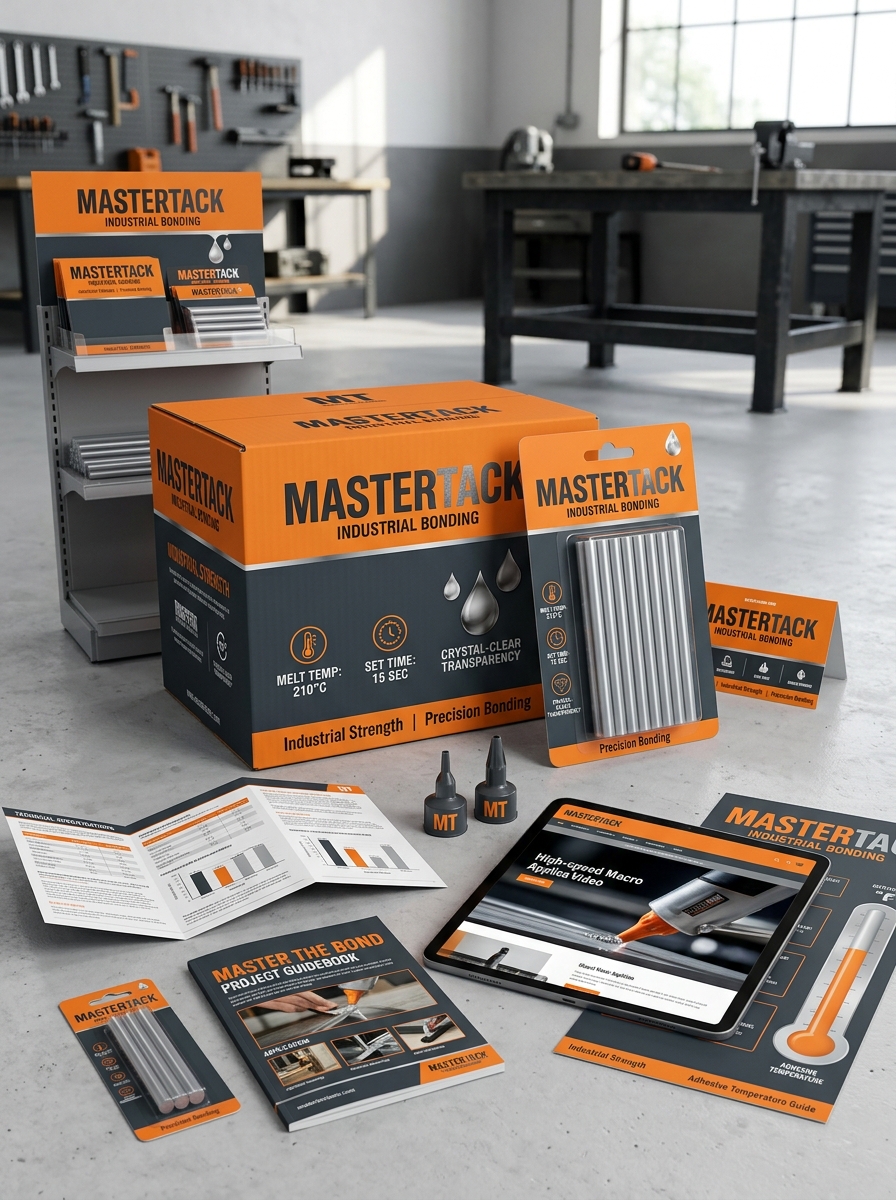
For manufacturers and DIY brands, hot glue stick packaging serves as both a vital protective barrier and a silent salesperson. Creating a standout product requires a strategic blend of structural integrity and high-impact visual aesthetics to capture consumer attention on crowded retail shelves.
Mastering this specialized design process involves balancing technical requirements-such as moisture resistance and heat stability-with compelling brand storytelling. From ergonomic opening features to bold, clear typography, every element must communicate reliability and ease of use to professional contractors and hobbyists alike. By focusing on these essential concepts, businesses can elevate their adhesive products, ensuring they remain secure during transit while resonating deeply with their target audience.
Understanding Brand Identity and Target Demographics
Establishing a compelling brand identity for hot glue sticks requires a focus on reliability, bonding strength, and application specificity. Brands must differentiate themselves by positioning products as either industrial-grade adhesives for heavy-duty repairs or user-friendly craft supplies for delicate projects.
Identifying target demographics is essential for effective market positioning. Key segments include:
- DIY Hobbyists: Focus on versatility, ease of use, and quick drying times for home decor.
- Professional Contractors: Require high-performance, high-temperature sticks for woodworking and upholstery.
- Educators and Parents: Prioritize non-toxic, low-temperature safety features for school environments.
By aligning technical specifications-such as melting points and open time-with these distinct audience needs, manufacturers can enhance brand loyalty and improve search visibility within the competitive adhesive market.
Functional Structural Design for Glue Stick Protection
The longevity and performance of hot glue sticks depend heavily on their protective structural design. Effective packaging serves as a critical barrier against environmental contaminants such as dust and moisture, which can compromise the chemical bond of the thermoplastic polymers.
To ensure adhesive reliability, functional design often incorporates:
- Rigid Outer Casing: Prevents physical deformation and bending, ensuring sticks remain compatible with glue gun feed mechanisms.
- Airtight Sealing: Protects against oxidation and humidity to maintain consistent melting points and clarity.
- Separation Channels: Prevents individual sticks from fusing together during transport or storage in warmer climates.
By prioritizing these structural elements, manufacturers preserve the adhesive integrity and shelf life of the glue, ensuring it remains ready for high-temperature application.
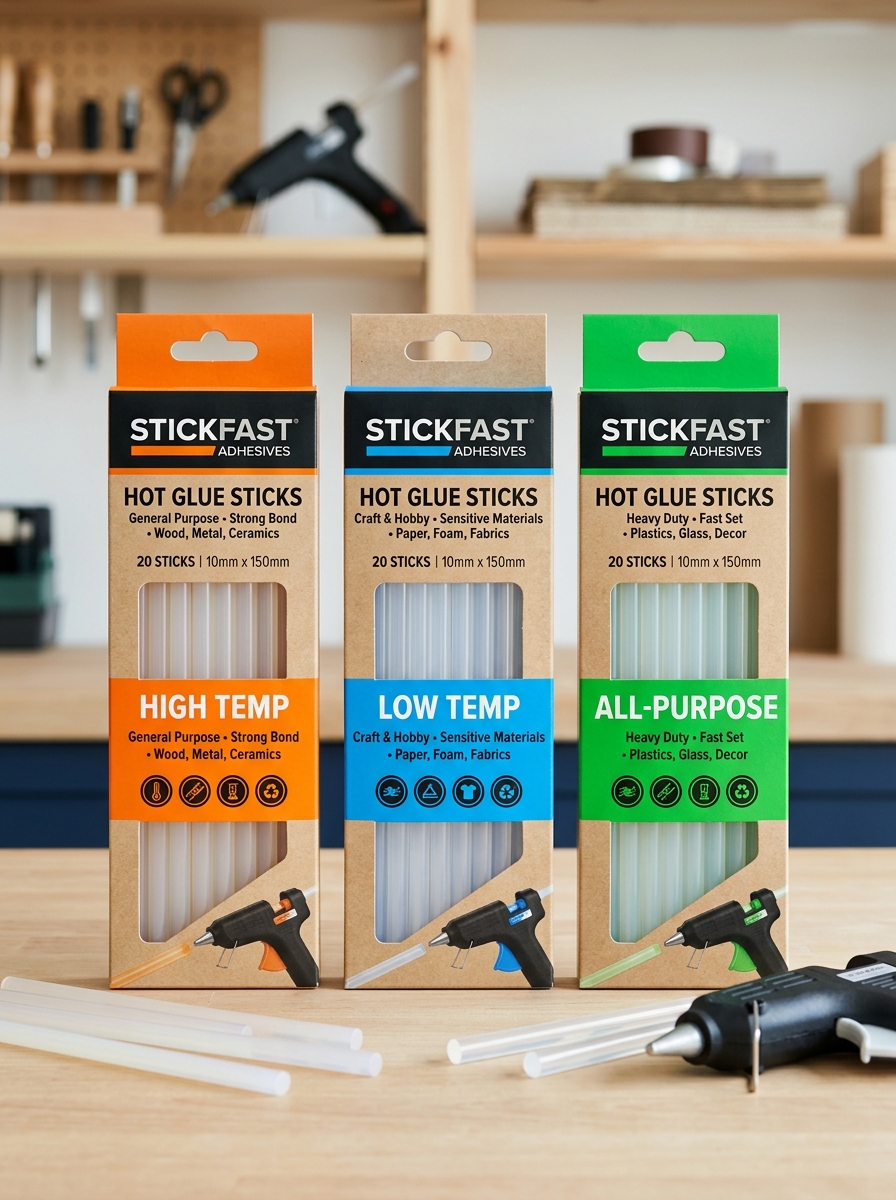
Strategic Color Coding for Adhesive Type Identification
In professional and industrial applications, hot glue stick color coding serves as a critical visual management tool to ensure material compatibility. While standard clear sticks are prevalent for general-purpose bonding, manufacturers utilize specific pigments to denote unique chemical formulations and performance specs.
- Translucent/Clear: Versatile, multi-temperature adhesive for hobbyist and light-duty repairs.
- Yellow/Amber: High-performance industrial formulas, often used for woodworking or high-strength packaging.
- Black/Opaque: Specialized adhesives designed for automotive repairs, cable management, or high-viscosity structural bonds.
Implementing a strategic identification system reduces application errors and prevents adhesive cross-contamination. By quickly identifying bond strength, melting points, and set times via color, technicians can optimize workflow efficiency and ensure the long-term structural integrity of the assembly.
Maximizing Product Visibility Through Transparent Windows
In the competitive adhesive market, packaging design plays a vital role in consumer decision-making. Incorporating a transparent window in hot glue stick packaging allows customers to instantly verify product specifications such as color, diameter, and length. Whether a project requires standard clear sticks, glitter-infused options, or high-temp colored adhesives, visual confirmation ensures the buyer selects the correct product for their specific glue gun.
High-visibility windows build consumer trust by showcasing the adhesive quality and quantity without compromising the package's integrity. For DIY enthusiasts and professional crafters, seeing the product's clarity and uniformity reduces purchase hesitation. By utilizing transparent packaging elements, manufacturers can effectively highlight the premium nature of their hot glue sticks, leading to higher conversion rates and reduced product returns due to sizing errors.
Essential Information Hierarchy and Technical Labeling
Understanding the technical specifications of hot glue sticks is vital for ensuring bond integrity and applicator safety. The information hierarchy typically begins with diameter (standard 7mm or 11mm) and operating temperature.
Technical labeling categorizes sticks based on several key performance indicators:
- Thermal Classification: Low-melt (approx. 250°F) for fragile substrates versus high-melt (380°F+) for structural applications.
- Base Chemistry: Identification of polymers such as EVA (ethylene-vinyl acetate) or Polyamide.
- Open Time: The duration the adhesive remains tacky before solidifying.
- Viscosity: The molten flow rate, which dictates precision in application.
Clear labeling ensures users match the adhesive's chemical properties to the substrate's surface energy, optimizing structural adhesion and preventing equipment malfunction.
Sustainable Packaging Materials and Eco-Friendly Initiatives
As environmental consciousness grows, manufacturers of hot glue sticks are transitioning toward sustainable packaging materials and greener production methods. Traditional plastic clamshells are increasingly replaced by recyclable cardboard and biodegradable films to significantly reduce single-use plastic waste.
Key eco-friendly initiatives include the development of bio-based adhesives formulated from renewable resins rather than petroleum. These non-toxic, low-VOC (Volatile Organic Compound) options offer a smaller carbon footprint while maintaining superior bonding strength for industrial and DIY projects. Additionally, many brands now utilize FSC-certified paper and bulk-packaging solutions to minimize material consumption. By integrating circular economy principles, the adhesive industry ensures that high-performance hot melt solutions align with global sustainability goals and environmental stewardship.
Typography Choices for Clarity and Professionalism
Selecting the right typography for hot glue stick packaging and technical documentation is essential for ensuring user safety and brand authority. To achieve maximum clarity, professional manufacturers typically favor sans-serif typefaces like Arial or Roboto. These fonts offer high legibility at small scales, which is critical when printing temperature requirements and material compatibility on narrow cylindrical labels.
A professional aesthetic is maintained through a disciplined visual hierarchy. Using bold weights for section headers and maintaining generous line spacing prevents instructional clutter. For industrial-grade adhesives, high-contrast typography ensures that safety warnings remain readable in high-intensity workshop environments. By prioritizing functional, clean fonts, brands communicate reliability and help users quickly identify the correct adhesive properties for their specific bonding tasks.
Innovative Packaging Formats from Blisters to Bulk Boxes
Hot glue stick packaging has evolved to meet the diverse requirements of both hobbyists and industrial manufacturers. Retail blister packs remain a staple for DIY enthusiasts, offering high visibility and protective shells that keep adhesive sticks clean and organized for small-scale projects.
For high-volume users, bulk boxes provide a cost-effective and space-efficient solution. These industrial formats minimize secondary packaging waste and reduce the per-unit cost for professional contractors and assembly lines. Recent innovations also focus on sustainability, incorporating recyclable paperboard and biodegradable films into the design.
Whether it is resealable pouches for easy storage or heavy-duty cartons for warehouse distribution, modern packaging formats ensure that hot melt adhesives maintain their integrity, prevent moisture absorption, and remain easily accessible for any bonding application.
Enhancing the Unboxing Experience and Resealability
Premium hot glue stick packaging transforms a basic utility into a professional-grade experience. Manufacturers now prioritize sleek, informative designs that provide immediate visibility of stick clarity and diameter. However, the most significant advancement in user experience is resealability.
Because adhesive polymers are prone to attracting dust, pet hair, and moisture, high-quality packaging-such as heavy-duty zip-lock pouches or snap-top containers-is essential. These features offer several semantic benefits:
- Contamination Control: Keeps sticks debris-free to prevent glue gun clogs.
- Long-term Storage: Protects the adhesive's chemical integrity against humidity.
- Workspace Organization: Prevents sticks from scattering, ensuring a tidy craft or industrial environment.
By focusing on functional, reusable packaging, brands ensure that every glue stick maintains optimal melting properties and bond strength from the first use to the last.
Visual Cohesion Across Product Lines and Brand Extensions
Establishing visual cohesion is essential for hot glue stick manufacturers to build brand equity and consumer trust. By implementing consistent color palettes, typography, and logo placement, brands ensure that specialized adhesives-such as high-temperature, low-melt, or fabric-specific sticks-are instantly recognizable as part of a unified product ecosystem.
Effective brand extensions utilize systematic packaging cues to help users navigate different product tiers. For example, color-coded headers can distinguish between heavy-duty industrial glues and multi-purpose craft sticks. This aesthetic alignment often extends to complementary hardware, such as glue guns and silicone mats, creating a professional and reliable user experience. Strategic visual design simplifies the purchasing process and reinforces brand loyalty across all adhesive categories, ensuring the product remains the preferred choice for various bonding applications.
Leave a comment