
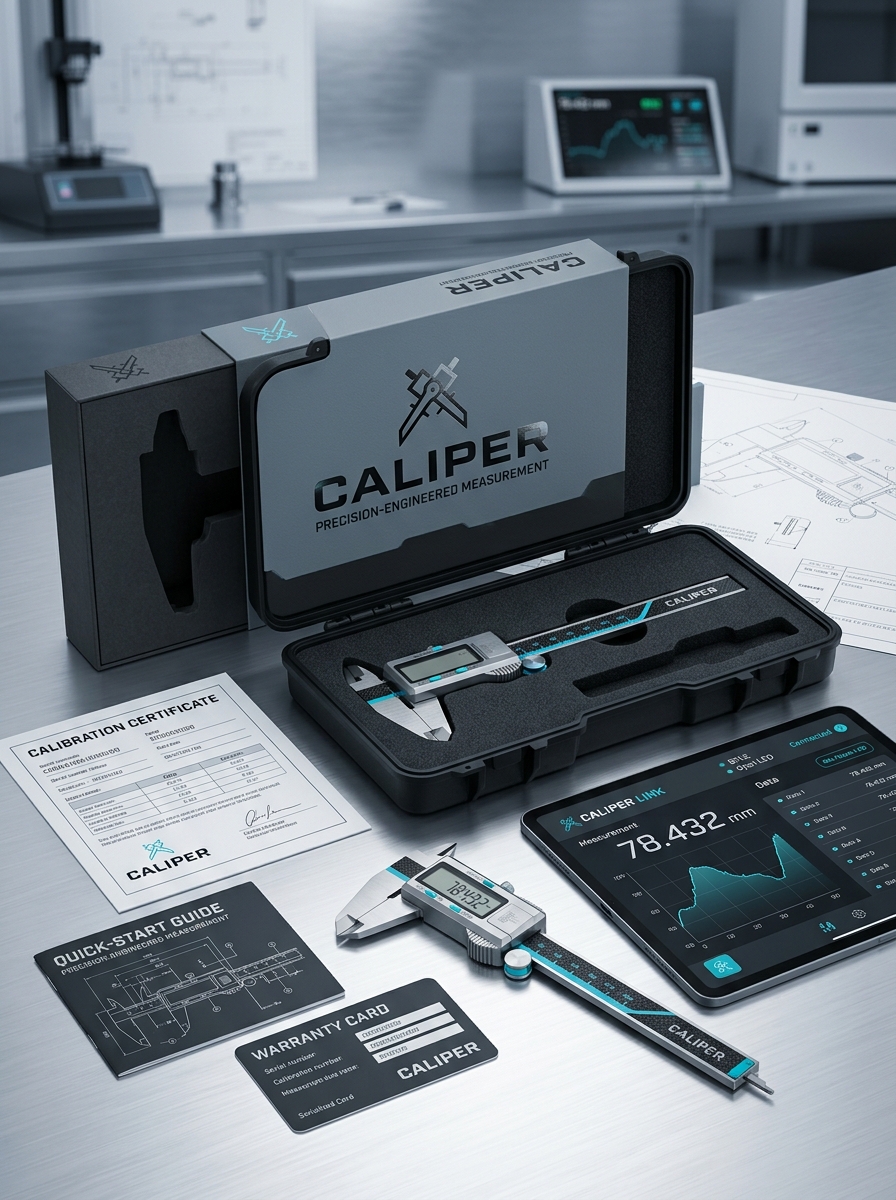
Achieving precision in measurement begins long before a tool is ever held in the hand; it starts with the professional impression of its housing. Mastering digital caliper packaging requires a strategic fusion of structural integrity and sophisticated visual appeal. For manufacturers and designers, the core challenge lies in creating a protective environment that safeguards delicate sensors while simultaneously communicating high-tier craftsmanship.
By integrating modern design concepts with aesthetic best practices, brands can transform a functional necessity into a premium unboxing experience. Whether utilizing custom-molded inserts for tool security or minimalist graphic hierarchies for clarity, the objective is to reflect the high-accuracy nature of the instrument within. This exploration covers the essential principles of material selection and layout design necessary to resonate with engineers, machinists, and precision-driven professionals.
The Role of Packaging in Precision Tool Branding
For a digital caliper, packaging serves as the vital bridge between technical excellence and consumer trust. Beyond basic protection, high-quality cases signal the instrument's precision and long-term durability. Professional branding often utilizes form-fitted foam inserts or rugged hard-shell cases to secure delicate LCD screens and internal sensors against impact, dust, and humidity.
Effective packaging also enhances the user experience by organizing essential accessories such as spare batteries and calibration certificates. For manufacturers, premium boxing reinforces a reputation for measurement accuracy and attention to detail. In a competitive market, robust packaging transforms a utilitarian tool into a professional-grade asset, justifying a premium price point while ensuring the device remains factory-calibrated during transit. This first physical touchpoint is essential for establishing brand authority in the metrology industry.
Selecting Durable Materials for Maximum Tool Protection
Choosing the right materials is essential for maintaining the longevity and precision of a digital caliper. High-quality models are typically crafted from hardened stainless steel, which provides superior resistance to corrosion, scratches, and thermal expansion. This robust construction ensures the sliding scale remains smooth and the measuring jaws stay perfectly aligned over years of heavy use.
For specialized applications, carbon fiber composites offer a lightweight, non-marring alternative, though they generally provide less structural rigidity than steel. To ensure maximum internal protection, look for tools with an IP54 rating or higher, which shields sensitive electronic components from dust, oil, and moisture. Finally, a heavy-duty storage case is a vital material consideration to prevent physical impact damage, ensuring your precision instrument remains a reliable asset in any workshop environment.
Defining the Aesthetic Language of Measurement Devices
The aesthetic language of a digital caliper represents a sophisticated intersection of industrial utility and modern ergonomics. Design choices prioritize high-contrast LCD displays and brushed stainless steel finishes, signaling both precision and durability to the user. Every structural element, from the knurled thumbwheel to the streamlined housing, is engineered to provide tactile feedback and ease of use during high-accuracy tasks.
In precision metrology, aesthetics are synonymous with clarity. The minimalist, functional profile of a caliper reflects its technical reliability. By balancing smooth mechanical movement with intuitive digital interfaces, these instruments communicate professional-grade accuracy. This visual and tactile synergy ensures that the tool remains an accessible yet powerful component of the modern toolkit, embodying a design philosophy where form directly enhances measurement performance.
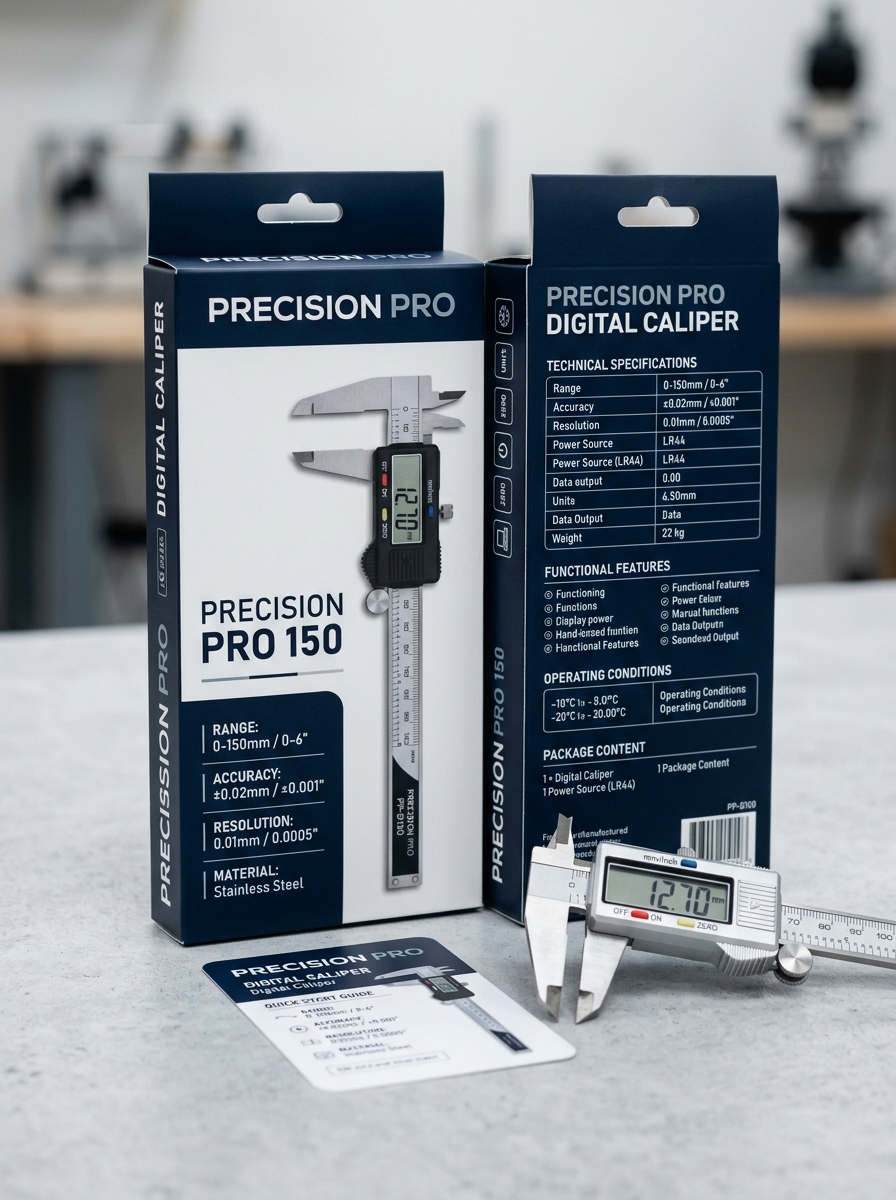
Information Architecture and Technical Specification Layout
The information architecture (IA) of a digital caliper defines how measurement data and operational modes are structured for the user. A robust IA ensures that high-priority information-such as numerical values, units (metric/imperial), and battery status-is logically mapped to the LCD interface for immediate legibility.
The technical specification layout categorizes the tool's mechanical and electronic capabilities into a standardized format. Essential specifications typically include:
- Measurement Range: Standard spans like 0–150mm or 0–6 inches.
- Resolution: Precision increments, often 0.01mm or 0.0005".
- Accuracy: Defined tolerance thresholds for industrial reliability.
- Data Output: Connectivity options for external data processing.
By organizing these attributes semantically, manufacturers ensure that technicians can quickly verify tool performance and compatibility with specific engineering requirements.
Optimizing the Unboxing Experience for Professional Users
For professional engineers and machinists, the unboxing of a digital caliper signifies a commitment to precision. A premium experience begins with a rugged, foam-lined protective case that ensures the instrument remains factory-calibrated during transit.
Key elements that optimize this experience include:
- Calibration Certification: Inclusion of NIST-traceable documents provides immediate validation of measurement accuracy.
- Ready-to-Use Components: Pre-installed high-capacity batteries and spare sets minimize initial downtime.
- Protective Packaging: Moisture-absorbent silica packets and residue-free protective films preserve the stainless steel finish.
By prioritizing an organized layout and accessible technical documentation, manufacturers reinforce brand trust, ensuring the tool is ready for high-tolerance industrial applications immediately upon arrival.
Visual Storytelling through Product Photography and Graphics
Effective visual storytelling for a digital caliper utilizes high-resolution macro photography and technical graphics to communicate precision. By showcasing the crisp LCD display, brushed stainless steel frame, and fine-tuned adjustment components, imagery validates the tool's accuracy and build quality.
- Macro Shots: Highlight the zeroing button, crisp resolution, and etched scales.
- Technical Diagrams: Illustrate the four-way measurement capabilities: internal, external, depth, and step.
- Infographics: Explain the internal sensor technology and battery compartment accessibility.
These visual elements bridge the gap between technical specifications and user experience, allowing professionals to assess ergonomic design and sliding smoothness. Through detailed graphics and professional photography, the digital caliper's reliability is clearly demonstrated, fostering trust in its measurement performance and industrial durability.
Sustainable Packaging Solutions for Industrial Instruments
Precision measurement tools like the digital caliper require specialized protection to maintain sensor accuracy and prevent mechanical damage. Modern sustainable packaging solutions for industrial instruments focus on reducing environmental impact without compromising tool integrity.
Key eco-friendly strategies include:
- Recyclable Inserts: Replacing petroleum-based foams with molded pulp or corrugated cardboard engineered for high shock absorption.
- Minimalist Design: Reducing overall material volume to lower carbon footprints during transit while ensuring the tool's stainless steel frame remains secure.
- Reusable Storage: Crafting primary cases from recycled high-density plastics, which serve as long-term storage to prevent electronic corrosion.
By integrating biodegradable desiccants and soy-based inks, manufacturers ensure that high-precision calipers are delivered safely and sustainably, meeting both industrial standards and global environmental goals.
Designing Protective Inserts for Delicate Electronic Components
Precision is paramount when engineering protective inserts for sensitive hardware. A digital caliper provides the sub-millimeter accuracy required to map the intricate geometries of circuit boards, sensors, and connectors. By utilizing the tool's external, internal, and depth measurement functions, designers can establish the tight tolerances necessary to prevent component shifting within custom foam, molded trays, or 3D-printed housings.
The high-contrast LCD allows for rapid data collection, facilitating seamless integration with CAD software. Accurate readings ensure that protective buffers account for heat dissipation and port access without compromising structural integrity. Ultimately, using a digital caliper reduces prototype iterations by ensuring a "first-fit" success for inserts designed to mitigate mechanical shock, vibration, and static discharge for delicate electronics.
Retail Shelf Strategy and Competitive Visual Differentiation
To dominate the hardware aisle, digital caliper manufacturers must leverage strategic packaging and visual cues. Retail shelf strategy focuses on "eye-level" placement, utilizing high-contrast color schemes-such as industrial yellow, professional silver, or deep blue-to signal tool precision and durability. Effective differentiation is achieved through clear-window packaging, allowing customers to inspect the stainless steel finish and the scale's legibility without opening the box.
Brands differentiate by highlighting unique selling points (USPs) like IP54 protection, large high-definition LCD screens, and fractional reading capabilities directly on the front-facing graphics. Using premium materials for the casing and incorporating "try-me" features for thumbwheel tactile feedback can significantly influence purchasing decisions. By aligning visual aesthetics with perceived accuracy, brands create a competitive edge that justifies price premiums over generic alternatives.
Future Trends in Digital Caliper Packaging Innovation
The evolution of digital caliper packaging is increasingly focused on sustainability and technological integration. Manufacturers are transitioning from traditional plastics to biodegradable materials and molded pulp inserts to minimize environmental impact while ensuring high shock absorption for sensitive measuring electronics.
Key emerging trends include:
- Smart Packaging: Integration of QR codes and NFC tags for instant access to digital manuals, video tutorials, and cloud-based calibration certificates.
- Compact Ergonomics: Space-efficient designs that reduce shipping costs and carbon footprints.
- Protective Durability: Reusable, moisture-resistant hard cases featuring custom-fitted foam to preserve sensor accuracy during transport.
By merging eco-friendly practices with digital connectivity, the next generation of measuring tool packaging enhances both the user experience and the long-term protection of precision metrology instruments.
Leave a comment